
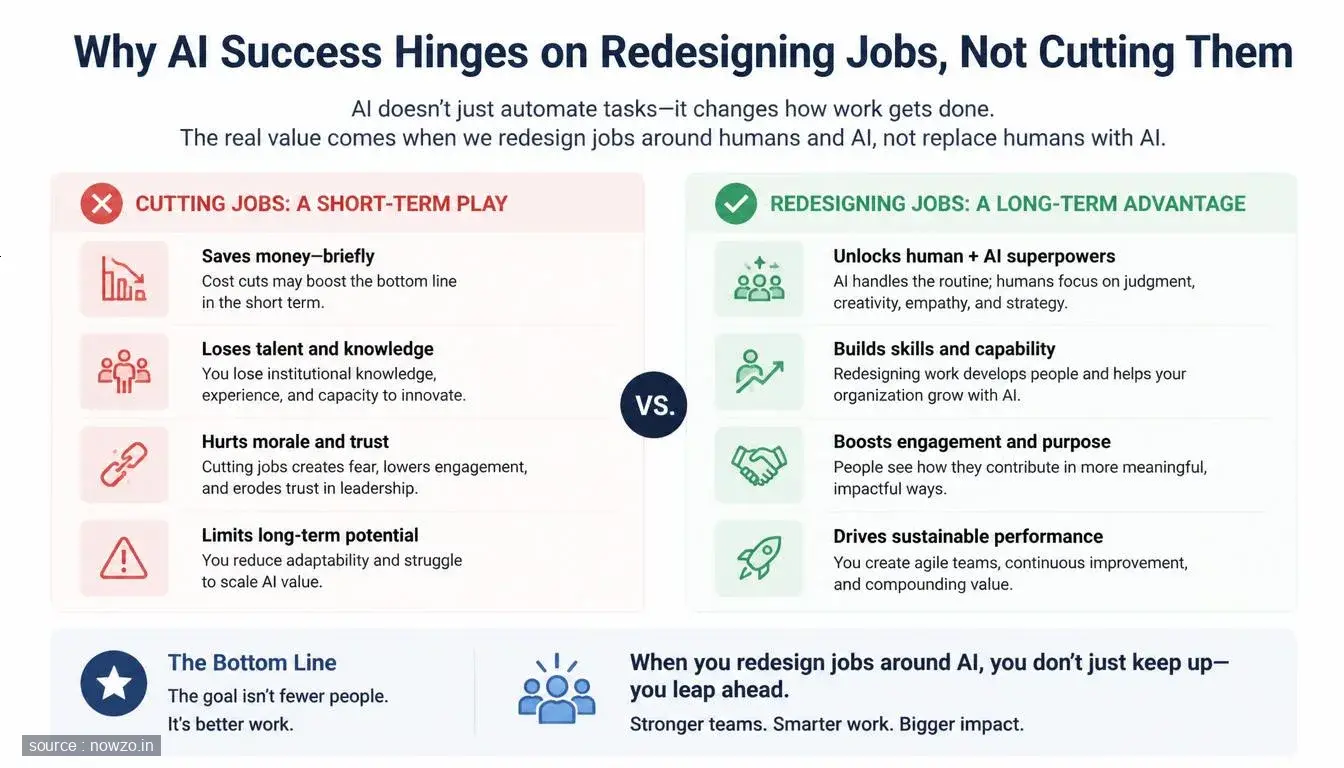
Rethinking AI’s Role in the Workplace
It’s tempting to see artificial intelligence as a shortcut to leaner teams and lower costs. But according to insights from Harvard Business Review, that thinking might be exactly what holds companies back.
Real transformation, they argue, isn’t about swapping people for bots. It’s about redesigning work itself—reshaping roles, rethinking processes, and leveraging human skill in concert with machine intelligence.
What This Means for Leaders
Forward-thinking organizations aren’t asking “How many jobs can AI replace?” They’re asking “How can AI help our people do more meaningful work?”
That shift in perspective changes everything. It encourages training, fosters innovation, and builds cultures where humans and algorithms collaborate—not compete.
- Encourages strategic reinvestment in human capital
- Promotes sustainable, long-term innovation
- Builds employee trust and reduces resistance to change
- Requires more upfront investment in redesign and training
- Demands cultural shift away from pure cost-cutting mindset
- May slow initial ROI compared to outright automation
The Path Forward
Success with AI isn’t a numbers game. It’s a design challenge. Companies that rearchitect work around human-machine collaboration will not only survive—they’ll set the pace.
So before pulling the trigger on layoffs, maybe pull out a whiteboard instead. The future of work isn’t about doing less with fewer people. It’s about doing more—with better tools.




Comments