
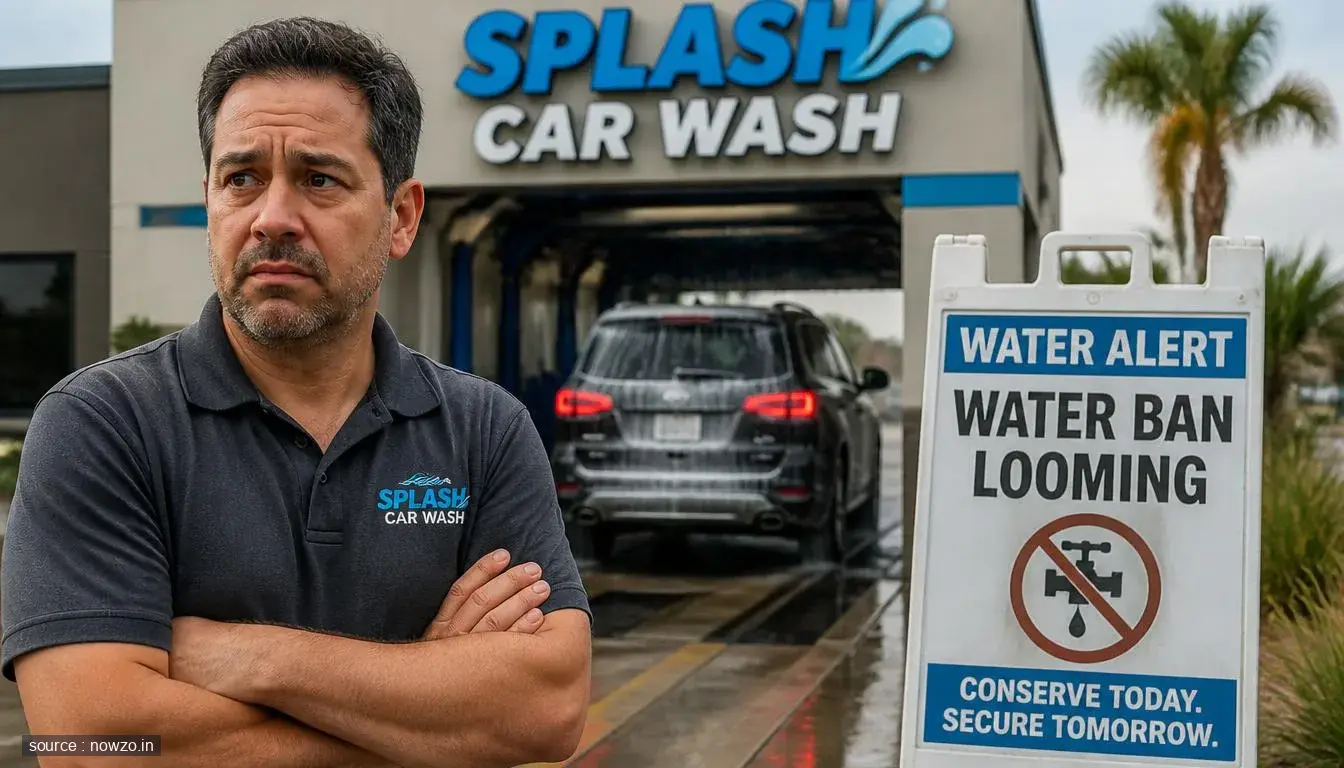
Mark Jenkins stares at the rows of gleaming vehicles waiting for a wash, his mind fixed not on the day’s profits, but on the threat of a dry spell—of the official kind. His car wash business in southern England could soon face a severe challenge if local authorities impose a water use ban.
- Car wash owner Mark Jenkins voices concern over potential water restrictions
- Business located in an area experiencing water shortages
- Ban could be implemented if reservoir levels continue to drop
Running on borrowed time
Jenkins isn’t just worried about a minor inconvenience. A full ban on non-essential water use, like car washing, could strike at the worst possible time—right in the middle of his busiest season. "We rely on a steady supply," he explains, the tension clear in his voice. "If they turn off the taps, we’re finished for the summer."
A wider pattern of strain
This isn’t an isolated fear. Water shortages have been creeping into public conversation across parts of England, especially after unusually dry springs and rising demand. Reservoirs are lower than usual, and conservation messages are growing more urgent.
Weighing business against necessity
For small business owners like Jenkins, it’s a difficult balance. He understands the need to conserve water, but also depends on it to keep his staff employed and his doors open. "I get why it might be needed," he admits. "But that doesn’t make it any easier to swallow."




Comments