
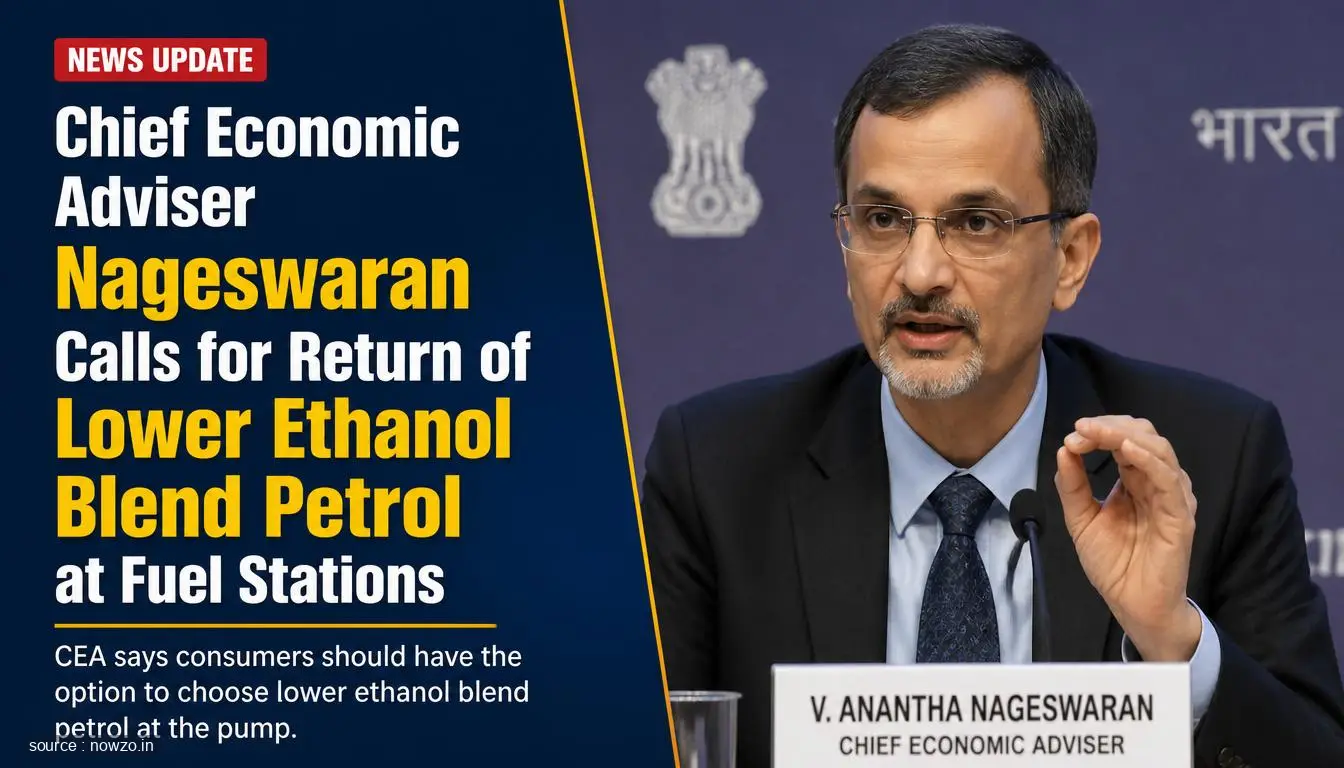
India's Chief Economic Adviser (CEA) V Anantha Nageswaran has entered the ongoing debate over E20 petrol, calling for the reintroduction of lower ethanol-blend fuel at petrol stations across the country. His remarks come at a time when the rollout of E20 — petrol blended with 20 percent ethanol — has sparked widespread discussion among consumers, industry stakeholders, and policymakers.
CEA Nageswaran Weighs In on E20 Debate
Speaking on the contentious issue of ethanol blending in petrol, Nageswaran said that fuel stations should once again offer petrol with a lower ethanol blend alongside the current E20 variant. His statement is notable given his position as the government's top economic adviser, lending considerable weight to concerns raised by consumers and automobile experts about the impact of higher ethanol blends on vehicles.
The E20 petrol rollout has been a key part of India's broader strategy to reduce dependence on imported crude oil and promote the use of domestically produced biofuels. However, the transition has not been without friction, with many vehicle owners expressing concerns about fuel efficiency, engine compatibility, and the availability of alternatives.
Growing Concerns Among Consumers
The debate around E20 petrol has intensified in recent months, with a section of vehicle owners and industry observers raising questions about the suitability of higher ethanol blends for older vehicles. Ethanol-blended fuel, while beneficial from an energy security and environmental standpoint, has been flagged by some as potentially affecting engine performance and mileage in vehicles not specifically designed for higher blends.
Nageswaran's call for bringing back lower ethanol-blend petrol at pumps reflects an acknowledgment of these concerns at the highest levels of economic policymaking. His intervention suggests that a more nuanced approach to the ethanol blending programme may be needed — one that balances national energy goals with consumer choice and vehicle compatibility.
What Lies Ahead
It remains to be seen whether the government will act on the Chief Economic Adviser's suggestion and reintroduce lower ethanol-blend options at fuel stations. The ethanol blending programme has been a flagship initiative aimed at cutting oil imports and supporting the agricultural sector, particularly sugarcane farmers who supply feedstock for ethanol production.
As the debate continues, Nageswaran's remarks are likely to add momentum to calls for greater flexibility in fuel options at petrol pumps, ensuring that consumers have access to the blend that best suits their vehicles while the country continues its transition toward cleaner and more sustainable fuel alternatives.


Comments