
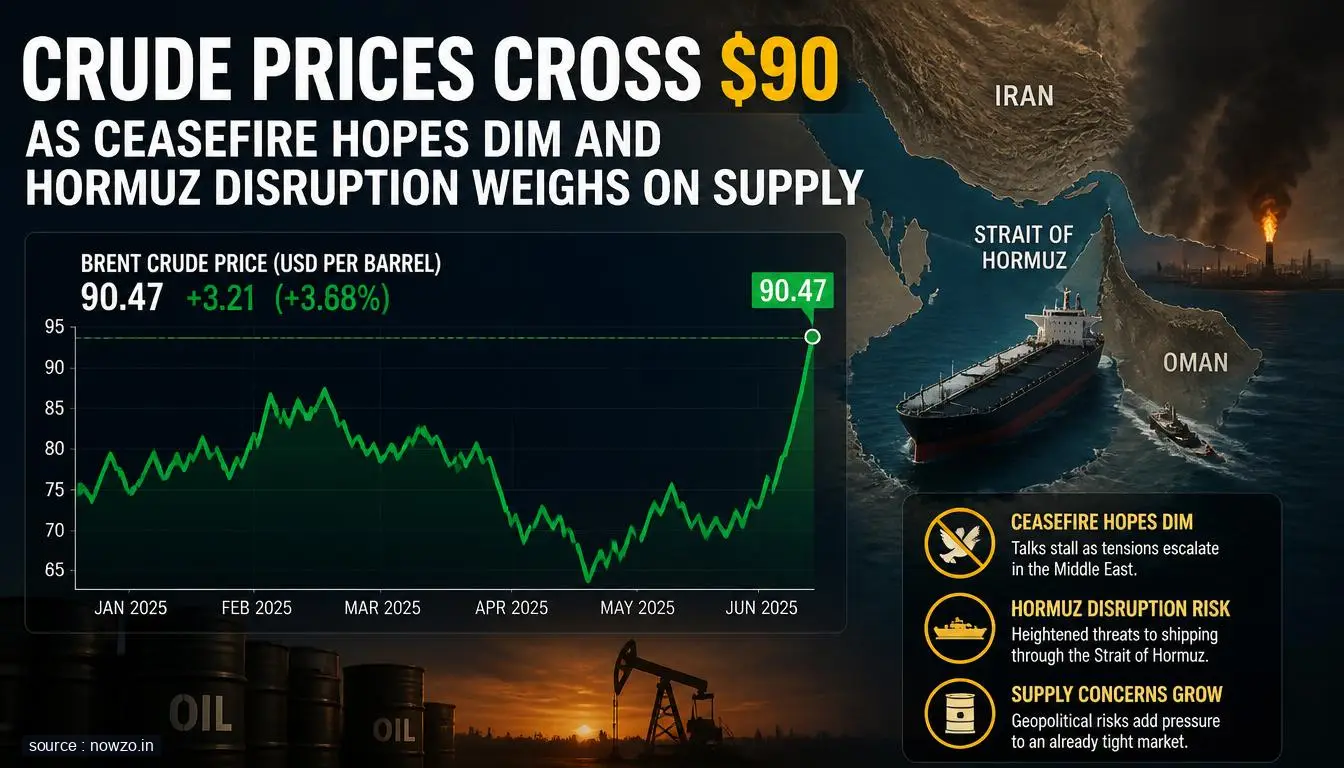
Crude prices climbed past the $90 mark as hopes for a ceasefire weakened and disruption linked to the Strait of Hormuz increased pressure on supply expectations. The rise reflects growing anxiety in global energy markets over geopolitical risk and the possibility of tighter oil flows.
Oil prices move above $90
The latest increase in crude prices came as market sentiment turned more cautious. With ceasefire hopes fading, traders appeared to factor in a higher risk premium for oil, pushing prices above a key psychological level.
The move highlights how quickly energy markets can react when geopolitical tensions threaten supply routes or raise uncertainty about future availability.
Hormuz disruption adds to supply concerns
Disruption around the Strait of Hormuz remained a major concern for the market. The waterway is one of the world’s most closely watched oil transit points, and any threat to movement through the region can immediately affect supply expectations.
As concerns over Hormuz persisted, crude prices gained further support. The market response underscores the strategic importance of the route and the sensitivity of oil prices to any sign of interruption.
Ceasefire uncertainty keeps markets on edge
Dimming hopes for a ceasefire added another layer of pressure. When diplomatic progress appears uncertain, oil markets often respond by pricing in the possibility of prolonged instability.
That uncertainty can sustain upward momentum in crude prices, especially when it coincides with fears of supply disruption in a critical region.
Why the $90 level matters
Crossing $90 is significant because it signals stronger market concern over supply risk. It can also draw attention from governments, businesses, and consumers, since sustained increases in crude prices may feed into broader energy costs.
For now, the combination of fading ceasefire hopes and Hormuz-related disruption has kept oil markets firmly focused on geopolitical developments.
Conclusion
Crude prices rising above $90 show how vulnerable the oil market remains to geopolitical shocks. With ceasefire prospects weakening and supply concerns tied to the Strait of Hormuz still in focus, energy markets are likely to remain highly sensitive to further developments.





Comments