
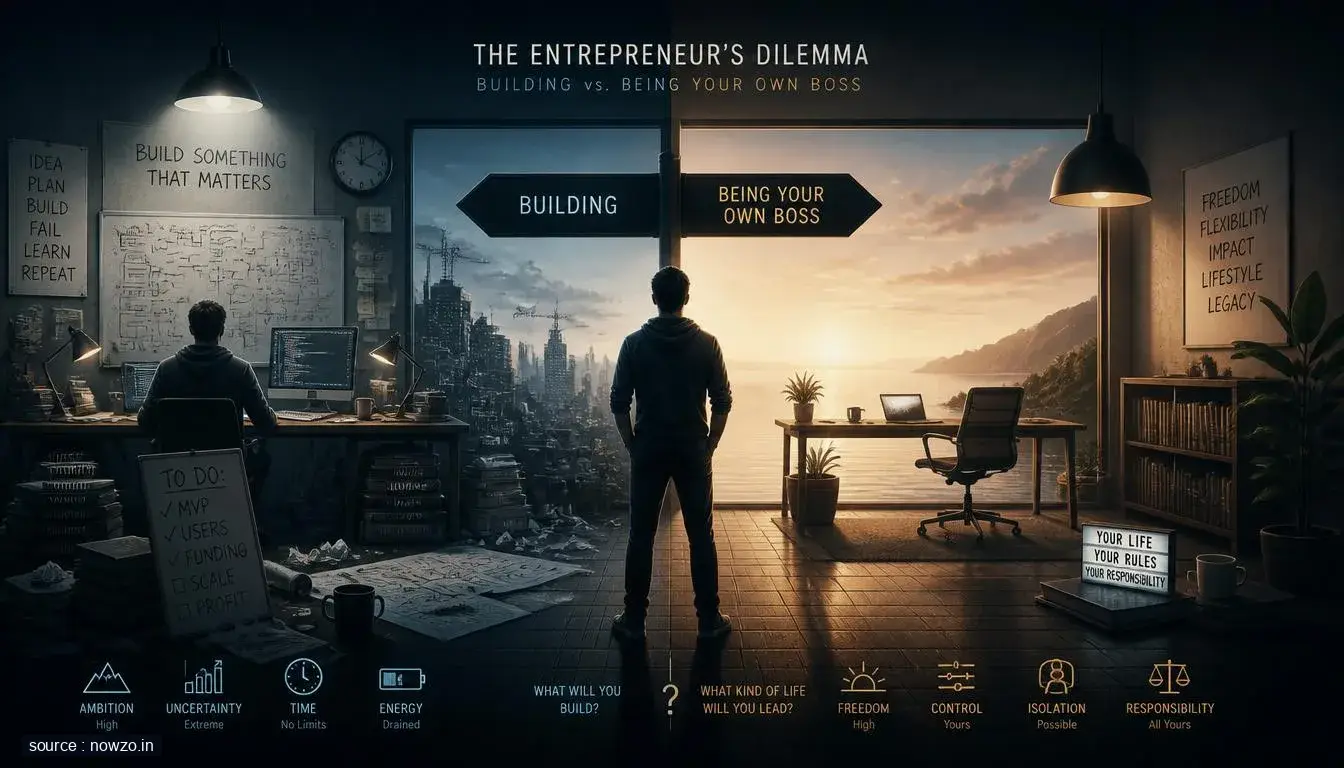
Two Paths to Independence
When people say they want to "be their own boss," they're often picturing freedom from the 9-to-5 grind. But there's a world of difference between that dream and what real entrepreneurship demands. While both paths offer autonomy, they require completely different mindsets, skills, and tolerance for risk.
| Feature | Being Your Own Boss | Entrepreneurship |
|---|---|---|
| Primary Goal | Personal freedom and independence | Building a scalable business |
| Risk Level | Moderate - primarily personal income risk | High - involves capital, team, and market risks |
| Scale Ambition | Limited to personal capacity | Designed for growth beyond the founder |
| Team Building | Optional or minimal staff | Essential for scaling operations |
| Exit Strategy | Typically none - business ends with founder | Often includes eventual sale or IPO |
The Freedom Seeker's Path
Being your own boss often means trading corporate constraints for personal control. You might be a freelancer, consultant, or small shop owner—enjoying the flexibility to set your hours and choose your clients. The upside? Immediate autonomy. The catch? Your income is directly tied to your time and effort. There's little leverage, and the business typically can't run without you.
The Builder's Journey
True entrepreneurship involves creating something that exists beyond yourself. It's about building systems, teams, and processes that can operate independently. The vision extends further—creating value that can be scaled, sold, or passed on. This path demands not just technical skills but leadership, strategic thinking, and the ability to manage complex risks.


Comments