
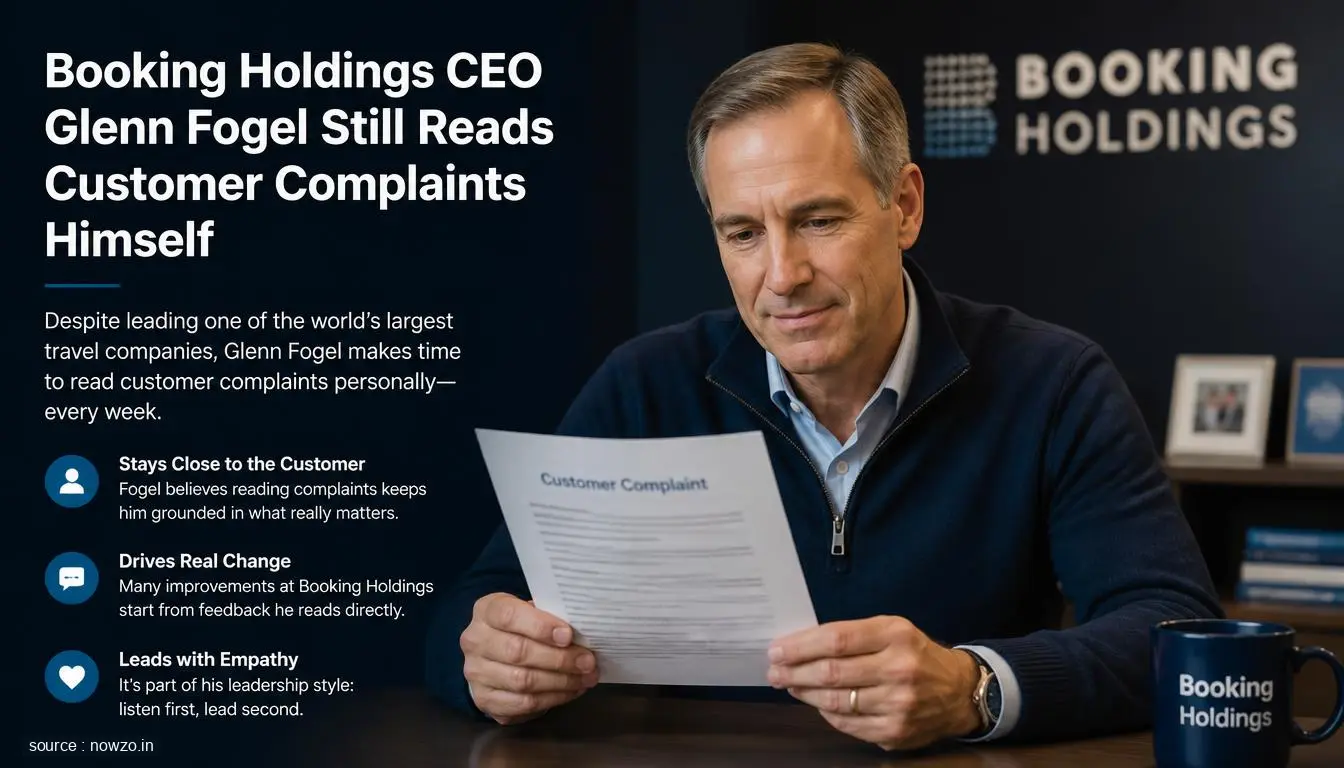
Glenn Fogel oversees the largest online travel business on the planet, yet he still makes time for a task many executives would delegate without hesitation: reading customer complaints himself.
The Booking Holdings chief executive believes staying close to customer feedback is essential to running a company built on service. In his view, no dashboard or executive summary can fully replace hearing directly from travelers when something goes wrong.
A Hands-On Approach at the Top
Fogel's leadership style stands out in an industry where scale often creates distance between decision-makers and customers. As head of the world's largest online travel business, he is responsible for a sprawling operation, but he continues to prioritize direct exposure to customer concerns.
That habit reflects a simple philosophy: if a company wants to earn trust, it has to understand where the experience breaks down. For Fogel, complaints are not just problems to be processed. They are signals that reveal what the business needs to fix.
Why Customer Complaints Still Matter
Fogel has made clear that customer experience remains central to his thinking. His blunt reasoning captures that mindset: "you gotta get that sh*t right."
The comment underscores a broader leadership principle. In online travel, where convenience, reliability, and trust shape consumer choices, even small service failures can have an outsized impact. Reading complaints personally gives Fogel an unfiltered view of how the company is performing.
It also sends a message inside the organization. When the CEO pays close attention to customer issues, service quality becomes more than a departmental metric. It becomes a company-wide priority.
Leadership Rooted in the Customer Experience
Many corporate leaders rely on layers of reporting to understand customer sentiment. Fogel's approach suggests he sees value in staying connected to the raw feedback itself. That kind of direct engagement can help executives spot recurring problems earlier and better understand what customers actually experience.
For a business of Booking Holdings' scale, that perspective is especially notable. The larger a company becomes, the easier it is for leadership to drift away from day-to-day customer realities. Fogel appears determined not to let that happen.
The Takeaway for Business Leaders
Fogel's example offers a straightforward lesson for executives in any consumer-facing industry: growth does not reduce the importance of listening. If anything, it raises the stakes.
By continuing to read customer complaints himself, the Booking Holdings CEO reinforces the idea that strong leadership starts with understanding the customer. In a business built on bookings, trust, and repeat use, that focus remains a competitive advantage.



Comments