
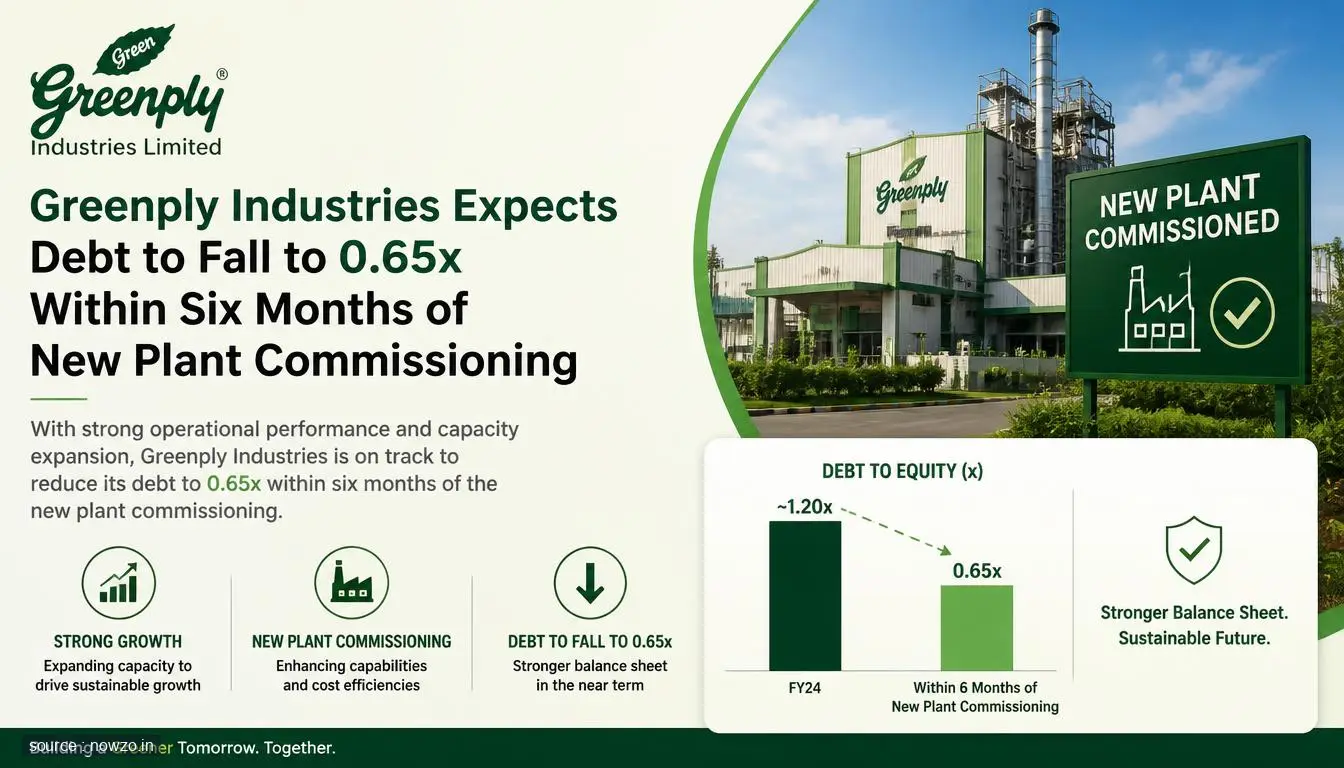
Greenply Industries is signaling a major improvement in its financial position as it prepares for the next phase of growth. According to Sanidhya Mittal of Greenply Industries, the company expects its debt level to come down to 0.65x within six months of commissioning its new plant.
The statement offers a clear look into the company’s expectations around balance sheet discipline and operational expansion. For investors and industry watchers, the key takeaway is that Greenply believes the upcoming facility will begin contributing meaningfully enough to reduce leverage in a relatively short period after it starts operations.
Debt Reduction Target in Focus
The headline projection from Mittal is direct: Greenply’s debt is expected to decline to 0.65x within six months of the plant being commissioned. That timeline suggests the company is banking on a fairly quick transition from project execution to operational contribution.
In manufacturing businesses, new plants often require significant upfront capital expenditure, which can temporarily increase borrowing. Against that backdrop, a stated target of bringing debt down to 0.65x within half a year of commissioning points to management confidence in the plant’s ability to support cash generation and improve financial ratios soon after launch.
While the source statement is brief, the emphasis is clearly on deleveraging. The 0.65x figure stands out as a specific benchmark, giving the market a measurable marker to track once the facility becomes operational.
Why the New Plant Matters
Although detailed operational numbers were not provided in the source, the commissioning of a new plant is typically a major milestone for a wood-panel and interior infrastructure company like Greenply Industries. A fresh facility can expand capacity, improve supply capabilities, and strengthen a company’s ability to serve demand more efficiently.
In this case, the plant is not just an expansion story. It is also tied directly to the company’s financial outlook. Mittal’s comment links the commissioning of the facility to an expected improvement in debt metrics, indicating that the project is central to Greenply’s near-term strategy.
That connection matters because capital-intensive growth often raises questions about leverage, payback periods, and execution risk. By publicly stating that debt should fall to 0.65x within six months of commissioning, the company is effectively framing the plant as a catalyst for stronger financial stability rather than a long-term drag on resources.
Management Confidence and Market Signal
Comments like these are closely watched because they provide insight into how management views the company’s post-expansion financial trajectory. Mittal’s remark suggests confidence that the business will be able to absorb the investment and move quickly toward a healthier leverage position.
For stakeholders, the message is straightforward: Greenply expects the new plant to support a measurable reduction in debt in a defined timeframe. That kind of guidance can shape market perception, especially when investors are evaluating whether expansion plans will translate into stronger earnings and improved balance sheet resilience.
At the same time, the statement remains a forward-looking expectation. The source does not provide additional details on the plant’s capacity, location, investment size, or expected revenue contribution. Even so, the debt target itself is a notable signal of management’s priorities.
What Comes Next
The next major development to watch will be the commissioning of the plant and the company’s financial performance in the months that follow. If Greenply meets its stated goal, the move to 0.65x debt within six months would mark a significant step in strengthening its financial profile after expansion.
For now, Mittal’s comment places the spotlight firmly on execution. The company has set a clear expectation, and the market will likely judge the project’s success not only by operational ramp-up but also by how quickly Greenply delivers on its debt reduction target.




Comments