
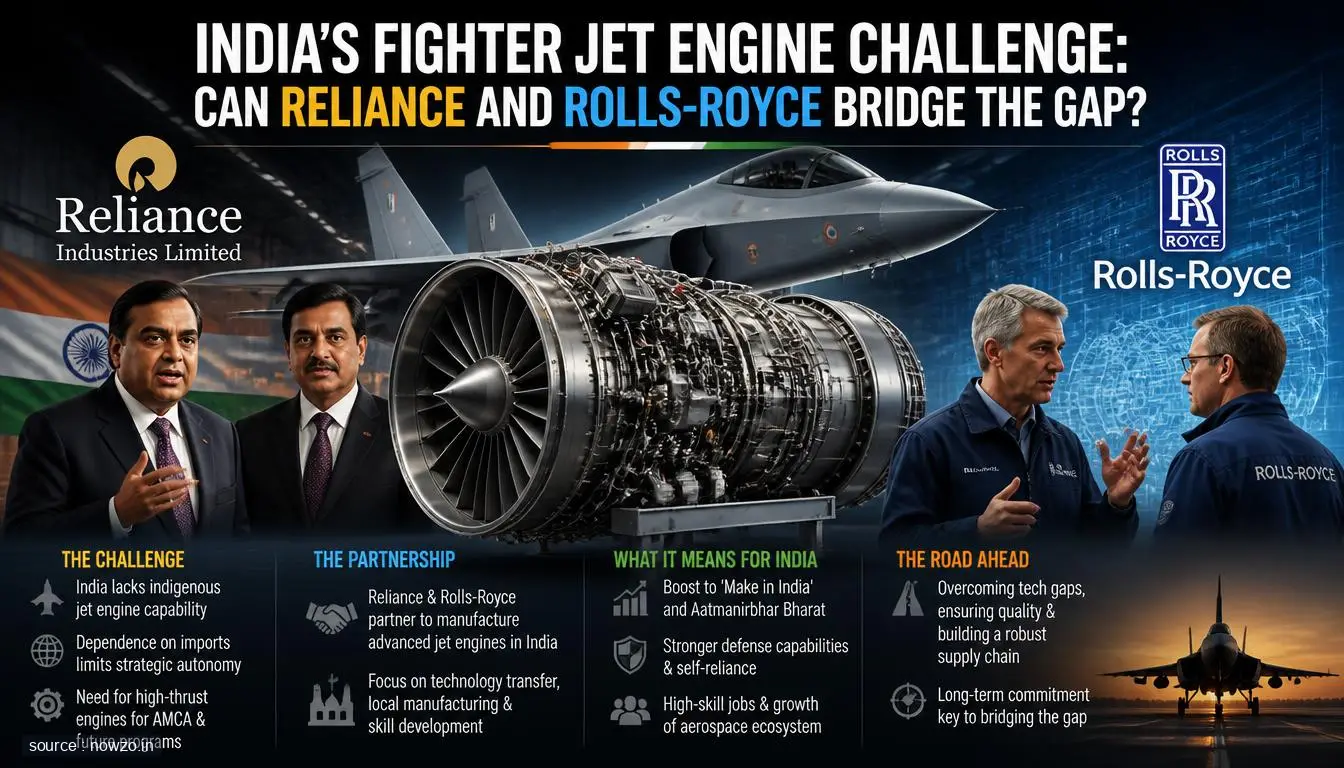
India has achieved remarkable success in designing and manufacturing fighter aircraft, yet a critical vulnerability remains: the nation cannot produce the engines that power these sophisticated machines. This dependency on foreign propulsion systems has long been a strategic concern for India's defense establishment. Now, a partnership between Reliance and Rolls-Royce is emerging as a potential solution to one of the country's most pressing aerospace challenges.
The Engine Dependency Dilemma
India's aerospace industry has demonstrated considerable capability in airframe development and aircraft assembly. The country has successfully produced fighter jets, showcasing technical expertise in aviation manufacturing. However, the powerplant—the heart of any fighter aircraft—continues to be sourced from international suppliers.
This reliance on foreign engines represents more than just a supply chain issue. It affects operational readiness, maintenance schedules, and strategic autonomy. When engines must be imported, India faces potential vulnerabilities related to spare parts availability, technology transfer restrictions, and geopolitical considerations that can impact defense preparedness.
Why Engine Manufacturing Remains Elusive
Developing fighter jet engines is widely considered one of the most complex engineering challenges in aerospace. These powerplants must operate under extreme conditions, generating enormous thrust while withstanding intense heat and stress. The technology requires mastery of advanced metallurgy, precision engineering, and sophisticated cooling systems.
Despite India's progress in various aerospace domains, engine technology has proven particularly difficult to crack. The specialized knowledge, testing infrastructure, and decades of accumulated expertise required for engine development have kept this capability concentrated among a handful of global manufacturers.
The Reliance-Rolls-Royce Partnership
The collaboration between Reliance and Rolls-Royce represents a significant development in India's quest for engine self-sufficiency. Rolls-Royce brings decades of experience in designing and manufacturing some of the world's most advanced military jet engines. The British engineering giant has powered numerous fighter aircraft programs globally.
Reliance, one of India's largest conglomerates, has been expanding its presence in defense and aerospace sectors. The company's manufacturing capabilities, combined with its financial resources and commitment to defense indigenization, make it a potentially strong partner for technology-intensive projects.
This partnership could facilitate technology transfer, skill development, and the establishment of domestic manufacturing capabilities that India needs to reduce its dependence on imported engines.
Strategic Implications for India's Defense Sector
Success in developing indigenous engine capability would mark a transformative moment for India's defense industry. It would complete the country's fighter aircraft ecosystem, allowing for greater control over the entire platform from airframe to powerplant.
Beyond military applications, engine manufacturing expertise has broader implications for India's aerospace sector. The technologies and capabilities developed through such partnerships can potentially benefit civilian aviation and other high-technology industries.
The initiative also aligns with India's broader push for self-reliance in defense manufacturing, reducing vulnerability to supply disruptions and enhancing strategic autonomy in critical defense systems.
Challenges Ahead
While the Reliance-Rolls-Royce partnership offers promise, significant challenges remain. Engine development requires sustained investment over many years, extensive testing infrastructure, and the cultivation of highly specialized engineering talent.
The path from partnership announcement to operational engine production is typically long and complex. Success will depend on effective technology transfer, adequate funding, and the development of a robust supply chain for specialized materials and components.
India's ability to finally bridge the fighter jet engine gap will be closely watched by defense analysts and industry observers. The outcome could reshape the country's aerospace capabilities and reduce a longstanding strategic vulnerability.



Comments