
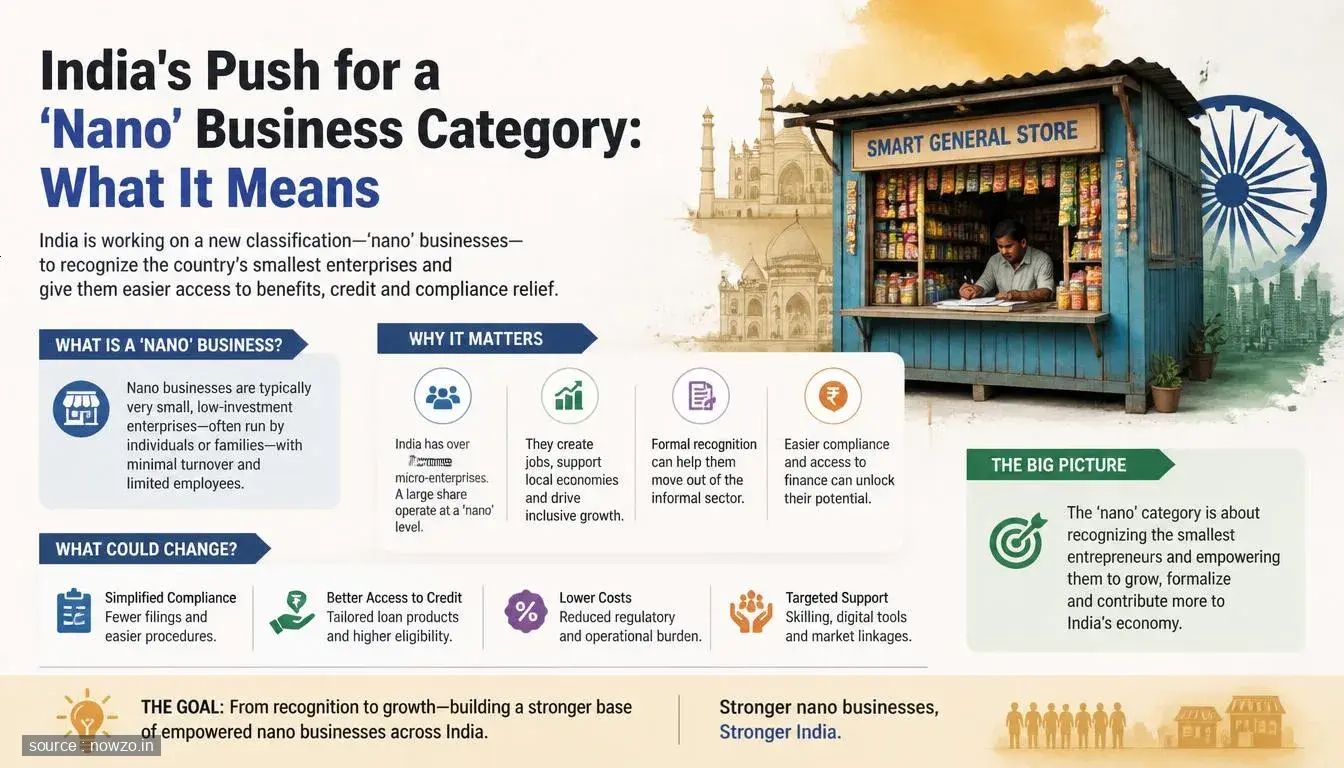
A 'nano' business category refers to a proposed classification for the smallest micro-enterprises in India, typically those with fewer than five employees and minimal capital investment. This new segment would sit below the existing micro, small, and medium enterprise (MSME) framework, aiming to provide hyper-targeted support.
Why This Matters Now
India's economic landscape is dotted with tiny businesses—street vendors, home-based artisans, single-person services—that often operate informally. They face unique hurdles: access to credit, regulatory complexity, and scalability challenges. By creating a 'nano' category, policymakers hope to bring these enterprises into the formal fold, offering them tailored benefits that larger MSMEs might not need.
The push comes from a parliamentary panel recognizing that one-size-fits-all policies don't work for the smallest players. These businesses are the backbone of local economies, yet they struggle to navigate compliance or secure loans. A dedicated category could mean simpler rules, lighter paperwork, and focused financial aid.
How It Would Work
The proposal suggests defining 'nano' enterprises based on employment and investment thresholds, likely lower than those for micro units. Once classified, they could qualify for specific incentives: easier registration processes, priority in government schemes, and access to micro-credit initiatives.
This isn't about creating new bureaucracy but refining existing frameworks. The goal is to ensure that support reaches those who need it most, without drowning them in red tape. For instance, a nano business might benefit from expedited licensing or exemptions from certain filings that are impractical at their scale.
Key takeaway: Recognizing nano businesses formally could unlock growth for millions of tiny enterprises, driving job creation and economic inclusivity.
Potential Impact
If implemented, this category could empower entrepreneurs at the grassroots level. It might encourage formalization, increase tax compliance, and foster innovation among the smallest players. However, success will depend on execution—ensuring that policies are practical, accessible, and genuinely supportive.
The move signals a shift toward more nuanced economic planning, acknowledging that India's business ecosystem is diverse and requires layered solutions.




Comments