
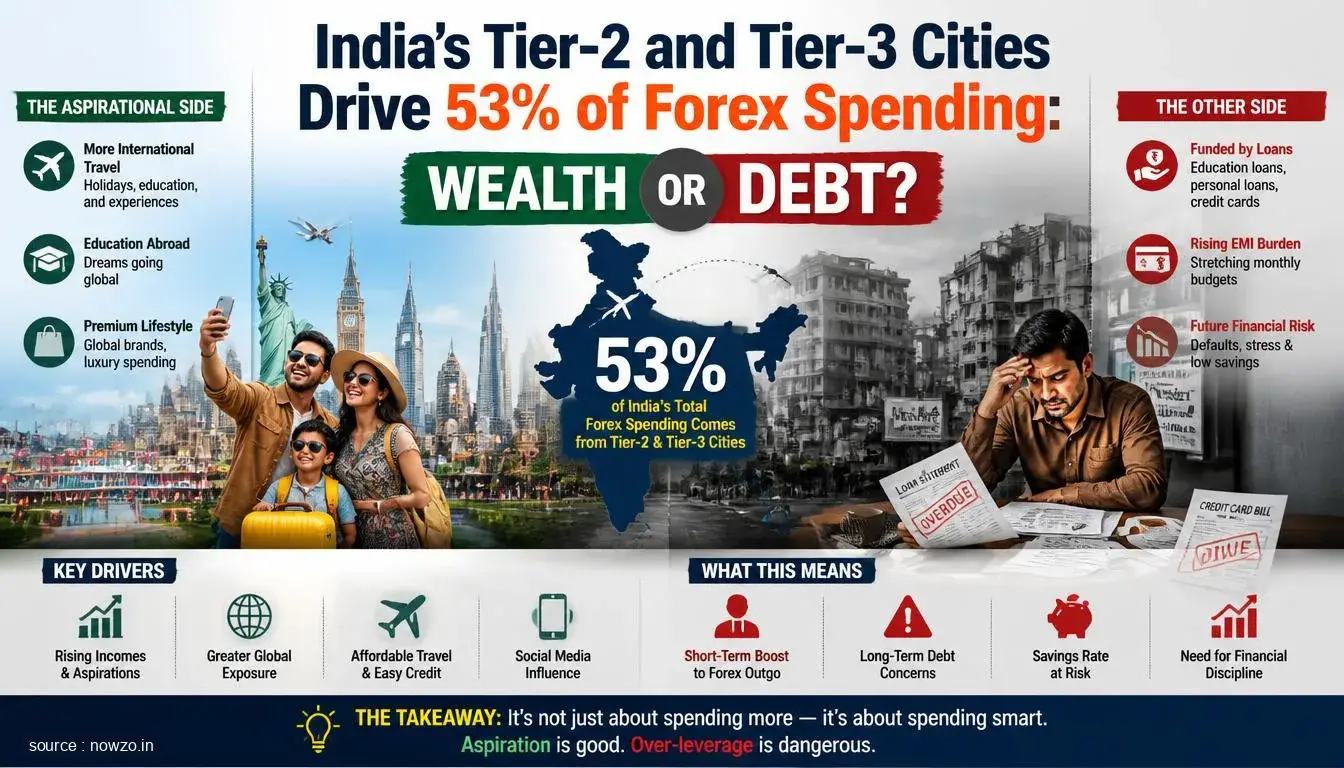
India's Tier-2 and Tier-3 cities have emerged as dominant forces in the country's foreign exchange spending landscape, now controlling 53% of total forex expenditure, according to recent analysis.
Smaller Cities Take Center Stage
The shift marks a significant transformation in India's economic geography, with non-metro cities now accounting for the majority of foreign exchange transactions. This development challenges traditional assumptions about wealth concentration in India's largest metropolitan areas.
Wealth Creation or Credit Expansion?
The surge in forex spending from Tier-2 and Tier-3 cities raises critical questions about the underlying drivers. Analysts are examining whether this trend reflects genuine wealth accumulation in these regions or increased dependence on credit facilities.
The distinction matters significantly for understanding the sustainability of this spending pattern and its implications for India's broader economic health.
Changing Economic Landscape
The data underscores the growing economic importance of India's smaller urban centers, which have traditionally been overshadowed by major metros like Mumbai, Delhi, and Bangalore. This shift could have far-reaching implications for businesses, policymakers, and financial institutions.
As these cities continue to expand their economic footprint, understanding the nature of their forex spending will be crucial for assessing India's economic trajectory and financial stability.




Comments