
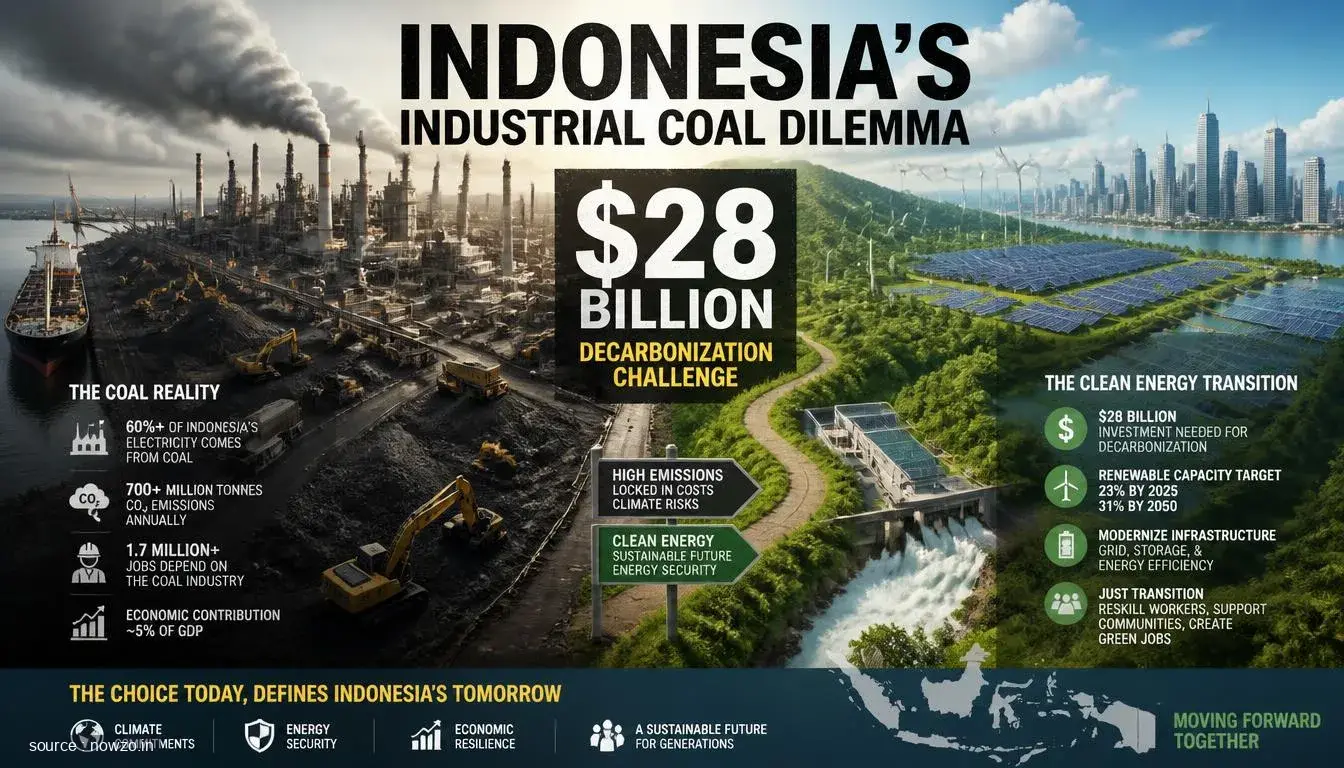
Indonesia's industrial heartland runs on captive coal power—and the bill to clean it up just arrived. A new analysis reveals the staggering $28 billion price tag to decarbonize the country's privately-owned coal plants that fuel everything from metal smelting to manufacturing.
Key facts
- $28 billion required for captive coal decarbonization
- Captive plants power metal, chemical, and manufacturing industries
- Financing strategies include blended finance and carbon credits
The Industrial Backbone
These aren't your typical power plants. Captive coal facilities operate behind the scenes, providing dedicated electricity to industrial complexes that form the backbone of Indonesia's economy. They power the smelters that process nickel, the factories that produce goods, and the chemical plants that supply materials—all while emitting carbon at an alarming rate.
Financing the Transition
The challenge isn't just technical—it's financial. How does a developing nation fund a green transition while maintaining economic momentum? The report suggests creative solutions: blended finance that mixes public and private funds, carbon credit mechanisms that make decarbonization profitable, and targeted investments that prioritize the most critical industrial sectors.
A Delicate Balance
Indonesia walks a tightrope between development and decarbonization. The country's industrial growth has been fueled by affordable coal power, yet climate pressures mount daily. This isn't about shutting down industry—it's about transforming it. The $28 billion question becomes how to keep factories running while cutting emissions, how to maintain jobs while investing in cleaner technology, and how to balance today's economic needs with tomorrow's environmental realities.





Comments