
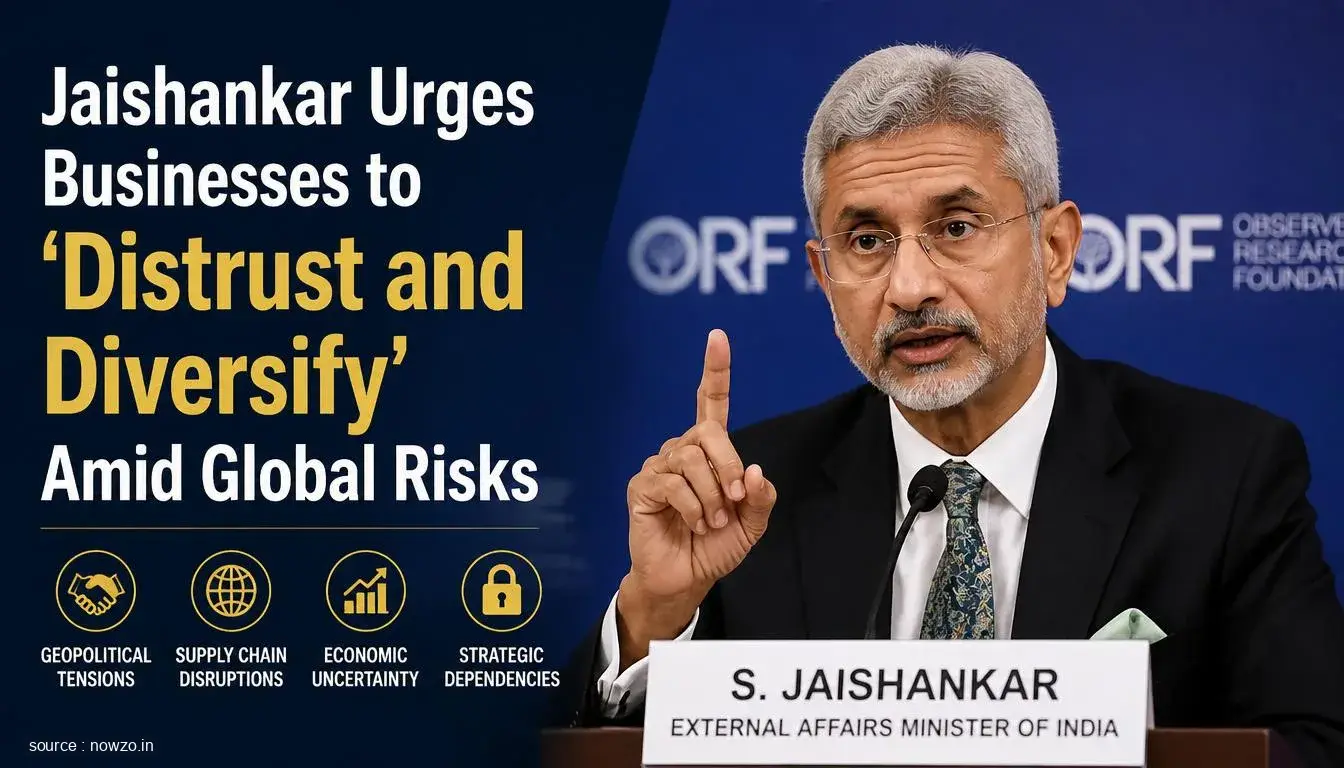
India's External Affairs Minister S. Jaishankar has delivered a stark warning to the business community: in an era of mounting global uncertainties, the old rules no longer apply. His solution? A simple but powerful mantra—"distrust and diversify."
- Key advice: "distrust and diversify" for supply chain resilience
- Context: Global risks reshaping international trade patterns
- Focus: Strategic business adaptation to geopolitical pressures
The New Reality of Global Commerce
Jaishankar's comments come as businesses worldwide grapple with supply chain disruptions that have exposed vulnerabilities in overly concentrated production networks. From pandemic-related shutdowns to geopolitical tensions and trade wars, companies are learning that reliance on single sources or regions carries significant risk.
A Strategic Shift in Thinking
The minister's advice represents a fundamental shift from the efficiency-first mindset that dominated global business for decades. Where companies once sought to streamline operations and minimize costs through concentrated supply chains, Jaishankar now urges a more cautious approach—one that prioritizes resilience over pure optimization.
Navigating an Uncertain Future
This call to action reflects broader concerns about the stability of international trade systems. As geopolitical tensions reshape alliances and trade routes, businesses must develop more flexible, distributed approaches to sourcing and production. The era of assuming stable global supply chains appears to be ending, replaced by a new normal where adaptability and redundancy become critical competitive advantages.



Comments