
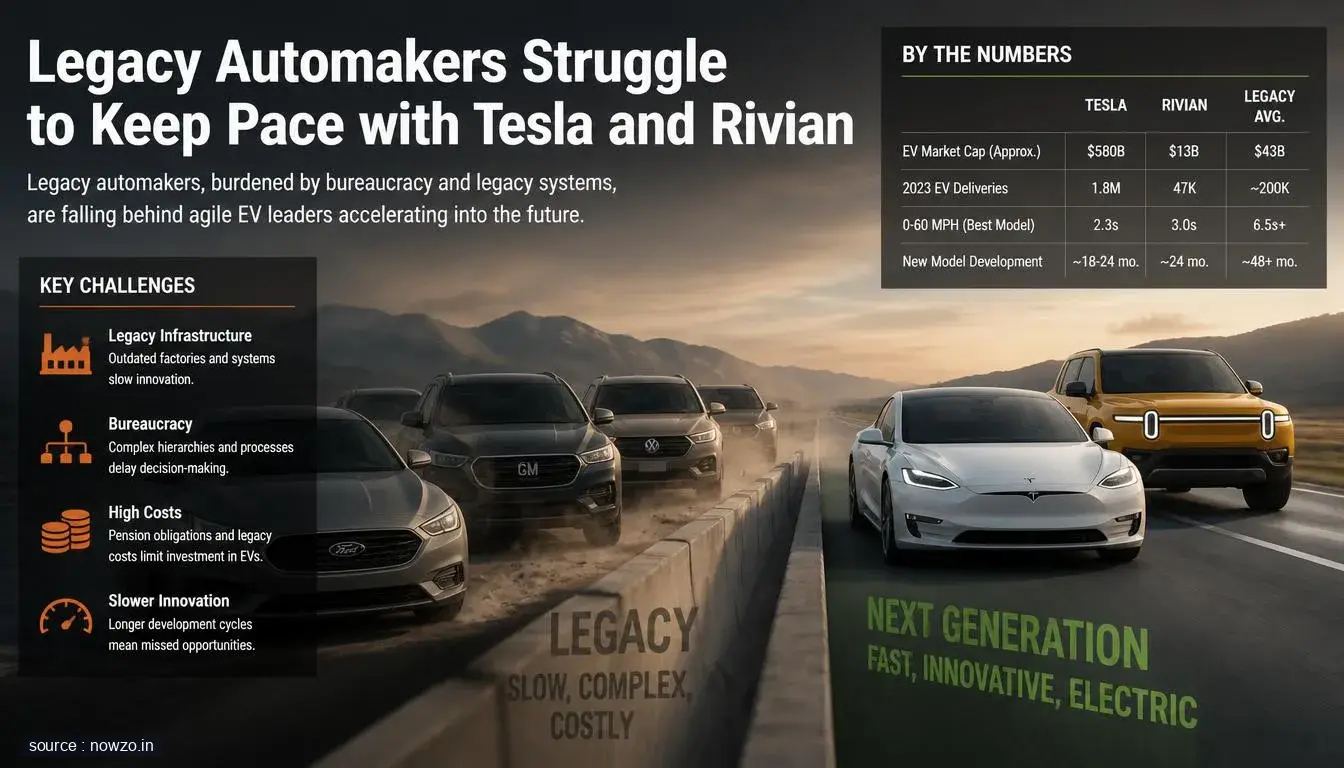
Legacy automakers are investing heavily in technology, but the spending hasn't closed the gap with Tesla, Rivian, and Chinese electric vehicle manufacturers. The disparity raises questions about whether money alone can solve structural disadvantages.
The Spending Paradox
Traditional car companies have committed substantial resources to electrification and software development. Yet these investments haven't translated into market leadership or technological parity with newer competitors.
The challenge extends beyond capital allocation. Legacy manufacturers face organizational hurdles that pure-play EV companies don't encounter.
Structural Disadvantages
Established automakers must balance legacy operations with future technology development. This dual mandate creates complexity that startups like Rivian avoid entirely.
Chinese manufacturers benefit from different market dynamics and regulatory environments. Their domestic ecosystem supports rapid EV development in ways Western markets don't replicate.
The Innovation Gap
Tesla's head start in battery technology and software integration continues to pay dividends. Rivian has carved out a niche in electric trucks and SUVs without legacy baggage.
Chinese EV makers leverage vertical integration and government support to accelerate development cycles. These advantages compound over time, making catch-up increasingly difficult for traditional players.
Looking Forward
The question isn't whether legacy automakers can spend money on technology. It's whether they can transform organizational structures and development processes quickly enough to compete with companies built for the electric era from day one.



Comments