
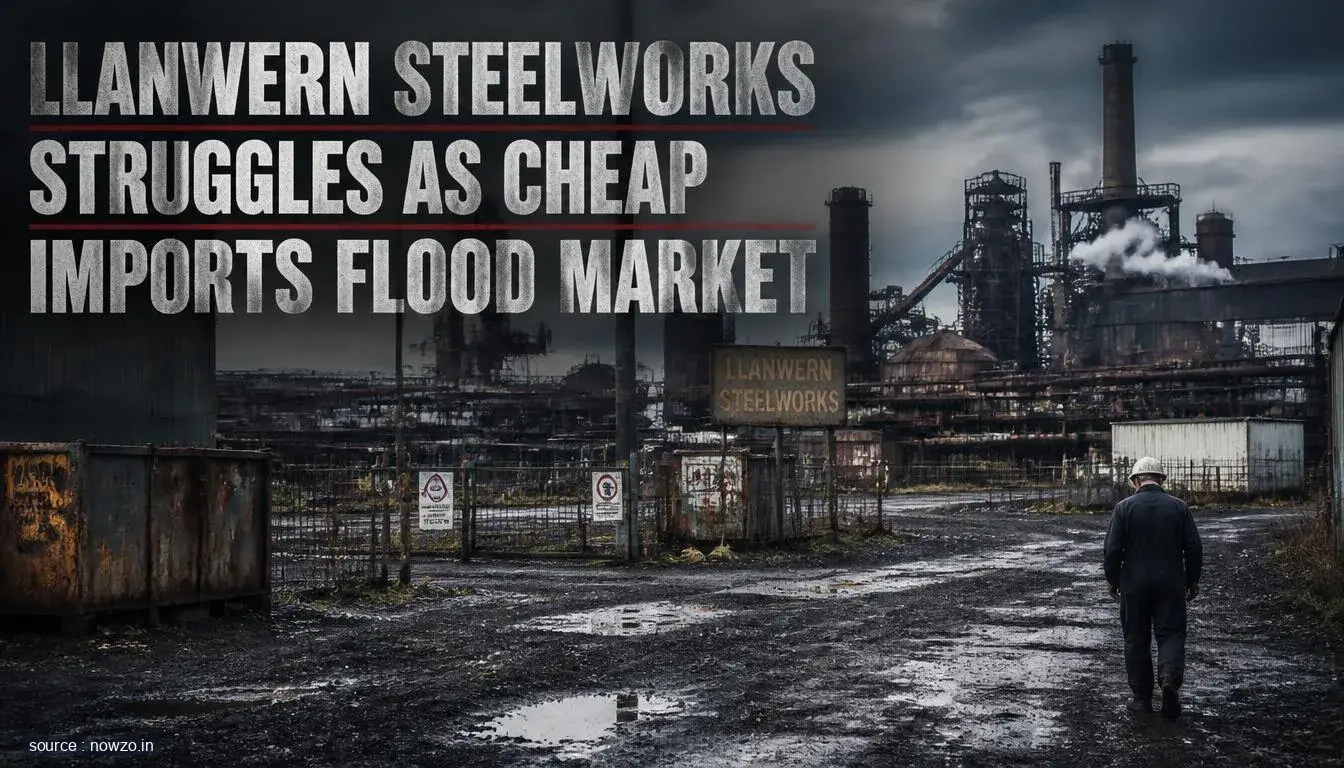
The hum of machinery at Llanwern steelworks carries a new, uneasy rhythm these days. Where once production lines roared at full tilt, they now whisper at half-strength, a stark testament to the pressure bearing down on Britain’s industrial heartland.
Key facts
- The production line at Llanwern is currently running at roughly half capacity.
- The primary cause is an influx of cheap steel imports, undercutting domestic producers.
- The situation has raised significant concerns among workers and union representatives about job security.
- Calls are growing for government intervention to support the UK steel industry.
A Factory Under Pressure
Walking the floor, the change is palpable. The familiar, full-throated bustle has softened. Workers, whose skills have long been the backbone of this community, now watch the lines move slower, a quiet anxiety settling in where confidence once stood. It’s a direct result of steel arriving from overseas, sold at prices that local mills simply cannot match.
The Human Cost of Global Trade
Behind the statistics and market trends are people worried about putting food on the table. The uncertainty is the hardest part. For generations, a job at the plant meant stability; now, that foundation feels shaky. Union voices are growing louder, urging ministers to look past spreadsheets and see the livelihoods on the line.
A Call for a Fair Fight
The core of the frustration isn’t competition—it’s what many see as an unfair fight. The UK industry is grappling with high energy costs and ambitious environmental targets, while some imported steel may not face the same stringent regulations. The plea from the factory floor is not for a handout, but for a level playing field that allows British steel to compete on its quality, not just its price.




Comments