
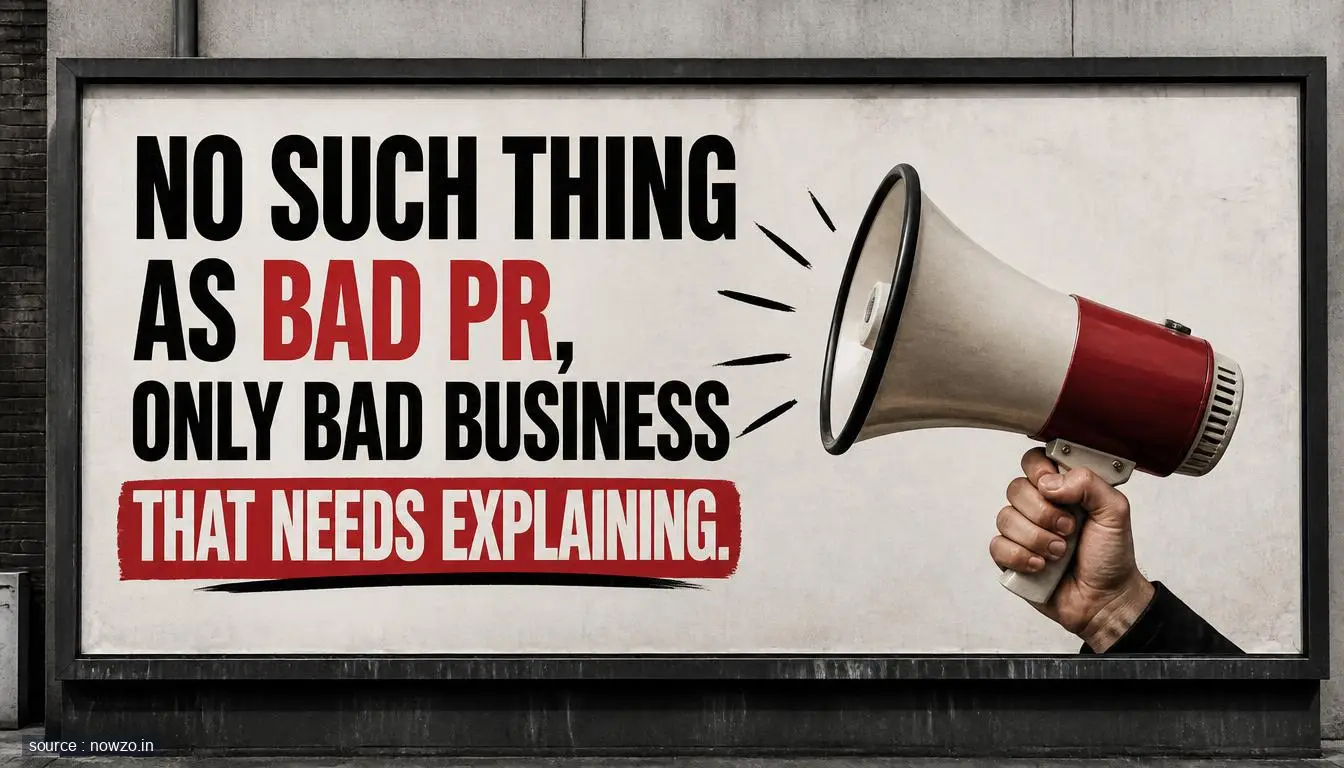
The age-old debate about public relations and its role in shaping business narratives has taken a provocative turn. A bold assertion is making waves in the communications industry: there is no such thing as bad PR, only bad business that PR has to explain.
Challenging Conventional PR Wisdom
The statement cuts to the heart of a long-standing discussion within the marketing and communications world. For decades, the phrase "all publicity is good publicity" has been debated, defended, and dismissed by professionals across industries. This latest perspective reframes the conversation entirely, shifting the blame from public relations efforts to the underlying business practices that generate negative attention in the first place.
The argument suggests that when companies face criticism in the media or public backlash, the root cause is not poor communication strategy but rather fundamental flaws in how the business operates. Public relations, in this view, becomes the messenger rather than the problem.
The Role of PR in Business Accountability
This perspective places significant responsibility on businesses to examine their own practices before pointing fingers at their communications teams. It implies that no amount of skilled PR work can genuinely rescue a company whose actions, products, or services are fundamentally flawed.
Public relations professionals often find themselves in the difficult position of crafting narratives around situations that stem from decisions made at the corporate level. Whether it involves product failures, ethical lapses, or customer service breakdowns, PR teams are frequently tasked with managing fallout they did not create.
Implications for the Communications Industry
The assertion carries meaningful implications for how businesses approach both their operations and their communications strategies. If bad PR is truly a symptom of bad business rather than a standalone problem, companies may need to invest more heavily in getting their fundamentals right before expecting positive media coverage.
This viewpoint also elevates the strategic importance of public relations within organizations. Rather than serving as a cleanup crew for corporate missteps, PR professionals could play a more advisory role, helping leadership understand how business decisions will be perceived by the public before those decisions are implemented.
A Conversation Worth Having
The claim that there is no such thing as bad PR, only bad business that PR has to explain, invites professionals across industries to reconsider the relationship between corporate behavior and public perception. While the debate is unlikely to be settled by a single statement, it underscores the growing recognition that authentic, responsible business practices remain the most effective foundation for any successful communications strategy.





Comments