
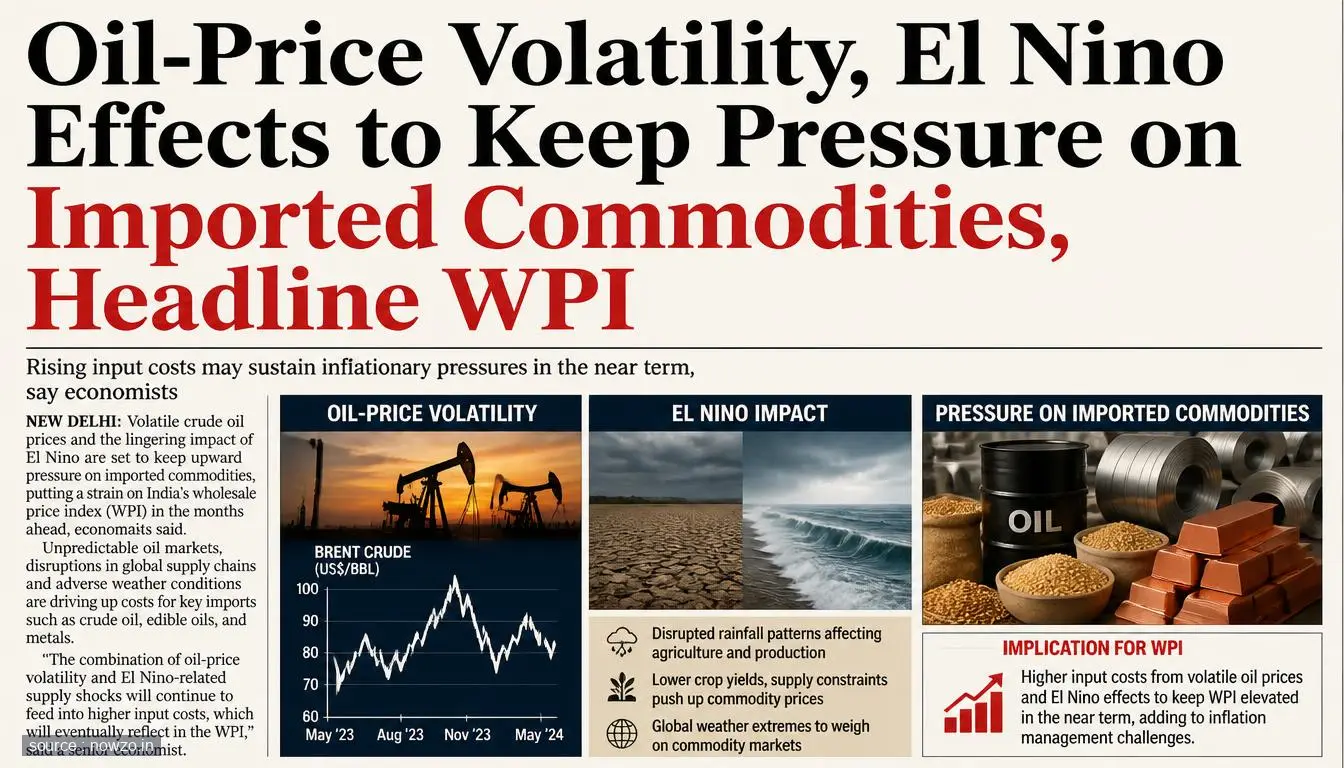
Oil-price volatility and El Nino effects are expected to keep pressure on imported commodities and headline wholesale price index (WPI) inflation, according to the latest economic assessment.
Key Pressure Points Identified
The assessment points to two primary factors that will continue to influence India's wholesale inflation trajectory in the coming period. Fluctuations in global crude oil prices remain a significant concern for imported commodity costs, while El Nino weather patterns pose additional risks to the inflation outlook.
Headline WPI, which measures the change in prices of goods at the wholesale level, is particularly sensitive to these external pressures. The combination of volatile oil markets and climate-related disruptions creates a challenging environment for price stability.
Impact on Imported Commodities
Imported commodities are expected to bear the brunt of these pressures. Oil-price volatility directly affects the cost of petroleum products and other energy-related imports, which form a substantial component of India's import basket.
El Nino effects, known for disrupting weather patterns globally, can impact agricultural commodity prices and supply chains. This climate phenomenon has historically been associated with changes in rainfall patterns and temperature variations that affect crop yields and commodity markets worldwide.
Looking Ahead
The persistence of these factors suggests that wholesale inflation may continue to face upward pressure. Market participants and policymakers will likely monitor both oil price movements and El Nino developments closely as they assess the inflation landscape.
The assessment underscores the interconnected nature of global commodity markets and climate patterns in shaping domestic price dynamics. As these external factors evolve, their impact on imported commodities and headline WPI will remain a key area of focus for economic observers.




Comments