
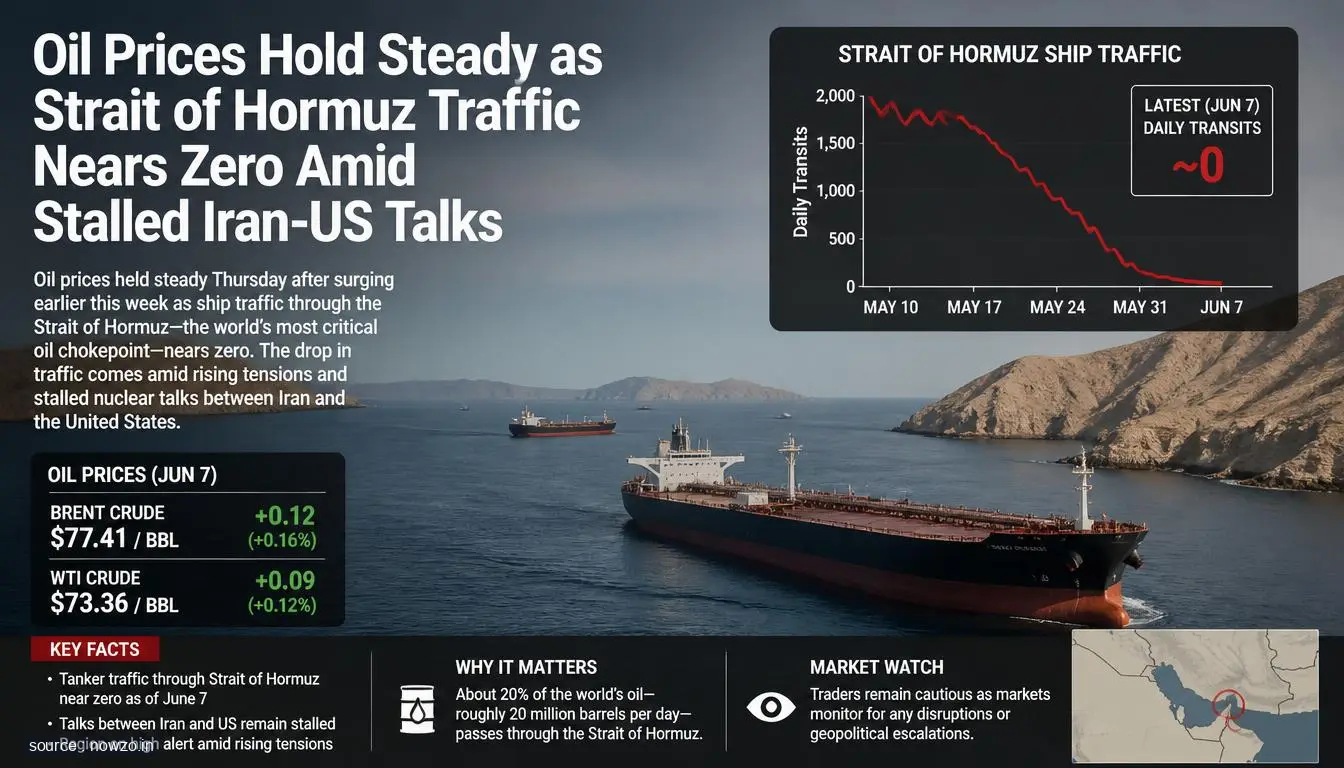
Oil prices are holding steady despite a dramatic slowdown in maritime traffic through the Strait of Hormuz, one of the world's most critical energy chokepoints. Shipping activity through the strategic waterway has dropped to near zero, raising concerns across global energy markets.
The sharp decline in traffic comes as diplomatic negotiations between Iran and the United States over the reopening of the Strait have stalled, leaving the timeline for a resolution uncertain.
Strait of Hormuz Traffic Approaches Zero
The Strait of Hormuz, a narrow passage connecting the Persian Gulf to the open ocean, is one of the most vital arteries for global oil shipments. A significant portion of the world's crude oil supply passes through this waterway on a daily basis, making any disruption a matter of international concern.
Traffic through the Strait has now fallen to near zero, a development that would typically send shockwaves through energy markets. However, oil prices have so far remained relatively stable, suggesting that traders may be weighing the situation carefully or anticipating a potential resolution.
Iran-US Talks on Reopening the Strait Stall
Efforts to restore normal shipping activity through the Strait of Hormuz have hit a roadblock. Talks between Iran and the United States aimed at reopening the waterway have stalled, with no clear indication of when or how negotiations might resume.
The diplomatic impasse adds a layer of uncertainty to an already tense geopolitical landscape in the region. The stalled discussions leave shipping companies, oil producers, and importing nations in a state of limbo as they await clarity on when normal transit through the Strait might resume.
Why the Strait of Hormuz Matters
The Strait of Hormuz is widely regarded as the world's most important oil transit chokepoint. Tankers carrying crude oil and liquefied natural gas from Gulf producers must pass through this narrow channel to reach international markets.
Any prolonged disruption to traffic through the Strait has the potential to significantly impact global energy supplies and, by extension, the broader world economy. The current near-zero traffic situation underscores the severity of the standoff and the urgency of finding a diplomatic solution.
Market Response Remains Muted for Now
Despite the gravity of the situation, oil prices have not experienced the kind of sharp spike that might be expected under such circumstances. The steady pricing suggests that market participants may be factoring in the possibility of a negotiated settlement or are drawing on existing stockpiles and alternative supply routes to manage the shortfall.
However, analysts and market watchers will be closely monitoring developments in the coming days. If the diplomatic stalemate between Iran and the United States continues and traffic through the Strait remains at near-zero levels, upward pressure on oil prices could intensify.
For now, the situation remains fluid, with the global energy market watching closely for any signs of progress in the stalled negotiations or further escalation in the region.




Comments