
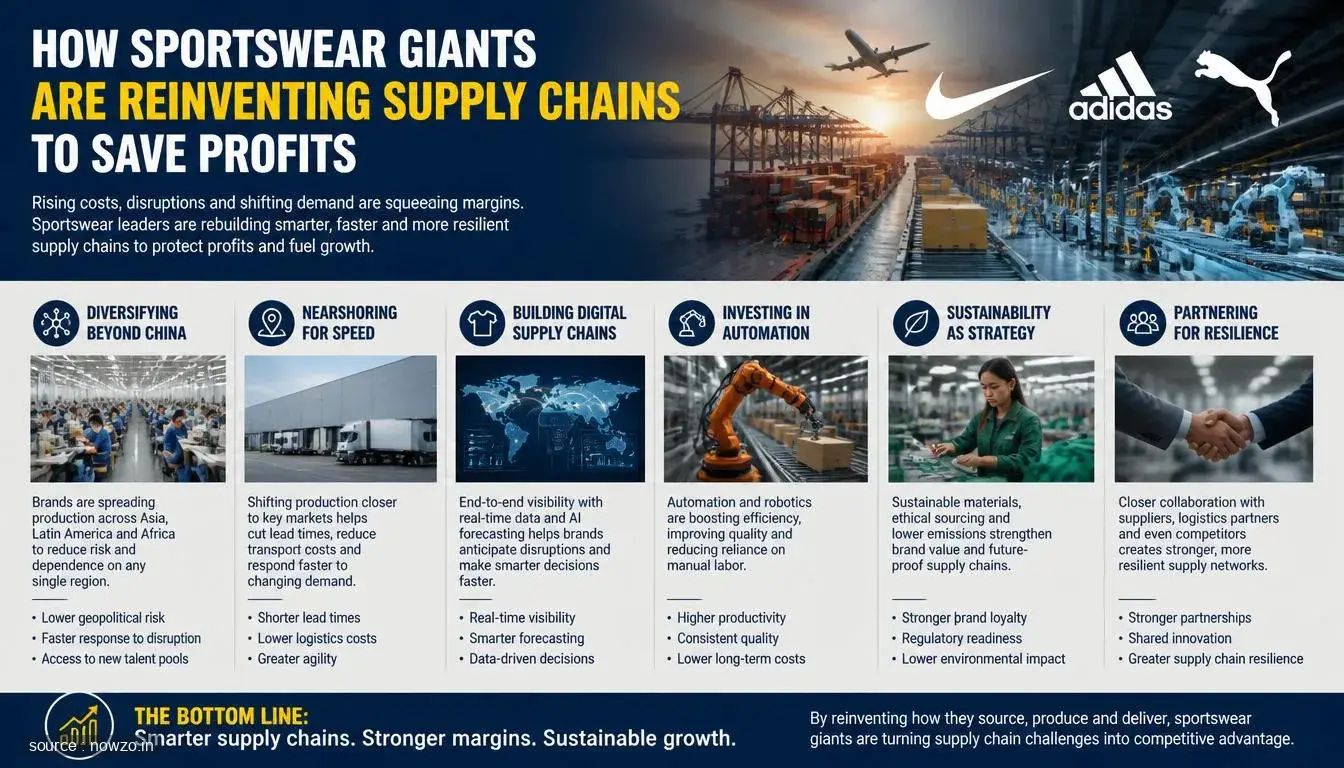
If you’ve bought workout gear lately, you’ve felt it—prices are up, and choices sometimes feel limited. Behind the scenes, sportswear titans are wrestling with a brutal reality: supply chain costs are eating into profits, and something’s got to give.
Nike, Adidas, and others aren’t just raising prices. They’re digging deeper, rethinking how products move from factory to front door. It’s a high-stakes game of efficiency, and every saved day or dollar counts.
The Pressure Points
Rising raw material costs, shipping delays, and labor shortages have pushed operational expenses through the roof. Consumers are feeling the pinch, but brands are feeling the squeeze even more. Margins have tightened, and leadership teams are responding not with panic, but with precision.
How Brands Are Adapting
Many are shortening supply chains, bringing production closer to key markets. Speed matters more than ever. Some are dual-sourcing materials to avoid being caught when one supplier falters. It’s about building resilience into every link.
- Greater control over production timelines
- Reduced dependency on single regions
- Potential for lower shipping costs and faster restocks
- High upfront investment in new logistics networks
- Risk of operational hiccups during transition
- Possible short-term disruptions to product availability
The Road Ahead
This isn’t a temporary fix. Brands that succeed will emerge leaner, more agile, and better insulated against future shocks. For shoppers, it could mean steadier supply—but also persistent pressure on pricing.
Keep an eye on quarterly earnings calls. The brands talking confidently about supply chain overhauls? Those are the ones betting big on coming out stronger.



Comments