
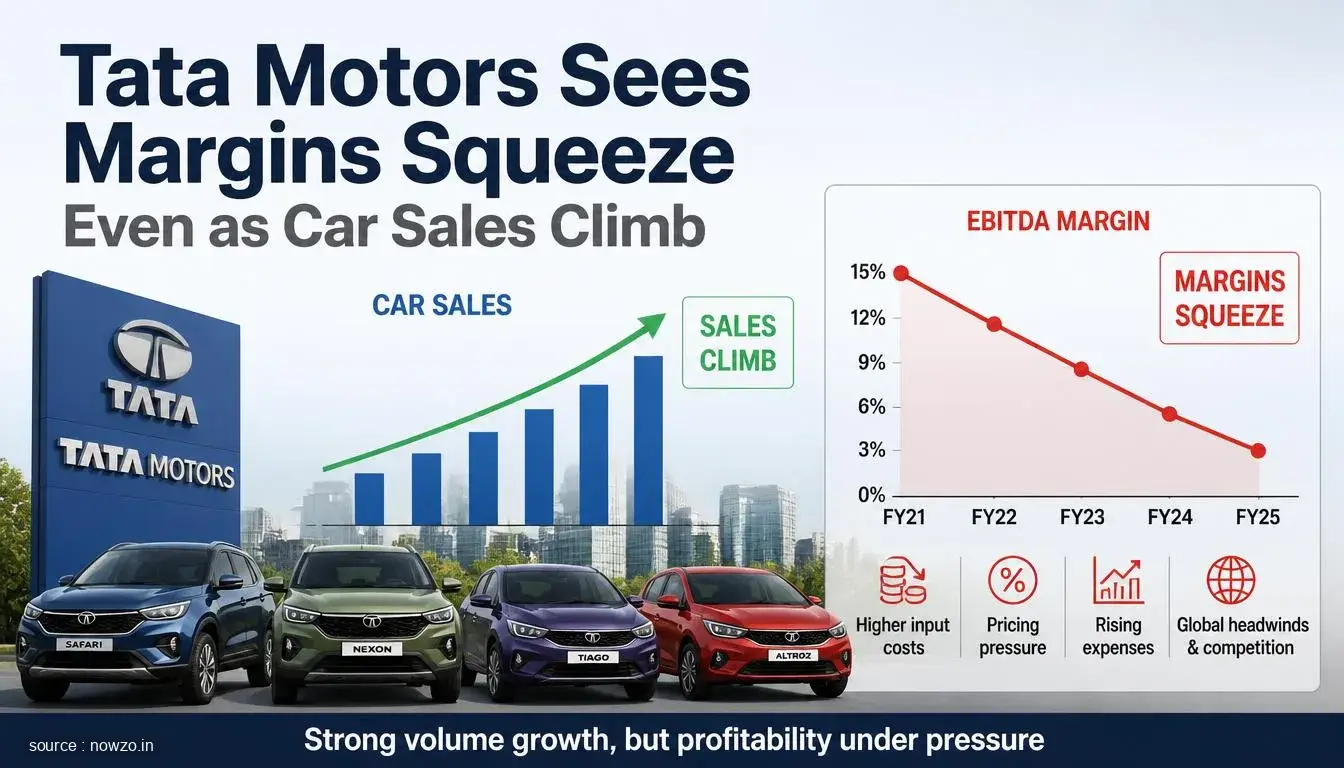
Tata Motors' passenger vehicle division is feeling the pinch. Despite moving more metal off the lot, profitability took a hit in the first quarter of FY27, signaling that higher sales don't always translate to fatter margins.
Key facts
- Tata Motors passenger vehicles reported Q1FY27 results
- Sales volumes increased year-over-year
- Operating margins came under pressure
- Cost inflation and competitive pricing impacted profitability
Volume Gains Mask Underlying Strain
The numbers tell a story of contradiction. While showroom traffic converted into higher unit sales, the bottom line tells another tale entirely. Market watchers noticed the squeeze almost immediately - that uncomfortable gap between ringing up sales and actually banking profits.
Margin Pressure Becomes the Headline
Here's where it gets interesting. The auto giant is navigating what many manufacturers fear most: selling more but earning less per vehicle. Input costs haven't eased, and consumers remain price-sensitive, forcing Tata to balance volume ambitions against margin reality.
Industry-Wide Challenges Persist
Tata isn't alone in this tightrope walk. The entire auto sector faces similar headwinds - raw material volatility, supply chain uncertainties, and fierce competition that keeps pricing aggressive. When everyone's fighting for market share, profitability often becomes the casualty.
The quarter demonstrates that in today's auto market, success isn't just about how many vehicles you sell, but how much you actually keep from each transaction.




Comments