
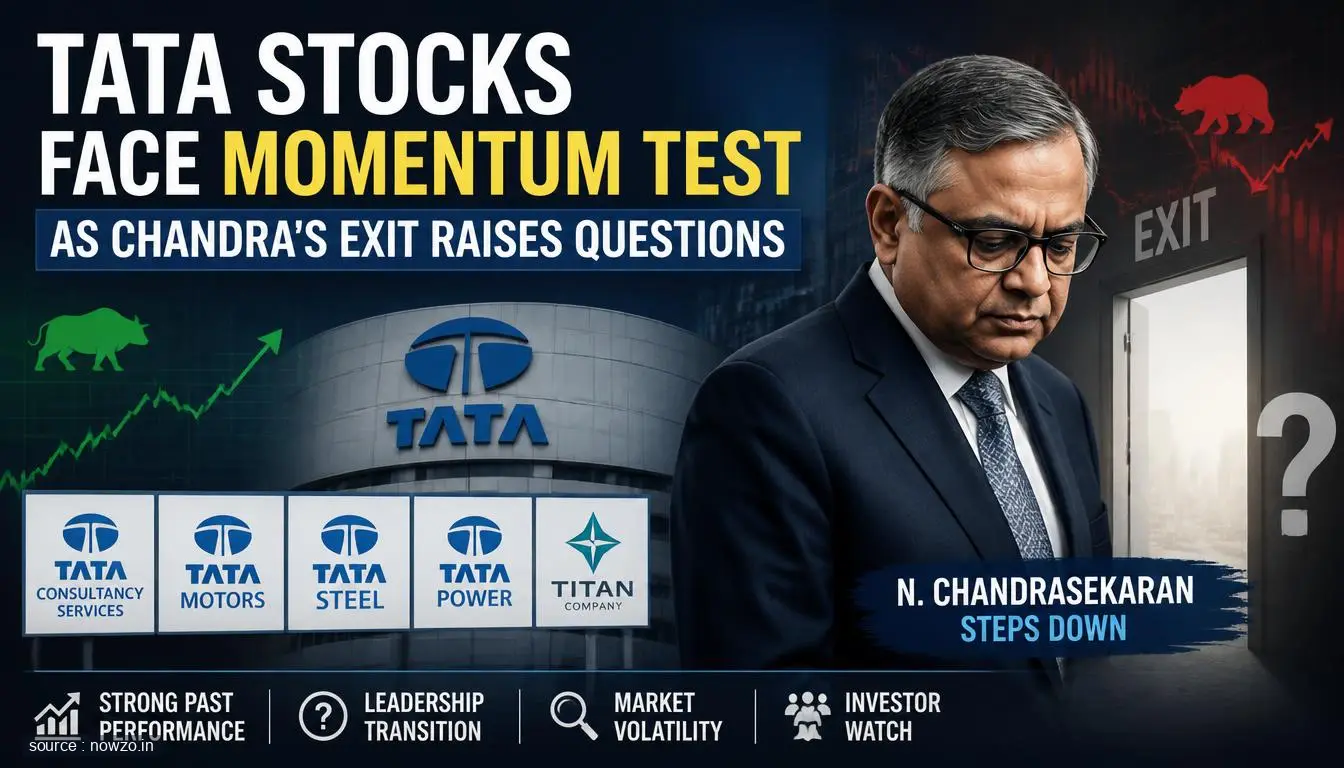
Tata Group stocks are navigating a period of subdued momentum as investors process the implications of N. Chandrasekaran's departure from the conglomerate's leadership. The transition has prompted market participants to reassess their positions across the group's various listed entities, searching for potential value amid the uncertainty.
Leadership Transition Sparks Market Reassessment
The exit of Chandrasekaran, who has been a prominent figure in steering the Tata Group's strategic direction, marks a significant moment for one of India's largest business conglomerates. His departure has coincided with a period of lackluster performance across several Tata stocks, raising questions about near-term momentum and investor sentiment.
Market observers note that leadership changes at major conglomerates often trigger portfolio rebalancing as institutional and retail investors alike evaluate the potential impact on business strategy, operational continuity, and growth trajectories. The Tata Group, with its diverse holdings spanning technology, automotive, steel, consumer goods, and financial services, presents a complex landscape for such assessments.
Searching for Value in a Weak Momentum Environment
Despite the current weakness in momentum, analysts suggest that periods of transition and market uncertainty can create opportunities for value-conscious investors. The key lies in identifying which Tata Group companies may be oversold relative to their fundamental strengths and long-term prospects.
Different segments of the Tata empire face varying dynamics. Technology services companies within the group continue to navigate global demand fluctuations, while automotive and consumer businesses respond to domestic consumption patterns. Steel and infrastructure-related entities remain sensitive to commodity cycles and capital expenditure trends.
Investors are advised to look beyond short-term momentum indicators and focus on company-specific fundamentals, including balance sheet strength, competitive positioning, and management quality. The conglomerate's long history and established market positions across multiple sectors provide a foundation that extends beyond individual leadership tenures.
Strategic Considerations for Portfolio Positioning
Financial advisors suggest that investors with exposure to Tata stocks should consider their investment horizon and risk tolerance when evaluating their positions. Long-term investors may view current weakness as an accumulation opportunity, while those with shorter timeframes might adopt a more cautious stance until clearer momentum emerges.
The broader market context also plays a role in shaping Tata stock performance. Macroeconomic factors, sector-specific trends, and overall market sentiment toward large-cap Indian equities all influence how these stocks trade relative to their intrinsic value.
As the market continues to digest the leadership transition, attention will likely focus on any strategic announcements, operational updates, or guidance provided by the group's various companies. These developments could serve as catalysts for renewed momentum or further consolidation, depending on their nature and market reception.
For now, the Tata Group's diverse portfolio offers multiple entry points for investors with varying risk appetites and sector preferences. The challenge lies in separating temporary sentiment-driven weakness from genuine fundamental concerns, a task that requires careful analysis and a clear understanding of each company's business model and growth drivers.




Comments