
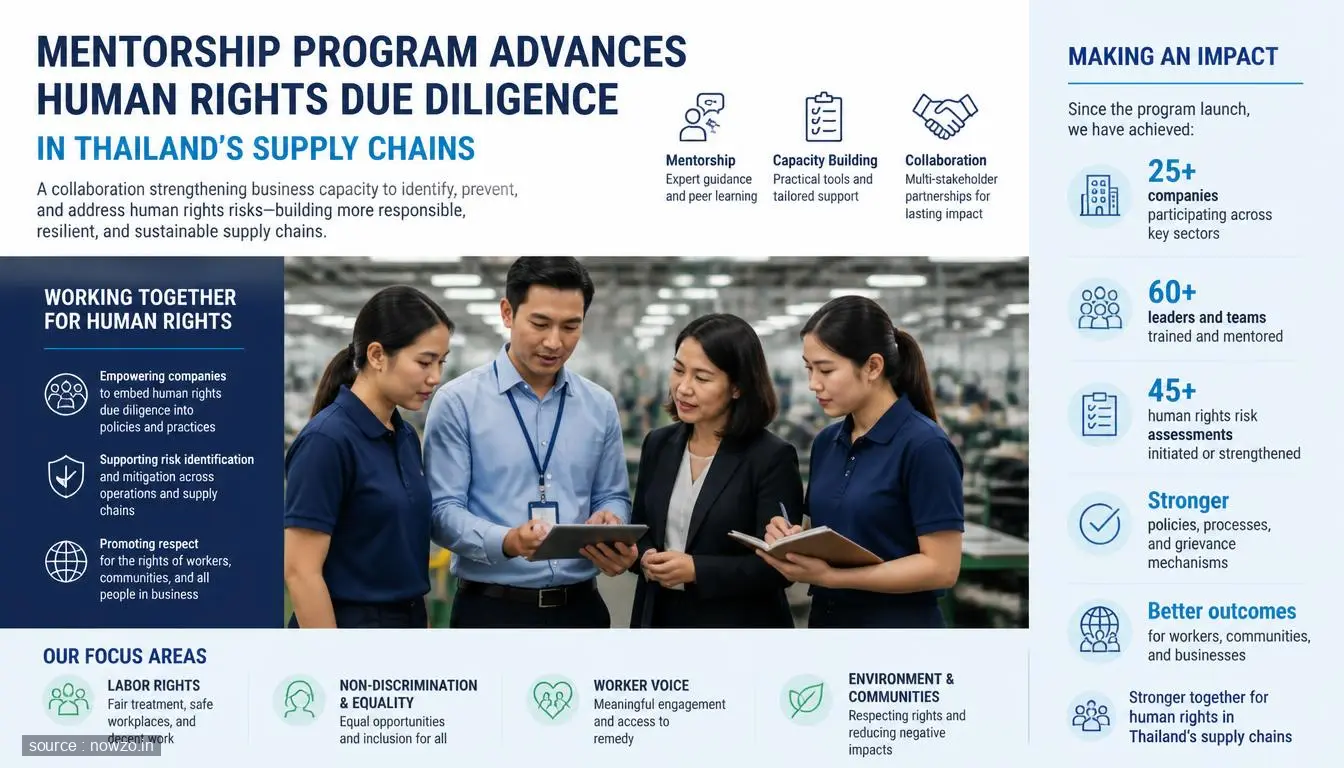
Businesses in Thailand’s automotive and electronics sectors are receiving new support to strengthen human rights practices across their supply chains through a mentorship initiative focused on due diligence. The effort is designed to help companies better identify, prevent, and address human rights risks linked to their operations and supplier networks.
The program comes at a time when global manufacturers face growing pressure to ensure that supply chains are transparent, ethical, and aligned with international standards. In Thailand, where automotive and electronics production play a major role in the economy, the need for stronger corporate responsibility systems has become increasingly important.
Supporting responsible business practices
The mentorship initiative focuses on helping companies build practical knowledge around human rights due diligence. This includes understanding how to assess risks, engage with suppliers, and develop internal processes that can reduce harm to workers and communities.
By offering guidance and structured support, the program aims to move companies beyond policy statements and toward concrete action. Businesses are encouraged to examine how their sourcing decisions and supplier relationships may affect labor conditions, workplace safety, and broader human rights outcomes.
Focus on automotive and electronics sectors
Thailand’s automotive and electronics industries are deeply connected to regional and global supply chains. These sectors often involve multiple tiers of suppliers, making oversight more complex and increasing the importance of consistent due diligence systems.
The mentorship effort targets these industries because of their economic significance and the potential human rights risks that can arise in manufacturing and sourcing. Through closer engagement, participating companies can improve their ability to detect problems early and respond more effectively.
Building stronger supply chain accountability
Human rights due diligence is increasingly viewed as a core part of sustainable business operations. Companies are expected not only to comply with local laws but also to meet rising expectations from international buyers, investors, and civil society organizations.
Mentorship can play a practical role in this process by helping businesses translate broad principles into day-to-day management practices. For many companies, especially those navigating complex supplier networks, expert guidance can make it easier to establish systems for monitoring, reporting, and remediation.
A step toward more ethical production
The initiative reflects a broader shift toward responsible production in Southeast Asia’s manufacturing hubs. As scrutiny of labor standards and corporate accountability continues to grow, programs that support human rights due diligence are becoming more relevant for companies seeking long-term resilience and credibility.
For Thailand’s automotive and electronics sectors, the mentorship program represents an opportunity to strengthen safeguards for workers while improving supply chain governance. By helping businesses adopt more robust due diligence practices, the initiative contributes to wider efforts to promote ethical and sustainable industrial growth.

Comments