
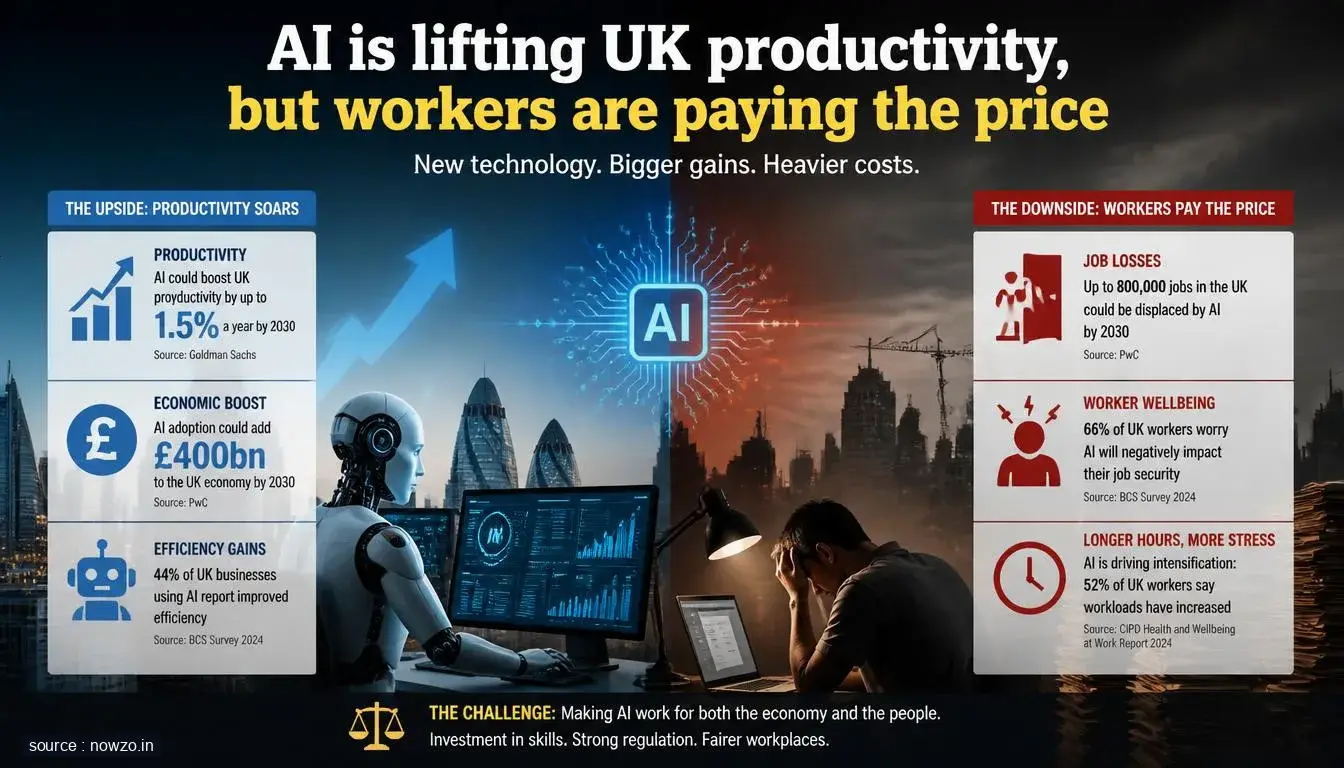
The artificial intelligence revolution is delivering on its productivity promise in the UK—but there's a growing unease about who's actually paying the price. While businesses celebrate efficiency gains and output improvements, workers are increasingly finding themselves caught between technological progress and personal stability.
Key facts
- UK productivity is rising due to AI implementation
- Workers report increased pressure and job insecurity
- Business efficiency gains come with human costs
The productivity paradox
Across British industries, AI tools are streamlining operations and boosting output. Companies that have integrated artificial intelligence report measurable gains in efficiency and capacity. The numbers don't lie—the technology works.
But behind these encouraging metrics lies a more complicated story. The very systems designed to enhance performance are creating new pressures in the workplace. Employees describe feeling constantly measured, optimized, and ultimately replaceable.
The human cost of efficiency
Workers aren't just imagining the strain. Reports indicate that AI-driven monitoring and performance systems are contributing to heightened stress levels across sectors. The technology that promises to make work easier is also making it more intense.
Job security concerns are mounting as well. As AI systems become capable of handling increasingly complex tasks, many employees wonder about their long-term place in the workforce. The anxiety is palpable in offices, factories, and workspaces nationwide.
Looking ahead
The UK's experience with AI reflects a global pattern—technological advancement that delivers economic benefits while creating social challenges. How businesses and policymakers respond to these worker concerns will shape the next chapter of the AI revolution.
For now, the tension remains: productivity gains on one side, human costs on the other. Finding balance between these competing realities may prove to be the ultimate test of our technological age.



Comments