
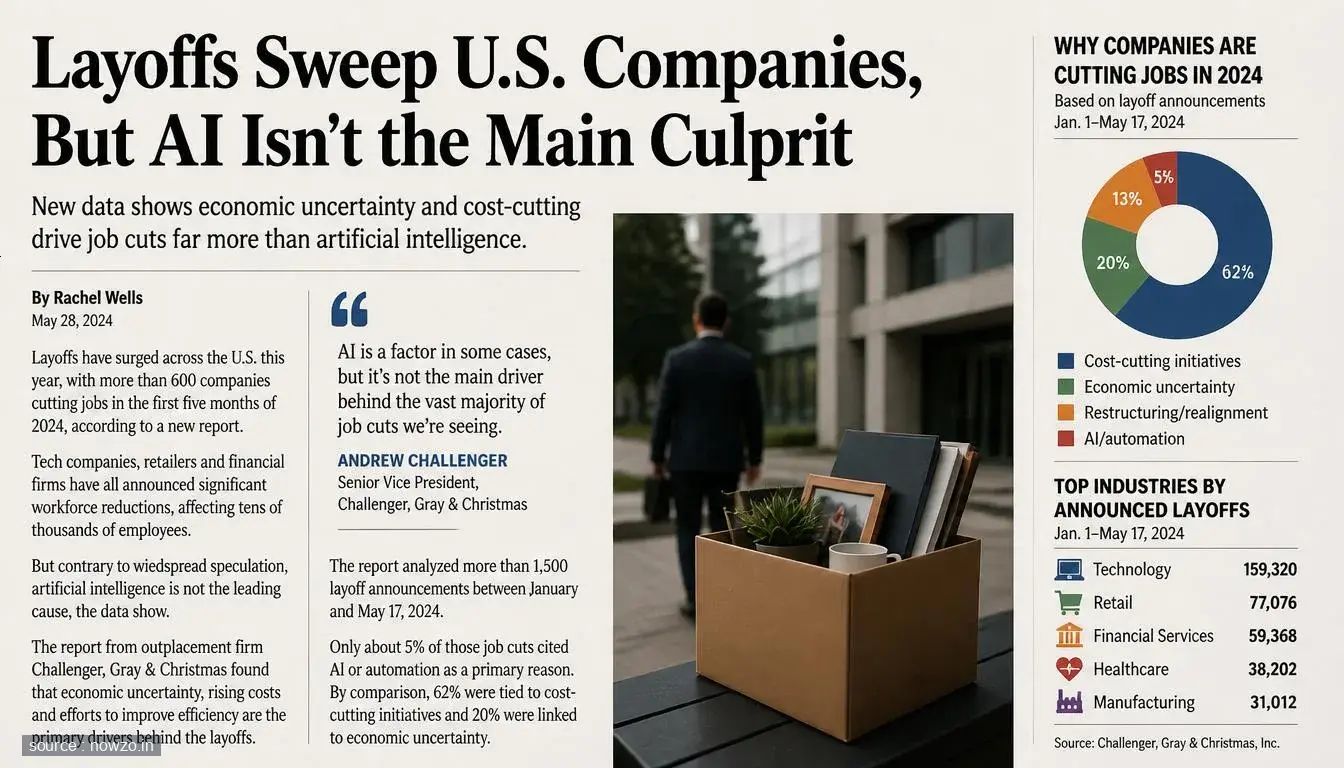
Across corporate America, a wave of layoffs is rolling through offices and factories—but if you're looking for a villain, don't point solely at artificial intelligence. Internal memos and statements from companies making cuts tell a more nuanced story: while automation plays a role, it's far from the headline act.
Key facts
- Layoffs are occurring widely across U.S. companies.
- Internal communications rarely cite AI as the primary reason.
- Economic pressures and restructuring are more common explanations.
Behind the Headlines
When pink slips are handed out, the narrative often defaults to machines replacing humans. But dig into the memos sent to staff, and a different pattern emerges. Companies are quick to acknowledge challenging markets, shifting consumer demands, or the need to streamline operations. AI might be in the room, but it's seldom holding the knife.
A Measured Response
This isn't to say technology isn't changing the workforce—it absolutely is. Roles are evolving, and some tasks are being automated. Yet the current round of job cuts appears rooted in classic business cycles: cost-cutting, pivoting strategies, or preparing for economic uncertainty. The dialogue inside organizations remains focused on adaptability rather than obsolescence.
What Comes Next?
For now, employees and observers are watching closely. The reasons given for layoffs matter—they shape morale, public perception, and even policy debates. If companies continue to highlight restructuring over automation, it may signal a broader trend: that human capital is still seen as vital, even in an age of smart machines.




Comments