
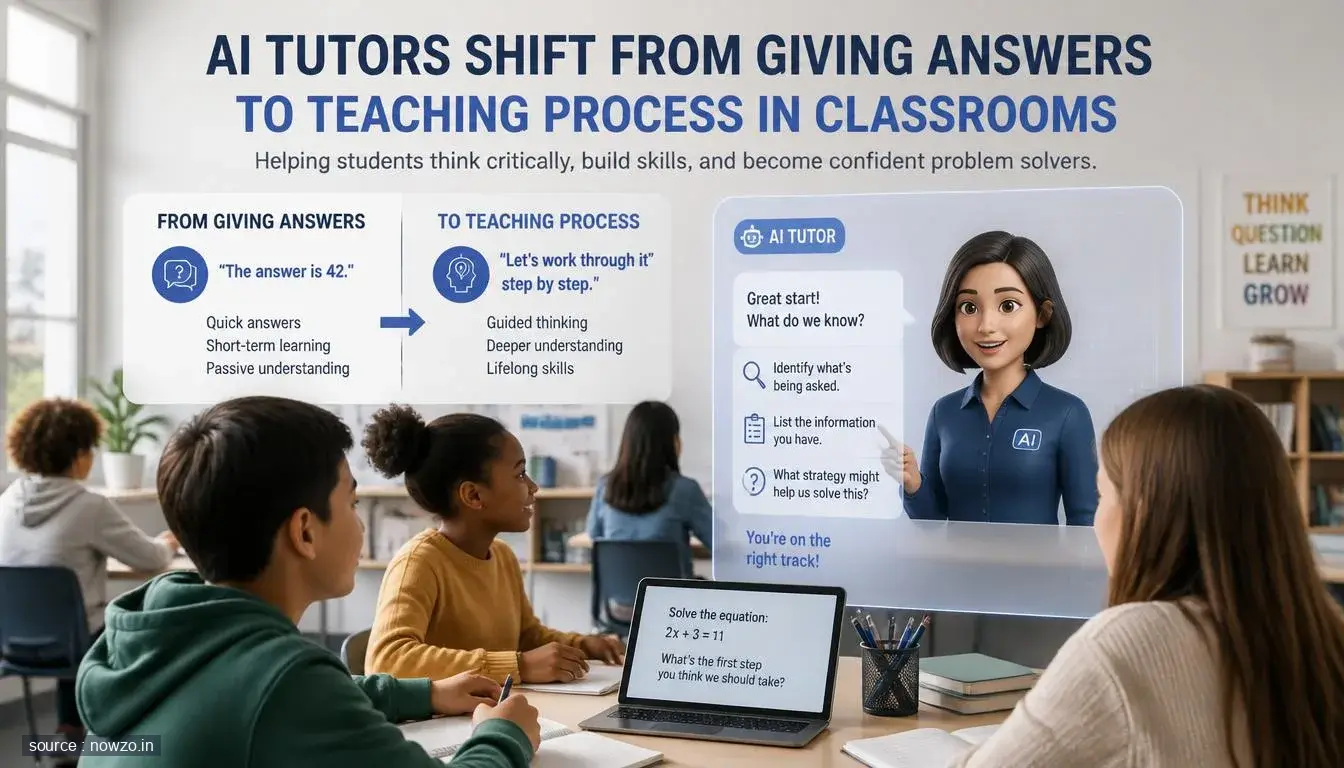
Artificial intelligence in education is undergoing a fundamental transformation, moving beyond simple question-answering systems toward tools that actually teach students how to think. The shift is so significant that K-12 school districts are now writing this capability directly into their purchasing specifications.
Key facts
- AI tutoring is transitioning from "answer engines" to "process engines"
- K-12 buyers are incorporating this requirement into technology specifications
- The change represents a maturation of educational AI technology
From Answers to Understanding
For years, AI tutoring systems primarily functioned as digital encyclopedias—quickly providing correct answers but offering little guidance on how to arrive at those solutions. Educators noticed students were getting answers without grasping the underlying concepts or problem-solving techniques.
Now, a new generation of AI tutors focuses on the learning journey itself. These systems guide students through reasoning processes, ask probing questions, and provide scaffolding that helps develop critical thinking skills rather than just delivering solutions.
Changing Procurement Standards
The most telling sign of this shift comes from the purchasing side. School districts and educational technology buyers are actively rewriting their request for proposals and technology specifications to require process-oriented AI capabilities.
This isn't just a preference among innovative teachers—it's becoming standardized in procurement documents. Districts want AI that can explain its reasoning, demonstrate multiple approaches to problems, and adapt to individual student learning styles throughout the problem-solving process.
Implications for Learning
This evolution represents a significant step toward AI systems that truly complement human teaching rather than simply automating information delivery. Process-focused AI tutors could help address one of education's persistent challenges: teaching students how to think, not what to think.
As these systems become more sophisticated, they may eventually provide personalized learning pathways that adapt in real-time to student misunderstandings, offering alternative explanations and approaches when a student struggles with a particular concept.

Comments