
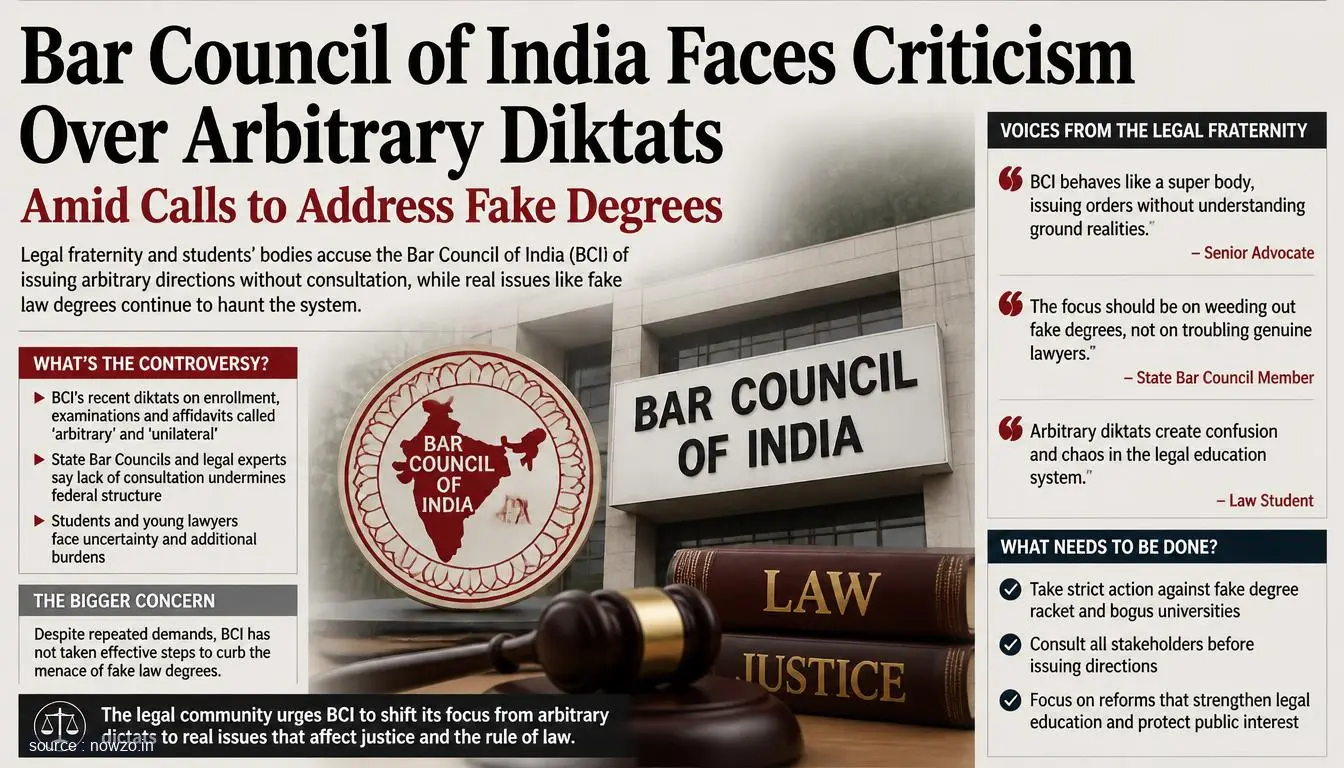
The Bar Council of India (BCI) has come under scrutiny for its recent issuance of arbitrary diktats, sparking a debate about the regulatory body's priorities and effectiveness. According to ThePrint, there are growing calls for the BCI to shift its focus towards addressing more pressing issues within the legal profession, such as fake degrees and professional misconduct.
Background on the Bar Council of India
The Bar Council of India is a statutory body established under the Advocates Act, 1961, responsible for regulating the legal profession and legal education in India. Its primary functions include setting standards for legal education, recognizing law degrees, and disciplining advocates for professional misconduct.
Criticism Over Arbitrary Diktats
ThePrint reports that the BCI has been criticized for issuing arbitrary diktats, which some argue are beyond its mandate. These diktats have raised concerns among legal professionals and educators, who believe that the BCI should concentrate on more critical issues affecting the legal profession.
Calls to Address Fake Degrees and Misconduct
One of the primary concerns highlighted is the prevalence of fake degrees in the legal profession. ThePrint emphasizes the need for the BCI to take stringent measures to verify the authenticity of law degrees and take action against those holding fake qualifications. Additionally, there are calls for the BCI to address professional misconduct more effectively, ensuring that advocates adhere to the highest ethical standards.
The Way Forward
In light of these criticisms, it is essential for the Bar Council of India to reassess its priorities and focus on its core regulatory responsibilities. By addressing issues such as fake degrees and professional misconduct, the BCI can enhance the credibility and integrity of the legal profession in India. ThePrint's report serves as a reminder of the importance of effective regulation and the need for the BCI to act in the best interests of the legal community.






Comments