
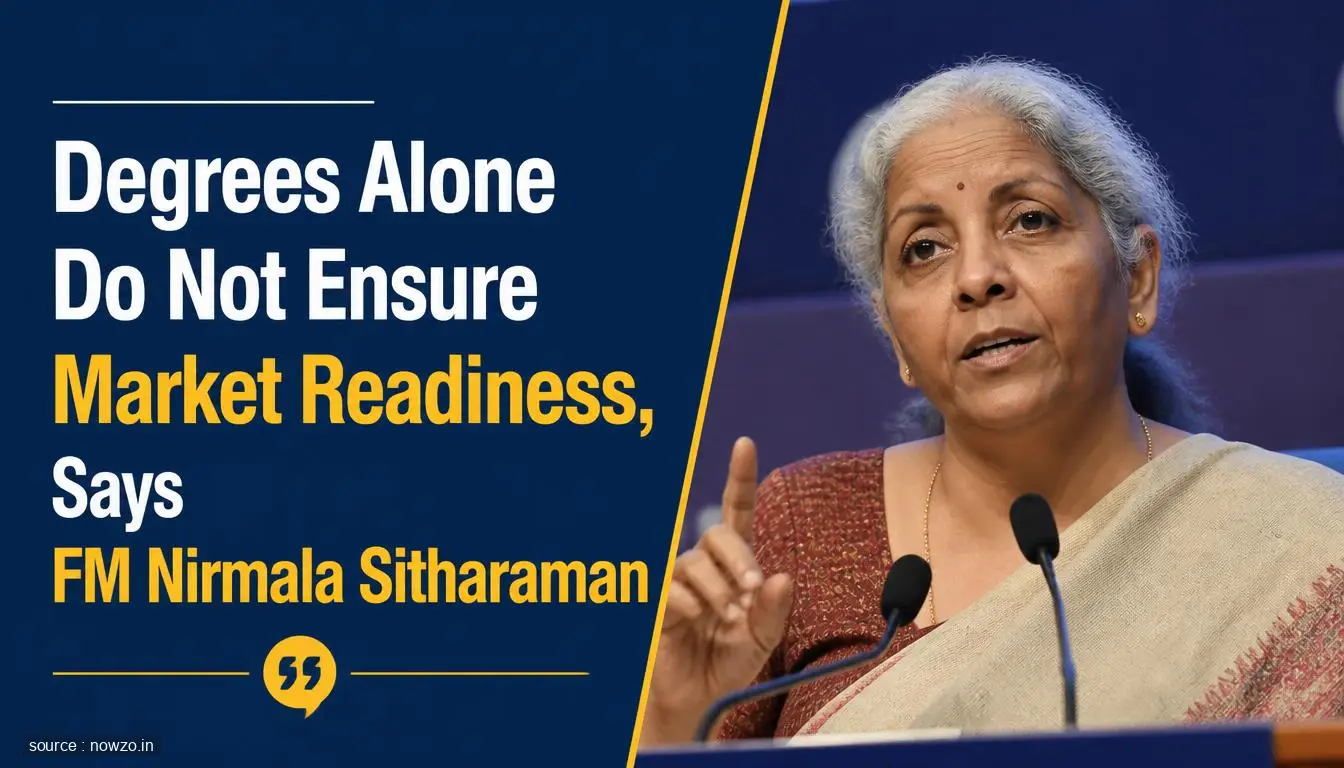
Union Finance Minister Nirmala Sitharaman has called for substantial changes in how higher education aligns with practical employment demands, emphasizing that acquiring a conventional academic qualification is no longer sufficient to guarantee market readiness.
Addressing the Employability Gap
Highlighting the disconnect between traditional classroom instruction and dynamic workplace expectations, Sitharaman stated,
"Mere degree doesn’t prepare for market, that’s the fix we need."
Her remarks point to a growing recognition among policymakers that academic credentials must be accompanied by practical skills, professional readiness, and alignment with modern industry requirements to help graduates transition smoothly into the workforce.
Navigating Youth Employment and State Responses
The broader discourse surrounding youth employability and the challenges entry-level jobseekers encounter has prompted wide-ranging discussions across administration and governance levels. Key state leadership and chief ministers have increasingly focused on addressing youth concerns, ranging from direct job creation initiatives to supportive examination coaching frameworks.
At the same time, educational administrators and experts have underscored the complexity of structural admissions and student pathways. Commenting on the broader education landscape, former education secretary R Subrahmanyam previously noted that institutions cannot simply allocate seats based solely on test ranks, highlighting the necessity for multifaceted approaches to higher education access and workforce preparation.
Refocusing on Practical Skills
As discussions around education reform and youth employment intensify, the emphasis is increasingly shifting toward systemic fixes that ensure students are not just degree holders, but truly equipped to meet the evolving demands of the job market.




Comments