
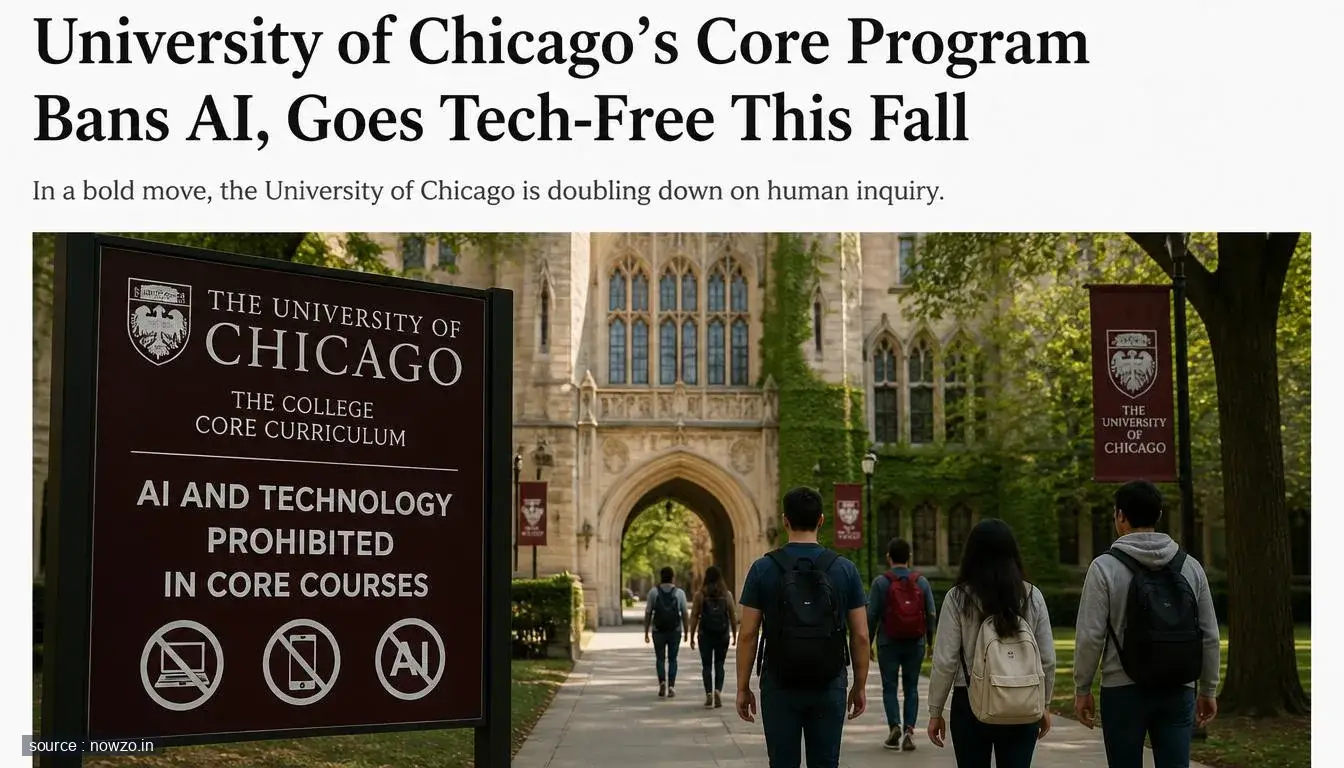
The hallowed halls of the University of Chicago are about to get quieter—digitally speaking. This fall, students in the prestigious Social Sciences Core program will trade screens for notebooks and AI for human intellect as the department implements a sweeping ban on technology in classrooms.
Key facts
- Complete ban on AI tools in Sosc Core program
- Technology-free classroom policy
- Implementation begins Fall 2024
- Policy applies to University of Chicago's Core curriculum
A Return to Analog Learning
The move represents a dramatic departure from the tech-integrated approaches many universities have embraced. Instead of laptops humming and screens glowing, classrooms will feature the scratch of pens on paper and the focused silence of undivided attention. It's a conscious step back from the digital saturation that defines modern education.
Philosophical Underpinnings
This isn't merely a technical adjustment—it's an educational statement. The Sosc Core program, known for its rigorous engagement with fundamental texts and ideas, appears to be making a case for undistracted, deeply human intellectual engagement. The policy suggests that true learning requires presence, not just connectivity.
Implementation Challenges
Students accustomed to digital note-taking and research tools will need to adapt quickly. The transition may prove challenging for those who've never experienced a completely analog classroom environment. Yet there's something compelling about the purity of this approach—a chance to focus solely on the exchange of ideas without digital intermediaries.
Broader Implications
While other institutions race to incorporate AI into their curricula, Chicago's Sosc Core is running in the opposite direction. This creates a fascinating counter-narrative in higher education's ongoing debate about technology's role in learning. It asks a fundamental question: does technology enhance education, or simply distract from it?


Comments