
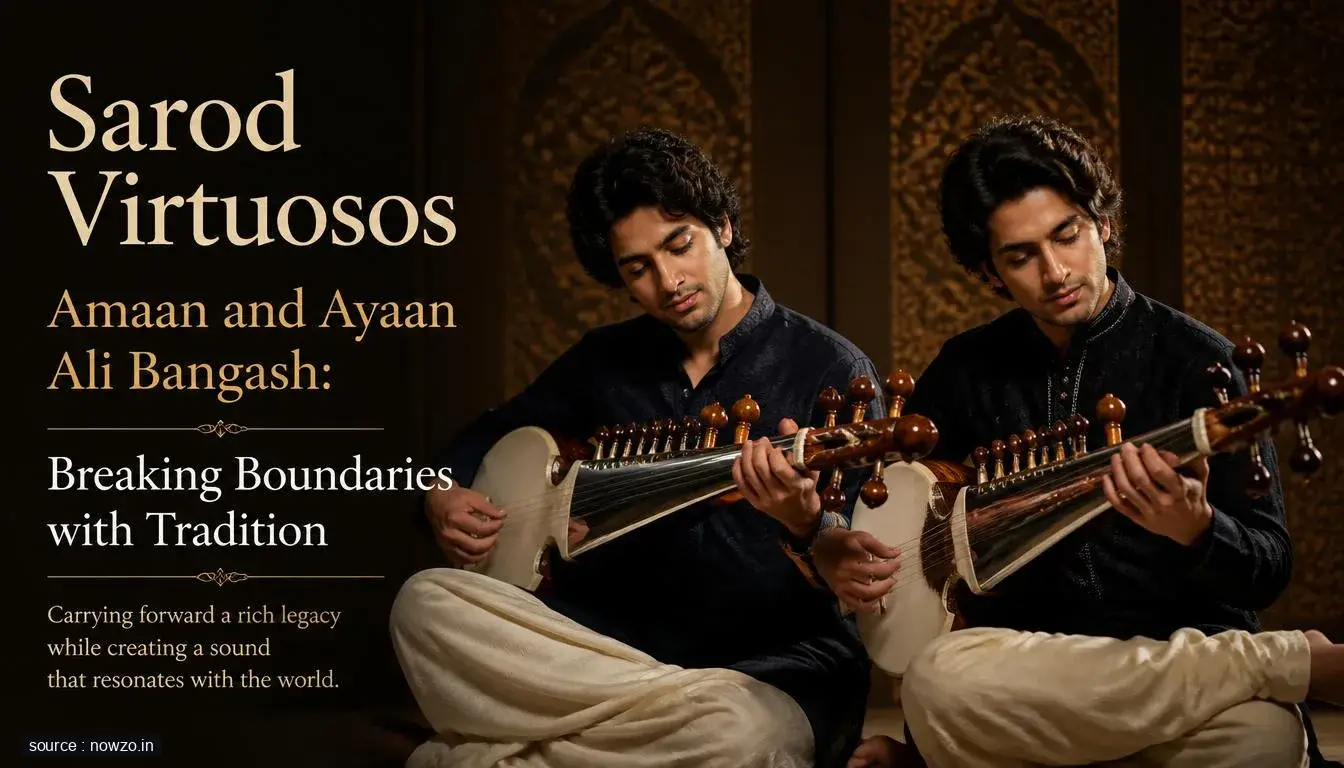
In the world of Indian classical music, few names resonate with the depth and innovation of Amaan and Ayaan Ali Bangash. The brothers, carrying forward a legacy that spans generations, are not just preserving their art—they're expanding its horizons. With fingers that dance on the strings of the sarod, they weave melodies that honor the past while fearlessly stepping into the future.
Key facts
- Amaan and Ayaan Ali Bangash are renowned sarod players from a celebrated musical lineage.
- They advocate for creativity without rigid boundaries in classical music.
- Their approach balances innovation with deep respect for traditional roots.
Honoring Heritage, Embracing Change
Growing up in a family where music flowed as naturally as breath, the Bangash brothers inherited not just technique, but a philosophy. Their father and guru, the legendary Amjad Ali Khan, instilled in them the essence of the sarod—a instrument known for its deep, resonant voice. Yet, he also encouraged them to find their own voice within those strings.
Amaan reflects on this duality with warmth. "We were taught to respect the grammar of our music," he says, "but never to be imprisoned by it." That freedom allows them to experiment with collaborations, compositions, and contexts that might raise eyebrows in purist circles, yet ultimately enrich the classical tapestry.
The Sound of Evolution
Listen to Ayaan speak about the sarod, and you hear the passion of an artist who sees the instrument as alive, evolving. "It’s not a museum piece," he insists. "It has to speak to today’s listeners, to tomorrow’s generations." This belief drives their work—whether performing traditional ragas or blending sounds with global musicians.
Their concerts often feel like conversations between centuries. The ancient tones of the sarod meet contemporary rhythms, and the result is something thrillingly new yet unmistakably rooted. Audiences lean in, captivated by the dialogue between what was and what could be.
A Legacy in Motion
What does it mean to be a bearer of tradition in a fast-changing world? For the Bangash brothers, it means holding two truths close: deep reverence for the past, and bold curiosity for the future. They practice for hours, mastering the nuances their ancestors perfected, yet they also ask, "What else is possible?"
This isn’t about rebellion; it’s about renewal. By stretching the boundaries of the sarod’s expression, they ensure its relevance and vitality. Their music remains a bridge—connecting histories, cultures, and hearts.



Comments