
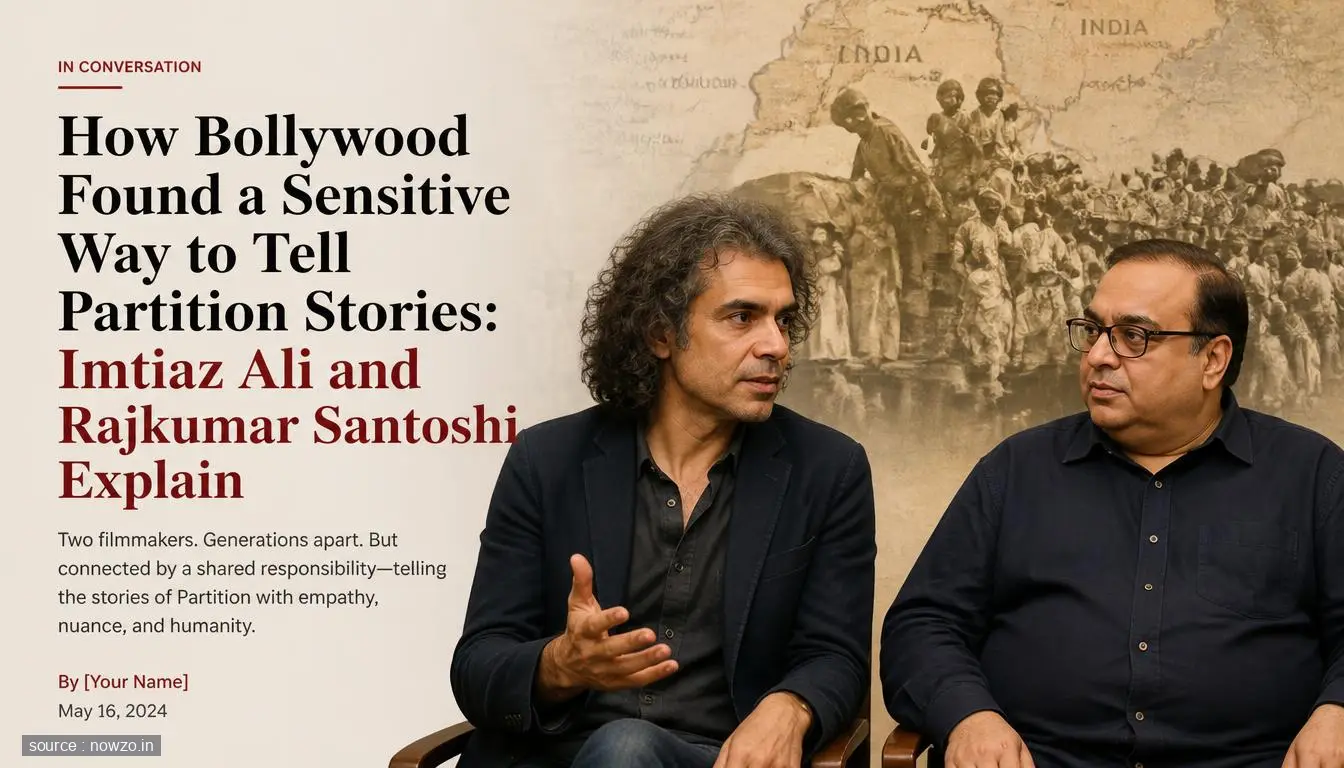
The Partition of 1947 remains one of the most defining and devastating events in the history of the Indian subcontinent, and its portrayal on screen has always demanded an extraordinary degree of care. In a recent discussion, acclaimed filmmakers Imtiaz Ali and Rajkumar Santoshi reflected on how Hindi cinema gradually developed a sensitive vocabulary to tell stories rooted in Partition, and how these narratives found a meaningful place within Bollywood's broader tradition of azaadi stories — films centred on freedom, independence, and the price paid for it.
Partition on Screen: A Subject That Demanded Sensitivity
Partition was not merely a political event; it was a human tragedy that displaced millions and left scars across generations. For filmmakers, approaching this subject has never been straightforward. The challenge lay in balancing historical truth with emotional honesty, without reducing the suffering of millions to spectacle or melodrama.
Both Imtiaz Ali and Rajkumar Santoshi addressed this delicate balance, explaining how Bollywood's approach to Partition narratives matured over time. Rather than treating the event as a backdrop for drama alone, filmmakers increasingly sought to centre the human experience — the loss of home, the fracturing of communities, and the quiet resilience of those who lived through it.
Imtiaz Ali on Storytelling and Historical Memory
Imtiaz Ali, known for his deeply personal and emotionally layered films, spoke about the responsibility that comes with retelling a chapter of history as painful as Partition. His perspective underscored the importance of approaching such stories not as grand historical epics but as intimate human accounts that allow audiences to connect with the lived reality of that era.
Ali's reflections point to a broader shift in Hindi cinema, where the emphasis moved from depicting events to exploring what those events meant for ordinary people — families torn apart, identities uprooted, and relationships tested by forces beyond individual control.
Rajkumar Santoshi and the Weight of Azaadi Narratives
Rajkumar Santoshi, whose filmography has engaged with themes of patriotism, sacrifice, and national identity, brought his own understanding of how azaadi stories in Bollywood have carried the weight of Partition within them. For Santoshi, the story of India's independence cannot be told honestly without acknowledging the trauma that accompanied it.
His observations highlight how films about freedom and nationhood have, at their best, held space for the complexity of that moment — the joy of liberation existing alongside the grief of division. This duality, Santoshi suggested, is what gives such films their emotional depth and lasting resonance with audiences.
An Evolving Cinematic Language
The conversation between these two filmmakers reflects a larger truth about Bollywood's evolving relationship with history. Over the decades, the industry has moved toward a more nuanced engagement with Partition, one that resists simplification and instead embraces the moral and emotional complexity of the event.
This evolution has allowed Partition stories to find a natural and necessary place within the broader canon of azaadi narratives in Hindi cinema. Films that engage with this period are no longer simply recounting history — they are inviting audiences to reflect on identity, belonging, and the human cost of political decisions.
As Imtiaz Ali and Rajkumar Santoshi's insights make clear, the sensitive retelling of Partition in Bollywood is not just a creative choice. It is an act of remembrance, one that ensures the stories of those who lived through that time continue to be told with the dignity and honesty they deserve.



Comments