
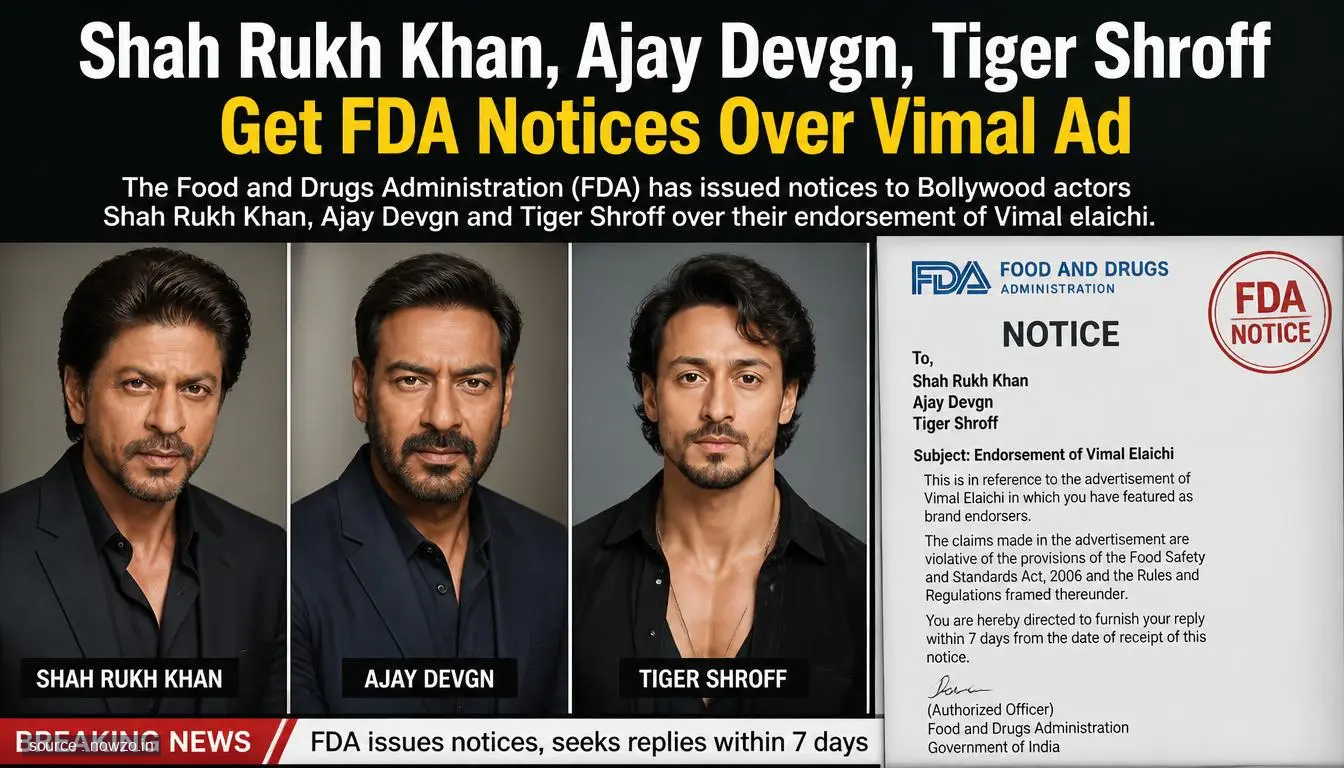
The Food and Drug Administration (FDA) has issued formal notices to prominent Bollywood actors Shah Rukh Khan, Ajay Devgn, and Tiger Shroff. The action stems from their participation in an advertisement for Vimal elaichi, a product often associated with the pan masala category.
Tukaram Mundhe, an official with the FDA, confirmed the development. The notices require the actors to provide an explanation for their role in the advertisement within a stipulated period of 15 days.
Details of the FDA Action
The notices were sent in connection with the promotion of Vimal elaichi. While the product is marketed as a mouth freshener, it falls under the scrutiny of the FDA due to its association with pan masala and gutkha brands, which are regulated under food safety laws.
The FDA's move is part of a broader effort to monitor and regulate advertisements that may indirectly promote products considered harmful to public health. The involvement of high-profile celebrities in such campaigns has drawn significant attention from regulatory bodies.
Deadline for Response
According to the notice, the actors have been given a 15-day window to respond to the FDA's queries. The notice explicitly asks them to 'explain in 15 days' their association with the advertisement and the claims made within it.
Failure to respond within the given timeframe could lead to further legal action, as per the provisions under the Food Safety and Standards Act. The FDA is expected to review the explanations provided by the actors before deciding on the next course of action.
Context of Celebrity Endorsements
This is not the first time a celebrity has faced scrutiny for endorsing products in this category. The issue of surrogate advertising, where a brand promotes a non-tobacco product to keep its name in the public eye, has been a point of contention for health advocates and regulators.
The FDA's action against Shah Rukh Khan, Ajay Devgn, and Tiger Shroff highlights the increasing accountability being placed on public figures for the products they choose to endorse. The outcome of this case could set a precedent for future advertising standards in the industry.



Comments