
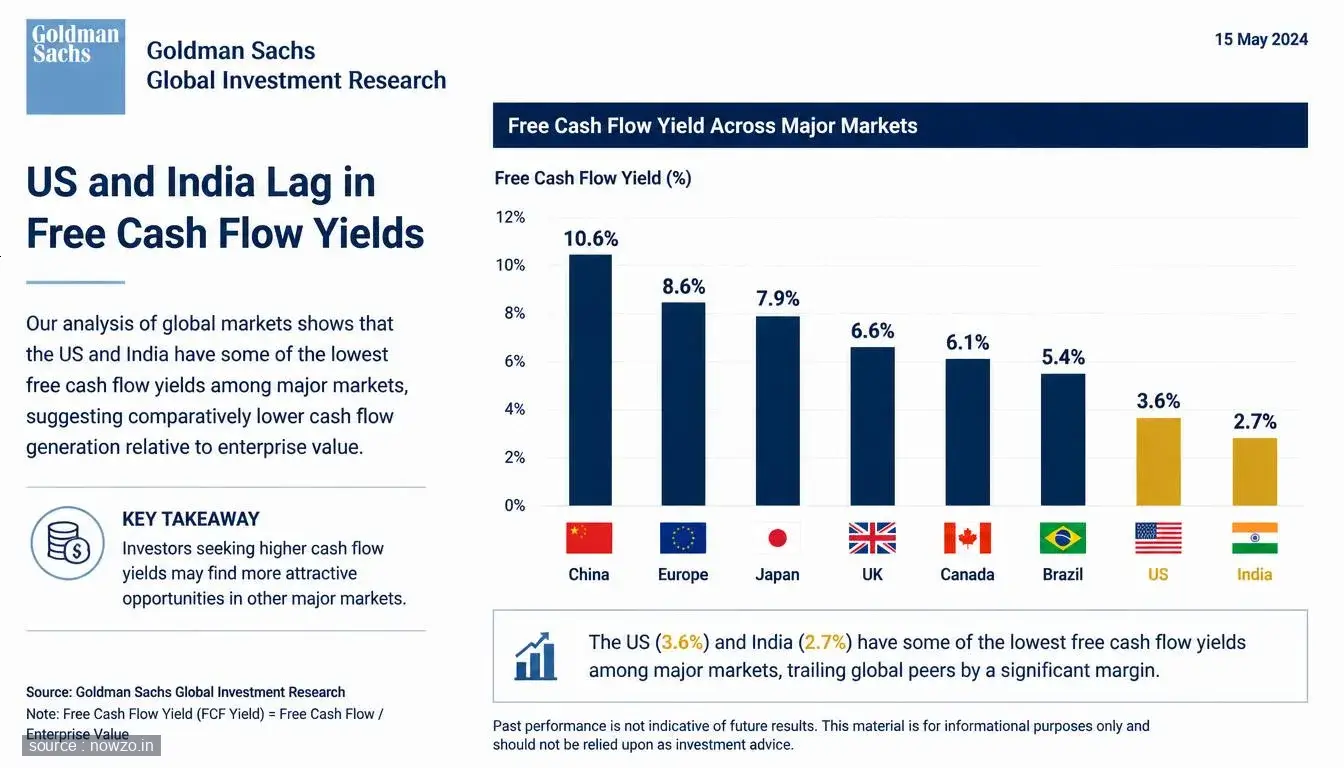
Investors scanning the globe for robust cash returns might want to look beyond two of the world's largest economies. A recent analysis from Goldman Sachs indicates that both the United States and India are currently presenting unattractive free cash flow yields, raising questions about value in these high-profile markets.
Key facts
- Goldman Sachs report identifies US and India as having low free cash flow yields
- Free cash flow yield measures cash return available to investors
- Findings suggest potential concerns for income-focused investment strategies
What Free Cash Flow Yield Reveals
Free cash flow yield serves as a critical barometer for investors, measuring how much cash a company generates relative to its share price. It's the financial metric that whispers truth about whether a stock is genuinely creating value or simply riding market sentiment. When this yield dips too low, it often signals that prices may have outpaced fundamental performance.
Implications for Market Strategies
The Goldman assessment arrives as global investors increasingly prioritize tangible returns over growth narratives. Markets tensed at the suggestion that two economic powerhouses might be offering slim pickings for those seeking cash-generating assets. This doesn't necessarily spell immediate danger, but it does encourage a more selective approach to portfolio construction in these regions.
Broader Investment Landscape
While the report highlights concerns about US and Indian markets, it implicitly directs attention toward other regions where free cash flow yields might appear more compelling. Investors watching the clock on their allocation decisions now have fresh data to consider—another piece in the complex puzzle of global capital flows.




Comments