
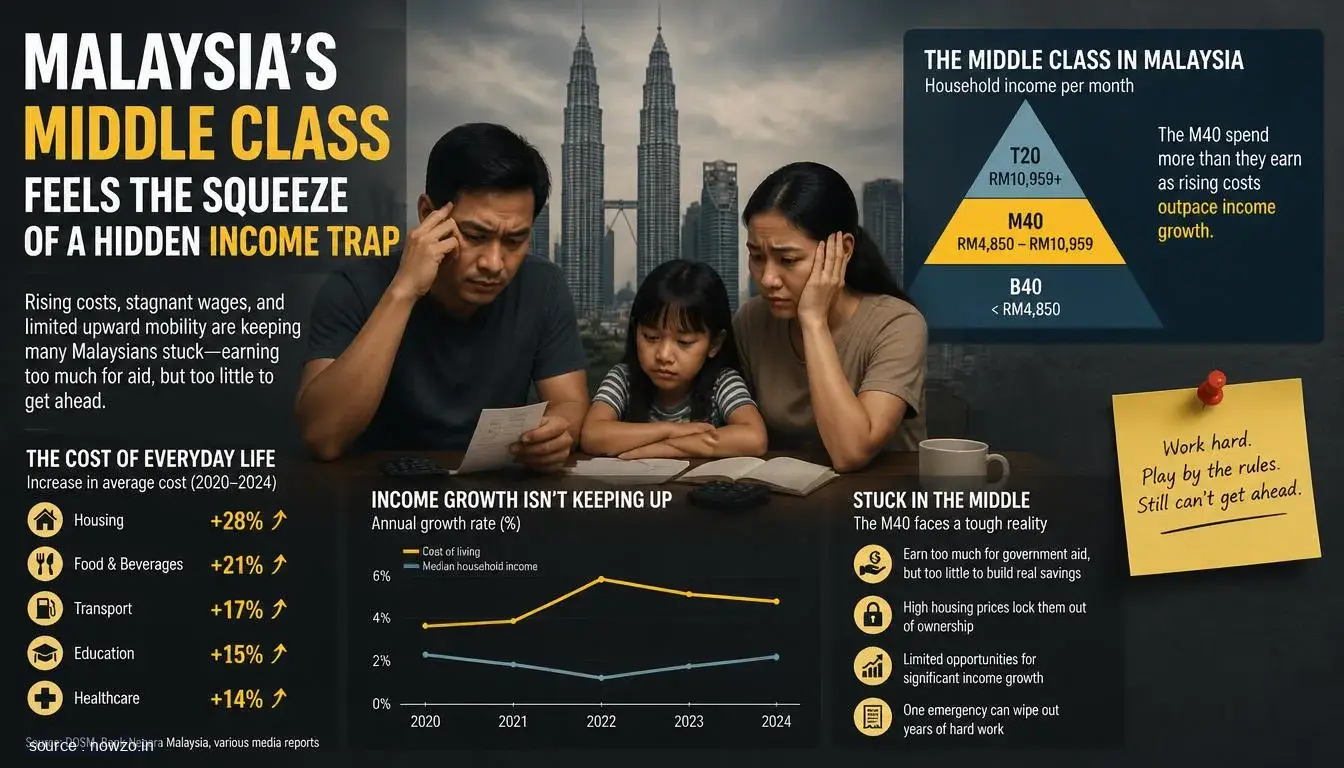
For many in Malaysia’s bustling cities and suburban neighborhoods, the dream of upward mobility is fading fast. A quiet crisis is unfolding within the country’s middle class—one where paychecks no longer stretch as far as they used to, and financial security feels increasingly out of reach.
Key facts
- Middle-income households face rising costs that outpace wage growth.
- Many are employed but struggle with affordability of housing, education, and healthcare.
- The trap is often invisible, affecting those who appear financially stable on the surface.
What’s really happening?
It’s not about unemployment or extreme poverty. This is about the squeeze felt by salaried workers, small business owners, and professionals who find themselves running harder just to stay in place. Inflation nibbles away at disposable income, while aspirations—like owning a home or saving for a child’s education—grow more distant.
Why it matters
This isn’t just a personal struggle; it’s an economic signal. When a country’s middle class can’t gain ground, consumer spending weakens, social mobility stalls, and discontent simmers. For Malaysia, a nation proud of its development journey, these pressures hint at structural challenges that need addressing.
Looking ahead
Without meaningful intervention—whether through policy, wage reforms, or cost-of-living adjustments—this trap could deepen. The risk isn’t just financial; it’s about the loss of hope for a generation that expected better.




Comments