
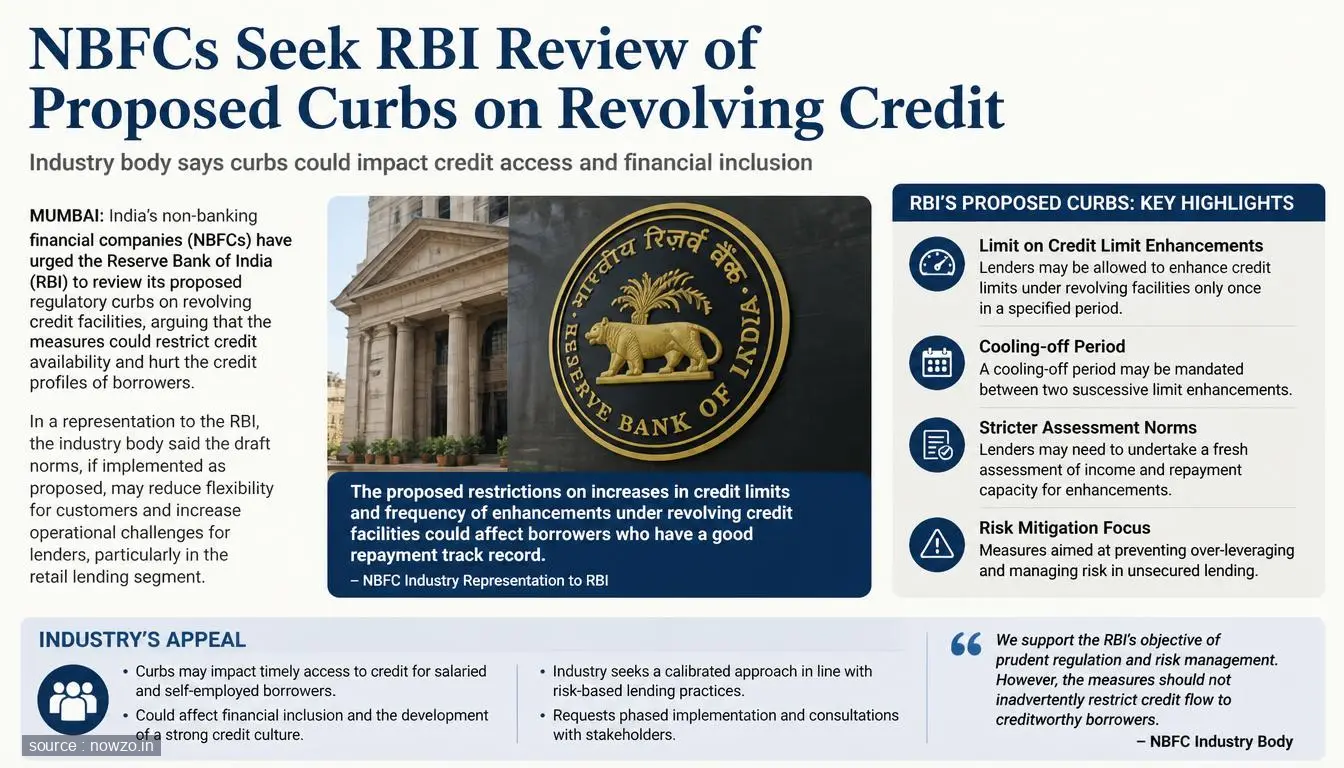
Non-banking financial companies (NBFCs) in India have formally approached the Reserve Bank of India (RBI) seeking a review of proposed restrictions on revolving credit facilities, according to industry sources familiar with the matter.
Industry Concerns Over Proposed Restrictions
The proposed curbs, which target revolving credit products offered by NBFCs, have raised significant concerns within the industry. Revolving credit facilities allow borrowers to access funds up to a predetermined limit, repay, and borrow again as needed, making them a popular financial product among consumers and small businesses.
Industry representatives argue that the proposed restrictions could substantially limit their ability to serve customers who rely on flexible credit options. The NBFC sector has been a crucial provider of credit to segments often underserved by traditional banks, including small enterprises and individuals with limited credit history.
Impact on Lending Operations
The proposed regulations come at a time when NBFCs are already navigating a challenging economic environment. Industry experts suggest that additional restrictions on revolving credit could force these companies to restructure their product offerings and potentially reduce credit availability to certain customer segments.
According to sources, the NBFC industry has presented its concerns to the RBI through formal channels, requesting a reconsideration of the proposed measures. The industry body has emphasized the role of revolving credit in promoting financial inclusion and supporting economic activity at the grassroots level.
RBI's Regulatory Stance
The Reserve Bank of India has been actively reviewing regulations governing the NBFC sector in recent years, with a focus on strengthening financial stability and consumer protection. The proposed curbs on revolving credit are part of this broader regulatory framework aimed at ensuring responsible lending practices.
However, industry stakeholders argue that a balanced approach is necessary to avoid unintended consequences that could restrict credit flow to productive sectors of the economy. They have urged the central bank to consider the practical implications of the proposed restrictions on both lenders and borrowers.
Next Steps
The RBI is expected to review the representations made by NBFCs and may hold further consultations with industry participants before finalizing the regulations. The outcome of this engagement could have significant implications for the future of revolving credit products in India's non-banking financial sector.
As the dialogue between regulators and industry continues, market participants are closely watching for any modifications to the proposed framework that could address the concerns raised by NBFCs while maintaining the RBI's objectives of financial stability and consumer protection.



Comments