
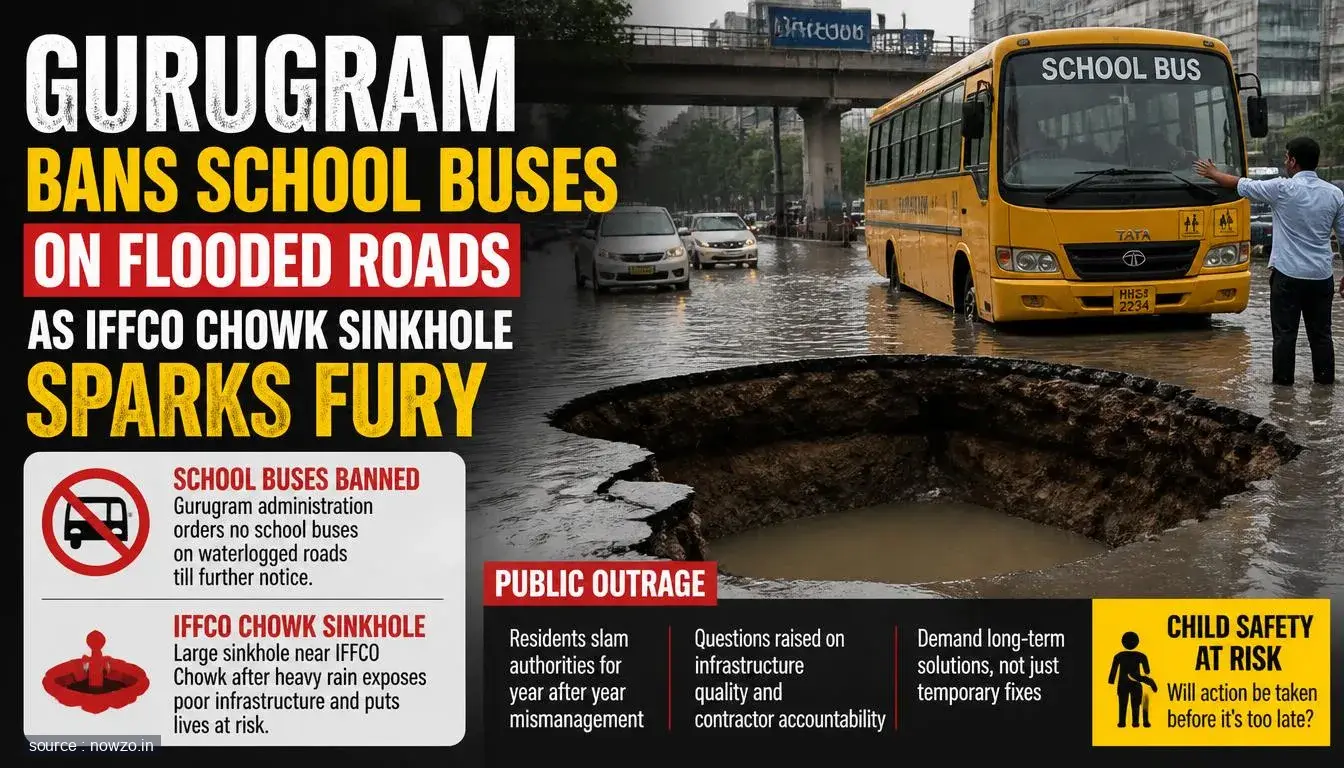
When torrential monsoon showers hit Gurugram, India's bustling corporate corridor ground to a familiar, submerged halt. Facing waist-deep waters across key arterials, the local administration issued a directive banning school buses from operating on flooded stretches. The response from local citizens was swift and scathing: rather than barricading children away from broken streets, why has the civic machinery repeatedly failed to fix the drainage system?
- Transit Curbs: School buses barred from navigating heavily inundated roads across the city.
- Caved-In Roadways: A large sinkhole swallowed a portion of the IFFCO Chowk service road following the downpour.
- Civic Backlash: Taxpayers and opposition leaders sharply criticized municipal authorities and local representatives for chronic monsoon mismanagement.
A Temporary Fix for a Systemic Collapse
The decision to restrict school buses highlights the acute vulnerability of Gurugram’s transit corridors during the monsoon season. For thousands of daily commuters and parents, navigating submerged streets has turned routine morning schedules into hazardous expeditions. While officials framed the movement restrictions as a critical safety precaution for schoolchildren, residents argue it simply shifts the burden of municipal neglect onto citizens.
Infrastructure Caves In at IFFCO Chowk
The severity of the city's drainage failure became even clearer when a dramatic sinkhole opened up along the IFFCO Chowk service road, caving in just a day after heavy rainfall lashed the area. The road collapse underscored how waterlogging actively erodes the physical foundations of Gurugram's key transport nodes, disrupting traffic and endangering motorists on one of the city's busiest commuter arteries.
Taxpayers and Opposition Demand Accountability
The widespread disruption has intensified political pressure on the administration and elected officials. Opposition leaders joined resident welfare groups in questioning the allocation of public funds, asking why years of promises have yielded recurring floods rather than functional stormwater networks. With roads turning into waterways and arterial connections crumbling, residents continue to press authorities for long-term civil engineering fixes rather than seasonal emergency bans.




Comments