
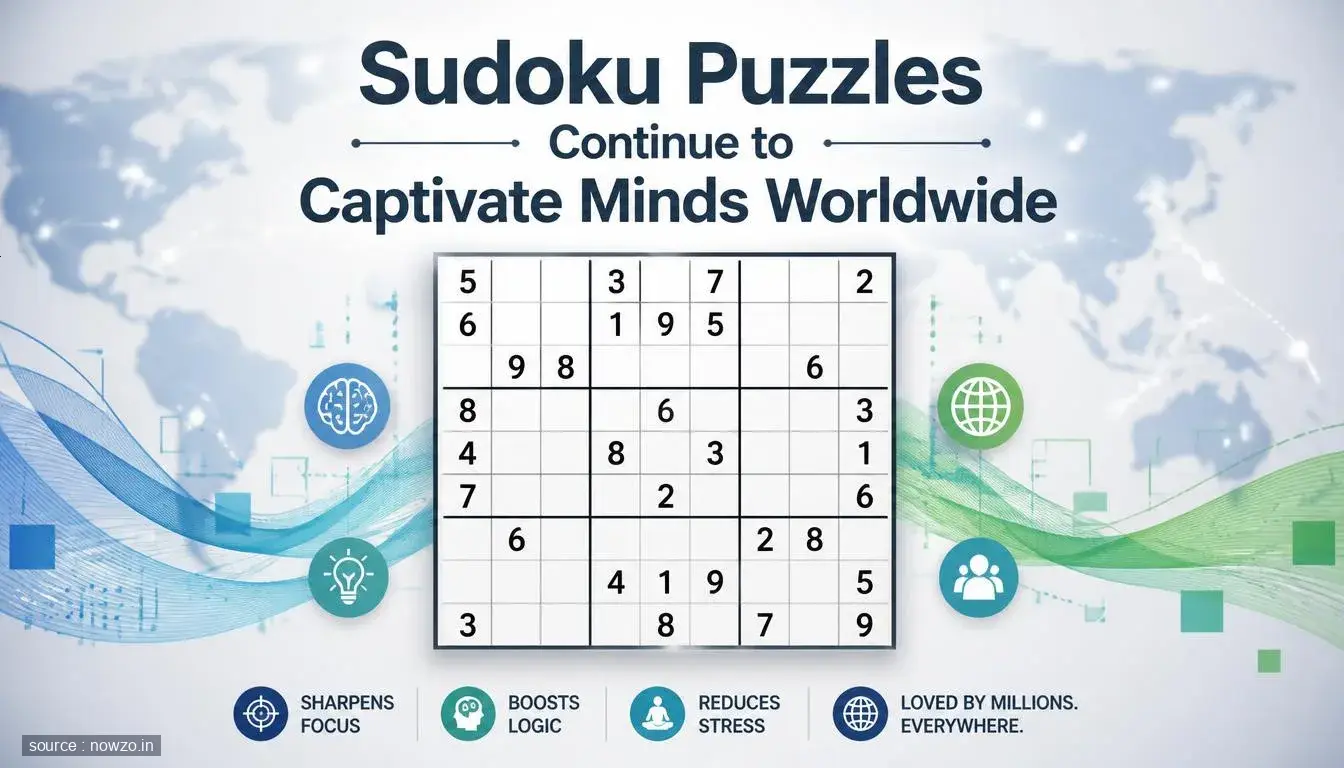
In a world buzzing with digital distractions, the quiet allure of a Sudoku grid remains surprisingly potent. This deceptively simple numbers game continues to captivate millions, offering a daily dose of cerebral satisfaction that feels both timeless and utterly modern.
Key facts
- Sudoku is a logic-based number placement puzzle
- Popularized globally in the late 20th century
- Available in newspapers, apps, and online platforms worldwide
The Universal Appeal
What makes Sudoku endure? It's the perfect storm of accessibility and challenge. You don't need advanced math skills—just patience and pattern recognition. The rules are simple: fill a 9x9 grid so that each column, row, and 3x3 subgrid contains all digits from 1 to 9. Yet within that framework lies infinite complexity.
Mental Gymnastics
Neuroscientists appreciate Sudoku for what it represents: a full-brain workout. The puzzles engage logical reasoning, working memory, and concentration—cognitive muscles that benefit from regular exercise. It's no wonder doctors often recommend number puzzles as mental maintenance.
Digital Evolution
While Sudoku found its first mass audience in newspapers, it has seamlessly transitioned to the digital age. Mobile apps now offer endless variations, from gentle warm-ups to diabolical challenges that can stump even seasoned solvers. The puzzle's essence remains unchanged, but its reach has expanded exponentially.
As one long-time enthusiast noted, "There's something deeply satisfying about watching those final numbers click into place." That moment of completion—when every row, column, and box aligns in perfect numerical harmony—keeps players coming back day after day.


Comments