
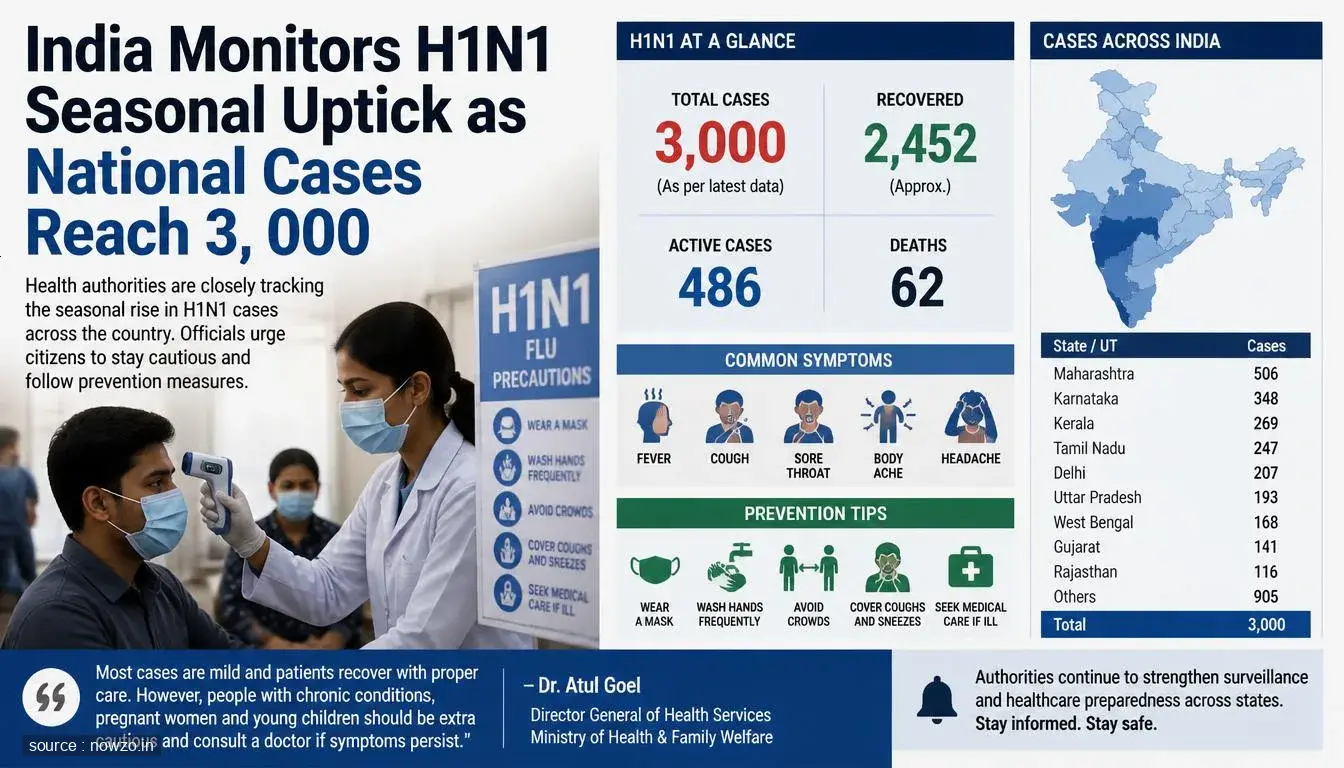
Health authorities across India have stepped up surveillance as seasonal influenza figures register a noticeable climb nationwide. With total H1N1 influenza cases reaching the 3,000 mark, both central monitoring agencies and state administrations are keeping a close watch on hospital trends and community transmission.
- Total H1N1 influenza cases across the country have climbed to 3,000.
- The Indian Council of Medical Research (ICMR) confirmed the surge represents standard seasonal patterns, not a new variant.
- Delhi Chief Minister Rekha Gupta convened an emergency meeting to review healthcare preparedness.
- The Directorate of Education (DoE) in Delhi issued preventive guidance to schools, with Minister Sood urging the public to remain calm.
- Corporate employers have started circulating health advisories to maintain office workplace safety.
ICMR Confirms Seasonal Pattern, Ruling Out New Strain
Addressing public concern surrounding the transmission numbers, the Indian Council of Medical Research clarified that the current spike in H1N1 cases is a recurring seasonal surge. Surveillance data indicates that the circulating virus matches existing strains rather than any emerging or uncharacterized mutation, providing reassurance regarding existing treatment protocols and medical management.
Delhi Calls Emergency Meeting and Directs Schools
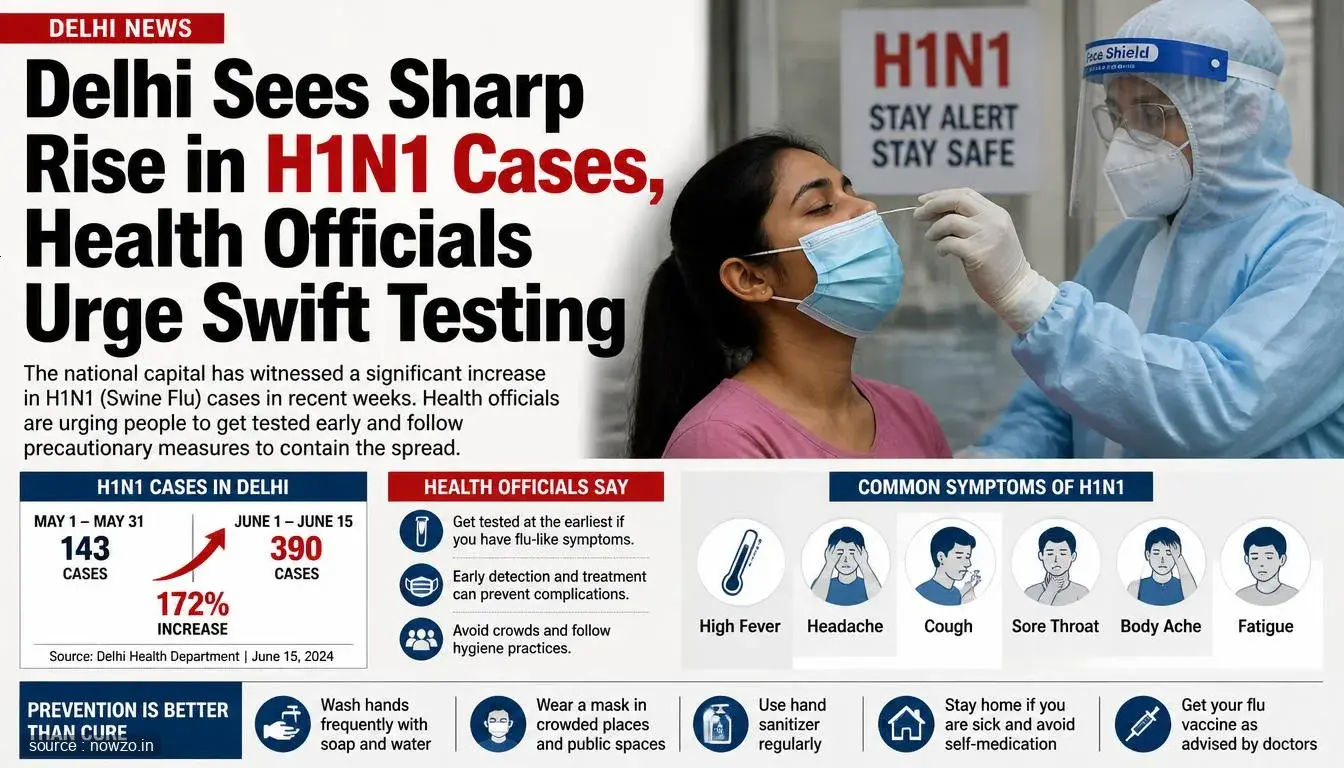
In response to rising case numbers in the national capital region, Delhi Chief Minister Rekha Gupta called an emergency meeting to review healthcare infrastructure, testing capacity, and hospital readiness. Administrative teams were tasked with ensuring seamless diagnostic services and essential drug supplies across regional medical facilities.
Simultaneously, the Directorate of Education issued a dedicated advisory for Delhi schools to protect students and staff. Addressing community anxiety, Minister Sood stated that while basic preventive measures must be followed diligently, there is no reason for widespread panic.
Corporate Vigilance and Public Health Recommendations
The impact of the seasonal wave is also visible across corporate workspaces. Multiple private sector firms have begun issuing health alerts to their employees, encouraging standard hygiene protocols, respiratory etiquette, and flexible arrangements for those exhibiting flu-like symptoms.
Union and state health bodies continue to track the seasonal trajectory closely, advising citizens experiencing persistent fever, body ache, or breathing difficulties to seek timely medical consultation.




Comments