
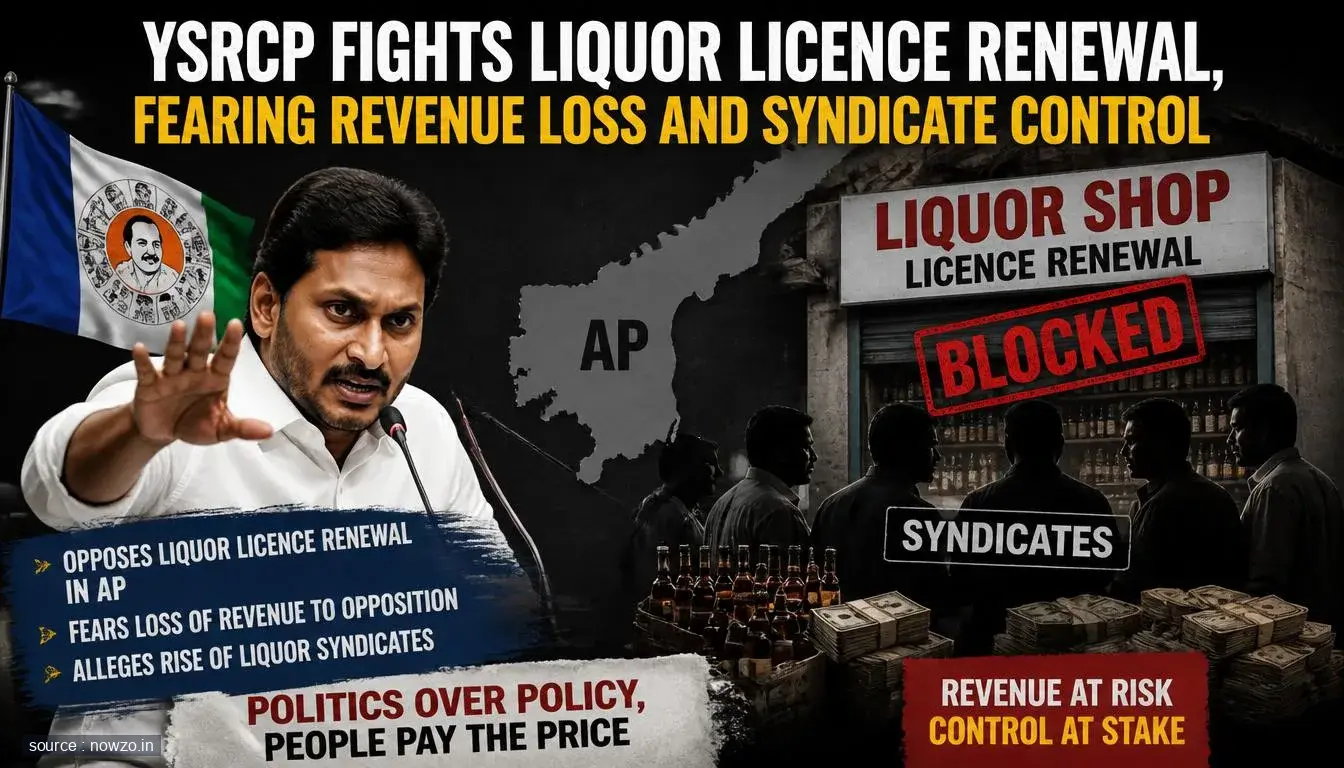
The YSR Congress Party has taken a firm stand against the Andhra Pradesh government's proposal to automatically renew liquor shop licences, warning that the move would strip the state exchequer of crucial revenue while empowering shadowy liquor syndicates.
Key facts
- YSRCP claims auto-renewal would cost state ₹3,000 crore
- 3,740 liquor shop licences were allotted through lottery in 2024
- 89,582 applications generated ₹1,800 crore in fees alone
- Party demands fresh lottery system instead of renewal
A revenue disaster in the making
Party spokesperson Putta Siva Shankar didn't mince words during a press conference at the YSRCP central office. His message was clear: auto-renewal isn't just bad policy—it's financial suicide for the state. "The government's proposal will deprive the State exchequer of nearly ₹3,000 crore and benefit liquor syndicates," Shankar stated, his concern palpable.
The shadow of syndicates
Behind the numbers lies a deeper worry about who really controls Andhra's liquor trade. Shankar alleged that syndicates have effectively taken over, with belt shops and permit rooms operating without adequate checks. He pointed to widespread MRP violations where liquor sells above mandated prices, while enforcement agencies seemingly look the other way.
The lottery solution
The party remembers what worked before. In 2024, the lottery system for 3,740 shops attracted 89,582 applications—generating approximately ₹1,800 crore just from non-refundable fees. With the two-year licence period ending, Shankar argues that another lottery could once again deliver that revenue windfall. He's demanding transparency too: details on MRP violation cases, penalties collected, licences cancelled, and actions against illegal sales.
"The government's proposal will deprive the State exchequer of nearly ₹3,000 crore and benefit liquor syndicates" - Putta Siva Shankar
A legacy of control
Shankar reminded everyone that the previous YSRCP government had brought liquor outlets under direct government control, ensuring revenue flowed to state coffers. Now he watches as that system risks being undone—not through debate or design, but through automatic renewal that could lock in syndicate power for years to come.


Comments