
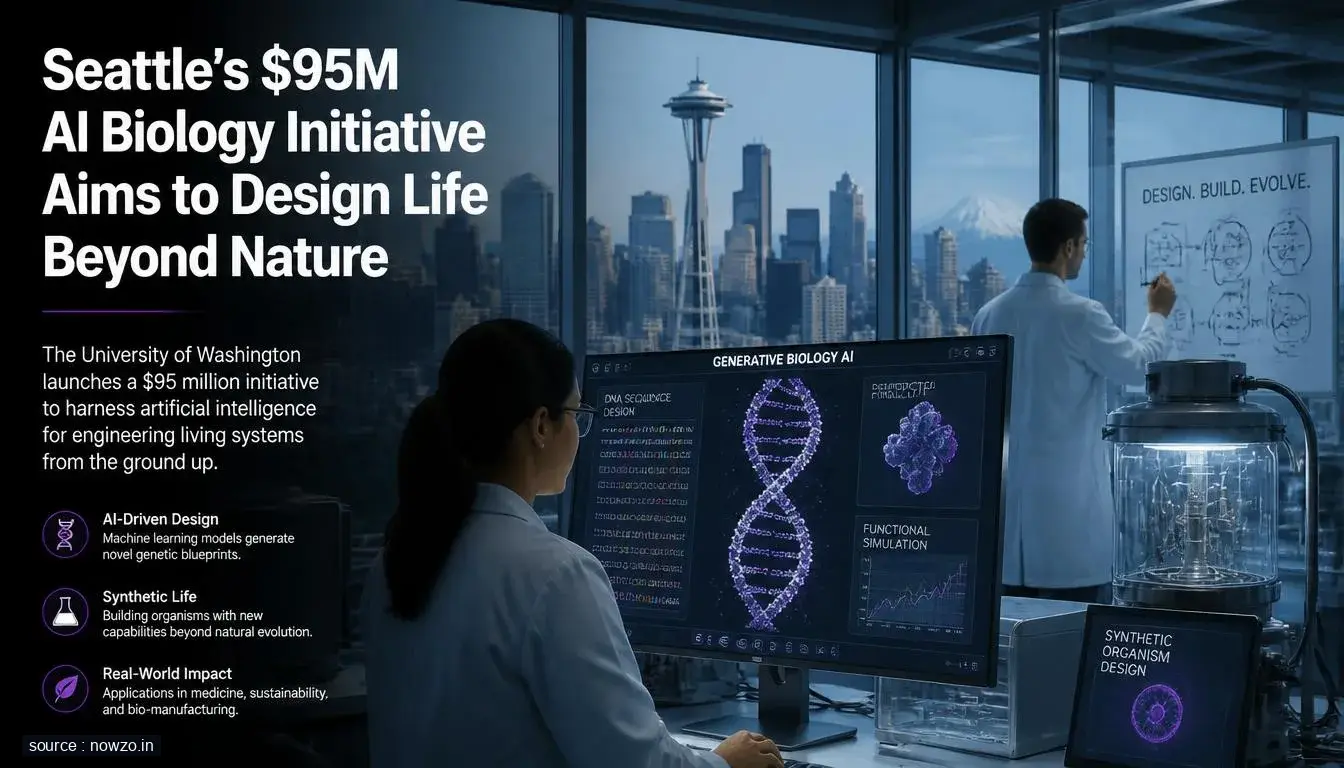
In a bold move that could reshape the future of biomedical discovery, three of Seattle's top research powerhouses have joined forces to launch a $95 million initiative blending artificial intelligence with biology. The Allen Institute, University of Washington, and Fred Hutchinson Cancer Center are pooling resources and expertise to venture into uncharted biological territory—designing what nature never has.
Key facts
- $95 million collaborative initiative
- Partners: Allen Institute, University of Washington, Fred Hutchinson Cancer Center
- Focus: Using AI to design biological systems beyond natural evolution
Beyond nature's blueprint
The initiative, dubbed the AI BioDesign Accelerator, represents a fundamental shift in how scientists approach biological engineering. Instead of merely studying or modifying existing biological structures, researchers will use advanced AI algorithms to conceive and create entirely new proteins and cellular mechanisms. This isn't about tweaking nature's designs—it's about writing entirely new biological code.
A collaborative powerhouse
Seattle's unique concentration of research excellence makes this ambitious project possible. The Allen Institute brings its cutting-edge computational and imaging capabilities, UW contributes world-class protein design expertise, and Fred Hutch adds deep translational research experience in cancer and disease. Together, they form a complete pipeline from computational design to real-world medical applications.
The promise of designed biology
If successful, this work could lead to breakthrough therapies, novel materials, and sustainable solutions that current biology cannot provide. Imagine cancer treatments that precisely target tumors without side effects, or enzymes that break down plastic waste efficiently. The researchers believe AI-designed biological systems could solve problems that have stubbornly resisted conventional approaches.


Comments