
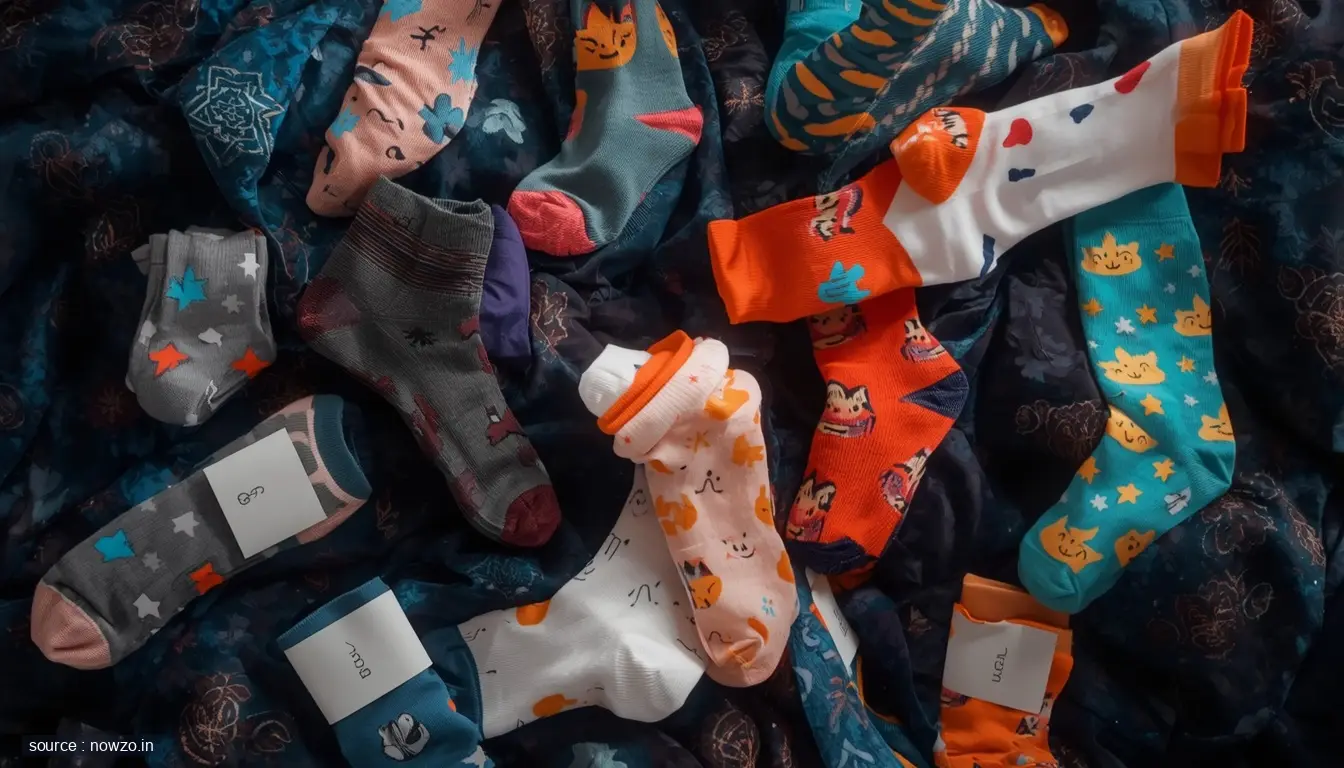
Leaving a stable career at one of the world's largest asset management firms to pursue an untested business idea takes courage. For one former BlackRock employee, that leap of faith began with an unusual and costly experiment: ordering 10,000 pairs of socks for $100,000.
A Bold Bet on a Business Idea
Before launching her startup, the former BlackRock employee decided she needed real-world proof that her concept could work. Rather than relying on market research reports or surveys alone, she committed a significant sum of money to test demand directly.
The decision to order 10,000 pairs of socks at a cost of $100,000 was not made lightly. It represented a calculated risk — one that would either validate her business model or serve as an expensive lesson in entrepreneurship.
From Finance to Entrepreneurship
Working at BlackRock, one of the most prominent financial institutions in the world, provided her with a strong foundation in business and risk assessment. However, the transition from analyzing investments to building a consumer product company required a fundamentally different skill set.
Her story reflects a growing trend of professionals leaving established corporate careers to pursue their own ventures. The security of a well-paying job at a major firm can be difficult to give up, but for many aspiring founders, the pull of building something from the ground up proves irresistible.
Testing Before Scaling
The approach of placing a large order before fully launching a business is a high-stakes form of validation. By committing real capital to inventory, she ensured that her test would produce meaningful data about customer interest, pricing, and product-market fit.
This method stands in contrast to the lean startup philosophy that advocates for minimal viable products and small-scale testing. However, in the consumer goods space, having physical inventory on hand can be essential for fulfilling orders and building brand credibility from day one.
The Road Ahead for Her Startup
While the outcome of her $100,000 sock order remains part of her broader entrepreneurial journey, the story underscores the lengths to which founders will go to bring their visions to life. It also highlights the financial risks inherent in launching a product-based business.
Her experience serves as a compelling example for other professionals considering a similar leap — demonstrating that sometimes, testing a business idea requires more than spreadsheets and projections. It demands real commitment, real money, and a willingness to embrace uncertainty.






Comments