
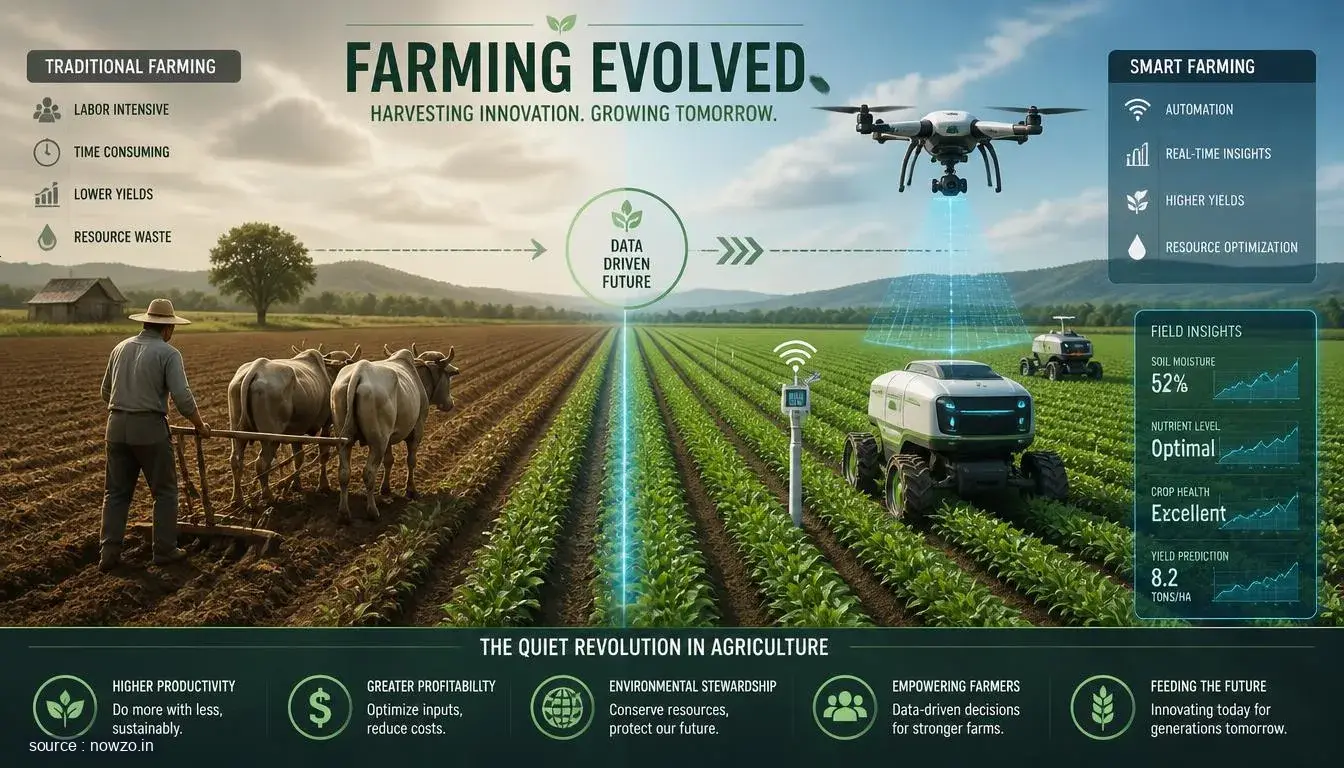
Farmers are witnessing a quiet revolution in their fields—not with dramatic gestures, but through the steady hum of technology optimizing every seed, drop, and nutrient. Agricultural technology continues to refine how inputs are managed, bringing precision to an age-old practice.
Key facts
- Technology is optimizing the use of seeds, water, and fertilizers
- Precision agriculture tools are reducing waste and environmental impact
- Data analytics help farmers make informed decisions about input application
The Precision Shift
Gone are the days of blanket applications. Today's farmers deploy sensors, drones, and GPS-guided equipment that measure field variability down to the square meter. This isn't just about saving money—it's about growing more with less, and doing it smarter.
Beyond Efficiency
The implications stretch further than input savings. Reduced fertilizer runoff means cleaner waterways. Optimized water use preserves scarce resources. And precise planting boosts yields without expanding acreage. It's a win for both productivity and the planet.
Looking Ahead
As technology continues to evolve, the relationship between farmer and field grows more intimate. The data keeps coming, the tools keep improving, and the potential for sustainable agriculture keeps expanding. This isn't just farming—it's farming, refined.


Comments