
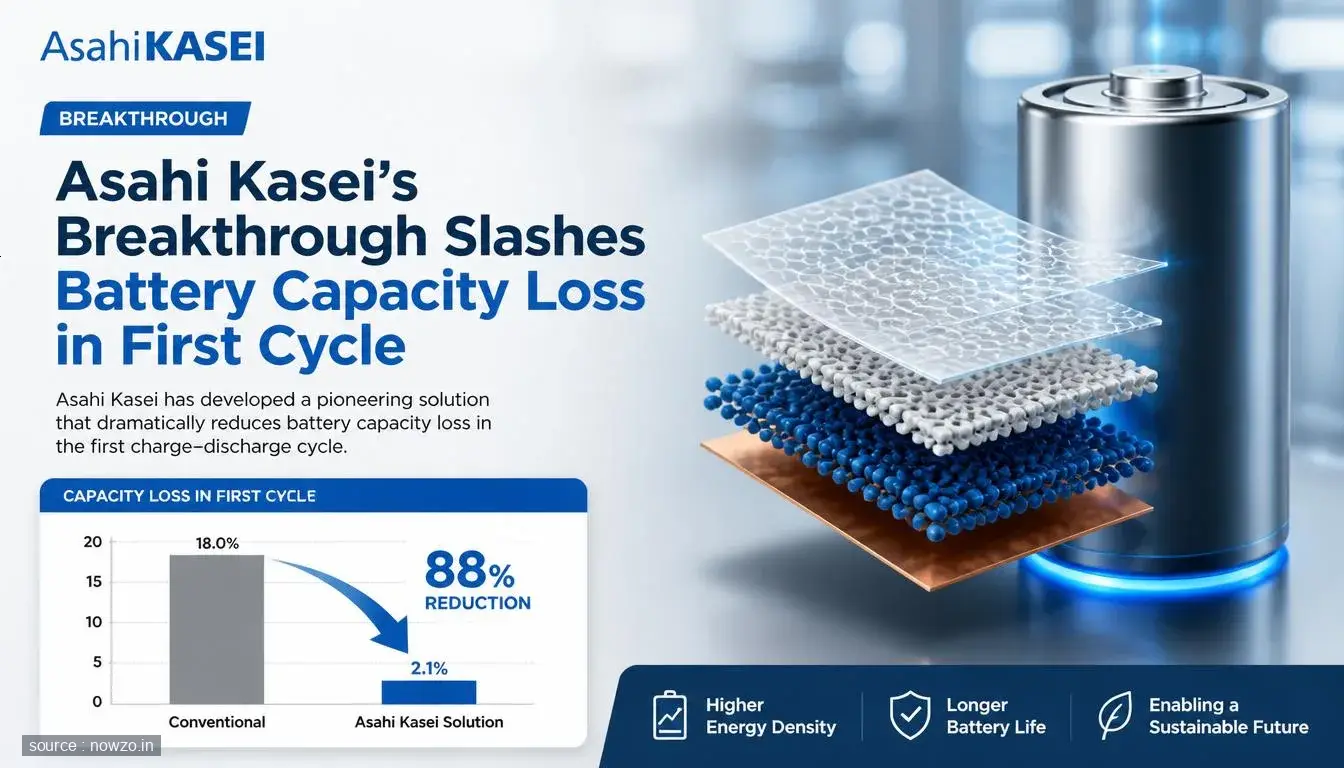
In a move that could reshape the future of electric vehicle batteries, Japanese materials giant Asahi Kasei has unveiled a breakthrough technology that tackles one of the most persistent problems in silicon-rich anode cells: first-cycle capacity loss.
Key facts
- Technology specifically targets silicon-rich battery cells
- Addresses first-cycle capacity loss issue
- Pre-doping process prepares cells before initial use
The Silicon Challenge
Silicon has long tantalized battery researchers with its potential to dramatically boost energy density compared to traditional graphite anodes. But there's always been a catch – those first few charge cycles can wipe out a significant portion of the cell's capacity before it even gets going. It's like buying a new car that immediately loses 20% of its fuel tank capacity.
How Pre-Doping Works
Asahi Kasei's solution involves treating the silicon-rich cells before their first use, essentially pre-conditioning them to handle the initial lithium insertion more gracefully. Think of it as giving the battery a gentle warm-up rather than throwing it straight into the deep end. The result? Cells that hold onto more of their precious capacity right from the start.
Broader Implications
This isn't just academic progress. For EV makers and consumers alike, reducing first-cycle loss means batteries that could deliver more range from day one and maintain their performance longer. In an industry where every percentage point of capacity matters, Asahi Kasei's innovation could help accelerate the adoption of higher-energy-density silicon anode technology.





Comments