
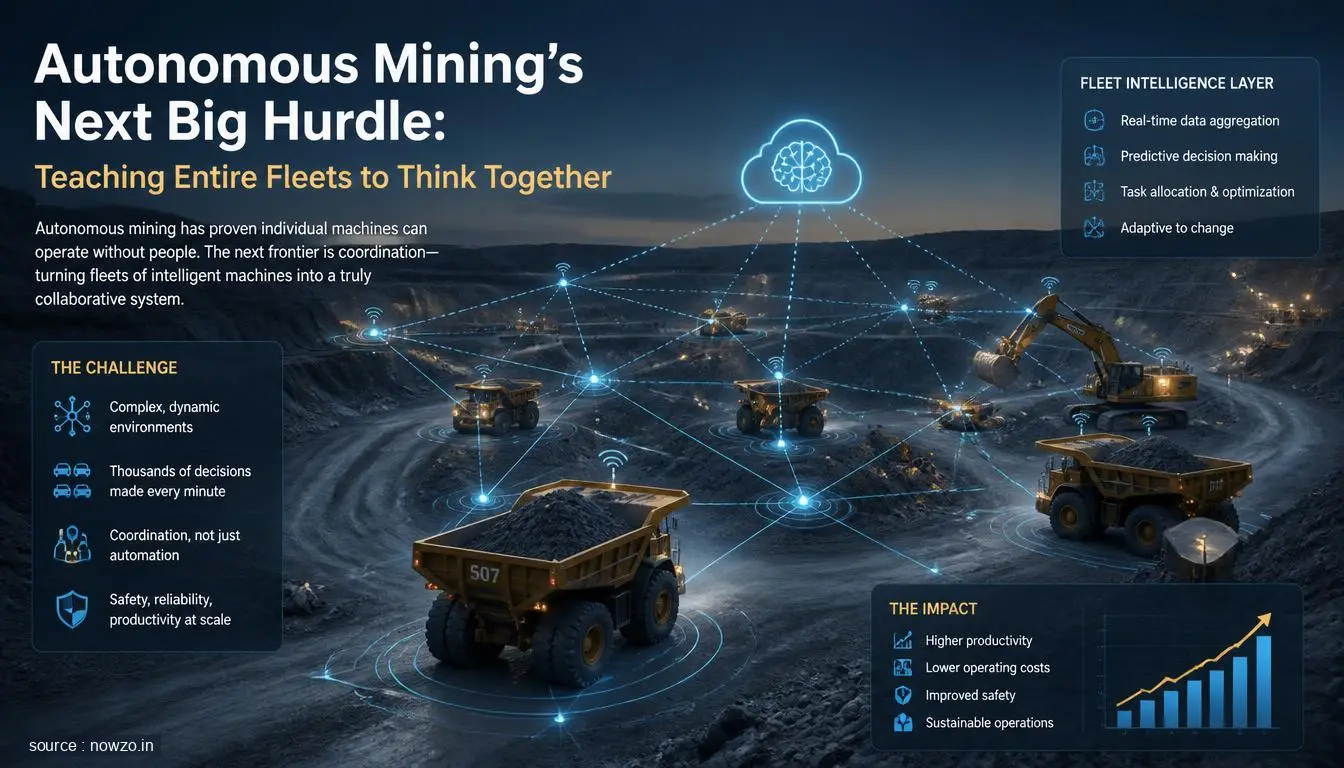
The mining industry has embraced automation at a remarkable pace, with self-driving haul trucks, drilling rigs, and other heavy machinery now operating at sites around the world. Yet as the technology matures, a new and more complex challenge is coming into focus: making entire fleets of autonomous machines think and work together as a unified system.
From Individual Machines to Fleet-Wide Intelligence
Much of the progress in autonomous mining so far has centered on individual vehicles performing specific tasks without human operators. Driverless haul trucks, for example, have become a common sight at large mining operations, moving material along predefined routes with impressive efficiency.
However, industry observers note that the real transformation lies ahead. The next phase of autonomous mining is not just about one machine operating independently — it is about ensuring that every piece of equipment on a site can communicate, coordinate, and make decisions collectively.
The Complexity of Coordination
Making an entire fleet “think” involves far more than simply adding more autonomous vehicles to a site. It requires sophisticated systems that can manage interactions between machines, adapt to changing conditions in real time, and optimize operations across the entire operation rather than at the level of a single unit.
This shift represents a significant technological and operational hurdle. Mining environments are dynamic and often unpredictable, with variables such as terrain, weather, and equipment status constantly in flux. Coordinating a fleet of machines to respond intelligently to these changes demands advanced software, robust communication networks, and new approaches to system design.
Looking Ahead
As mining companies continue to invest in automation, the focus is expected to shift increasingly toward integrated, fleet-level solutions. The goal is to move beyond isolated pockets of autonomy and create mining operations where machines work together seamlessly — improving safety, efficiency, and productivity across the board.
While the challenge is considerable, the potential rewards are significant. A fully coordinated autonomous fleet could redefine what is possible in modern mining, setting new standards for how resources are extracted in the decades to come.


Comments