
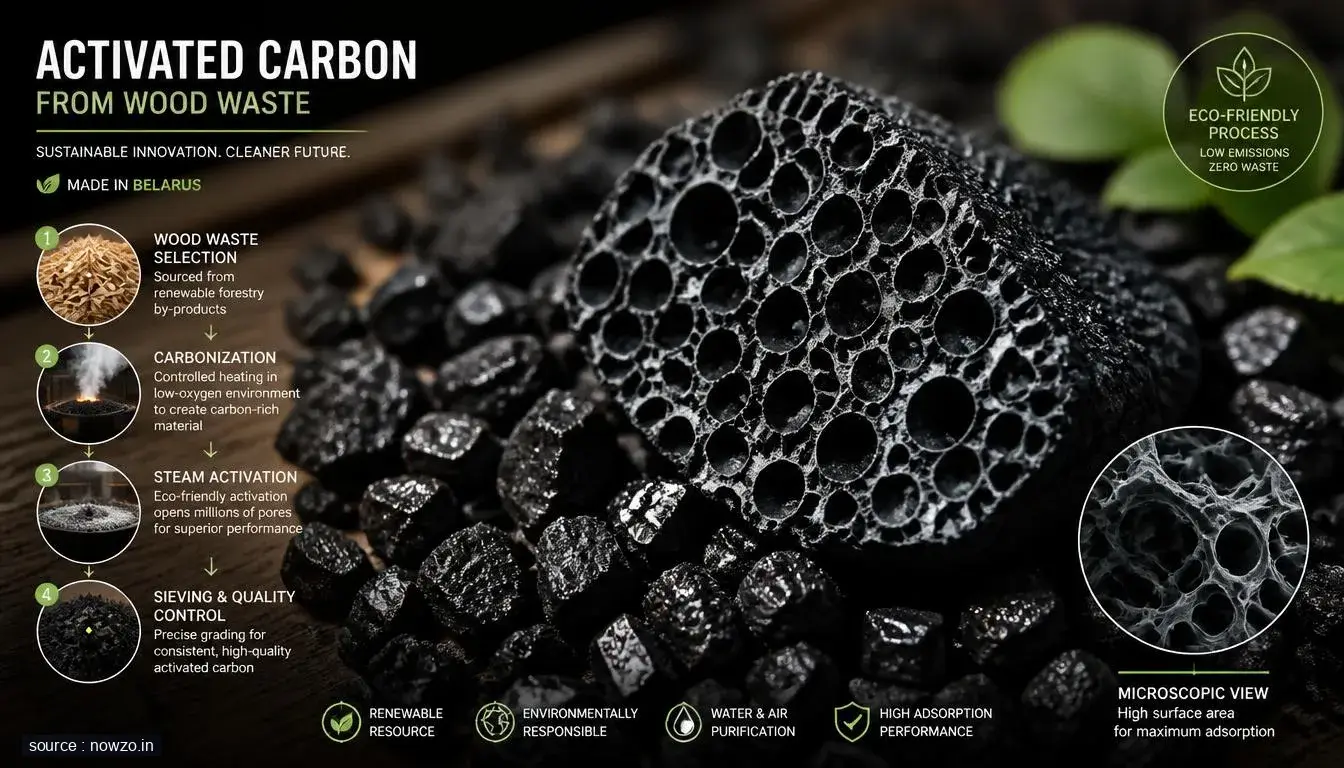
In a move that marries sustainability with industrial innovation, Belarus has cracked the code on transforming wood waste into high-value activated carbon. This isn't just recycling—it's upcycling with purpose, turning what was once discarded into a critical material for cleaning air and water.
Key facts
- Technology converts wood waste into activated carbon
- Process enhances resource efficiency and reduces environmental impact
- Activated carbon is vital for filtration in various industries
Why This Matters
Activated carbon is the unsung hero of purification. It's used everywhere from water treatment plants to chemical manufacturing, trapping impurities with remarkable efficiency. Until now, producing it often required significant resources. Belarus's approach flips the script, using waste as the primary ingredient. That's smart science with a conscience.
The Bigger Picture
Globally, industries are scrambling for sustainable solutions. This breakthrough dovetails perfectly with that urgency. By leveraging wood waste—a abundant byproduct of timber and paper industries—Belarus isn't just solving a waste problem; it's creating value from what was once considered trash. Imagine fewer piles of sawdust and more clean water. That's the promise here.
What's Next?
While details on scaling remain under wraps, the potential is enormous. If implemented widely, this technology could reduce reliance on virgin materials for activated carbon production, cutting costs and environmental footprints simultaneously. It's a classic case of innovation driving both economic and ecological benefits.


Comments