
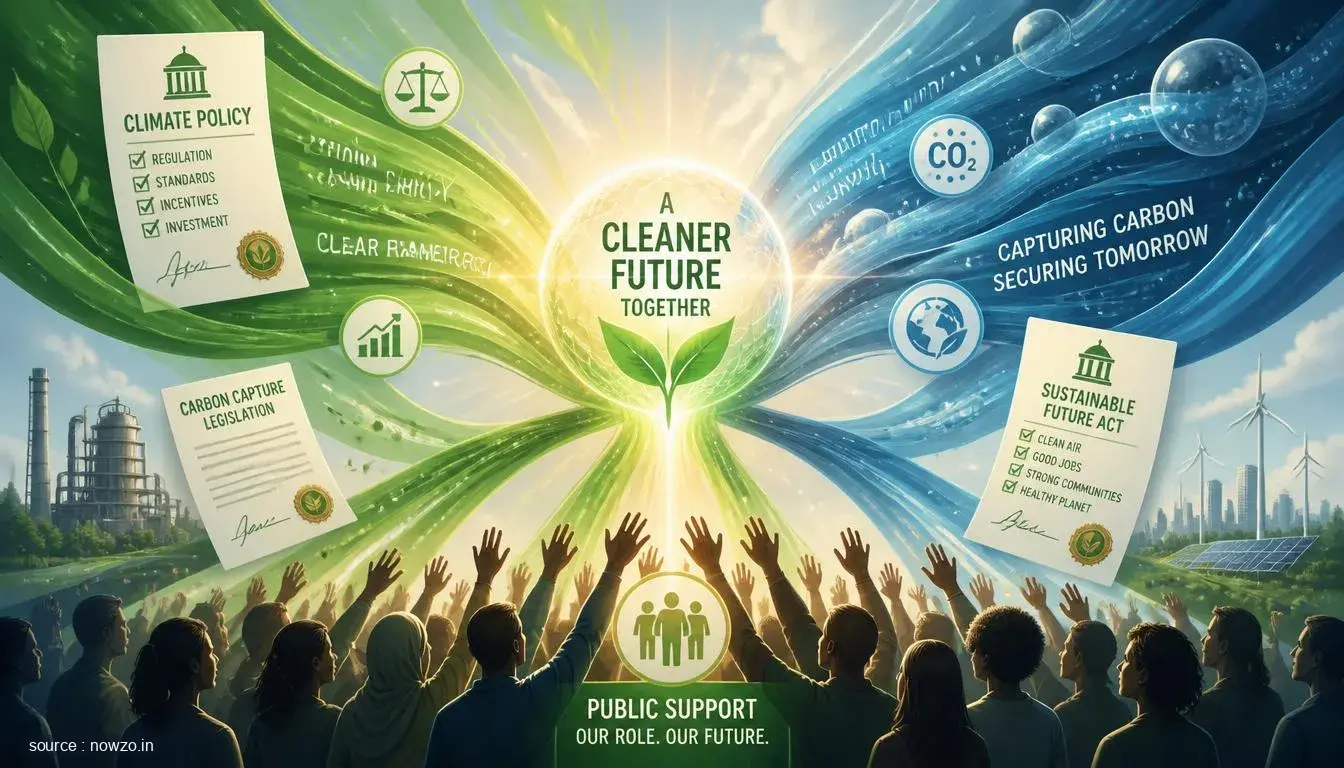
Carbon capture, utilization, and storage (CCUS) stands at a crossroads. While hailed as a critical tool in the fight against climate change, its widespread adoption isn’t guaranteed. Experts warn that without decisive policy support and a significant boost in public awareness, CCUS may struggle to move from niche projects to industry-wide implementation.
Key facts
- CCUS growth is contingent on policy frameworks and public awareness.
- Technological readiness exists, but scaling requires broader buy-in.
- Current progress is fragmented without cohesive national or global strategies.
The Policy Gap
Right now, the technology isn’t the problem. Engineers have proven CCUS can work—capturing carbon emissions from industrial sources, transporting them, and storing them safely underground. But turning pilot projects into standard practice? That demands more than innovation. It needs policy muscle: tax incentives, regulatory clarity, and long-term government commitments that make investment less risky and more appealing.
Awareness Holds the Key
Beyond legislation, there’s a perception challenge. For many, carbon capture remains an abstract, even misunderstood concept. Building trust—showing communities and stakeholders that CCUS is safe, effective, and necessary—is just as crucial as drafting laws. Without public support, even the best-laid policies can stall.
What’s Next?
The path forward is clear, if not easy. Align economic incentives with climate goals. Educate and engage. The world is watching; the success of CCUS could tip the scales in our broader effort to decarbonize heavy industry and achieve net-zero targets. But none of it happens in a vacuum. It’ll take a collective push.


Comments