
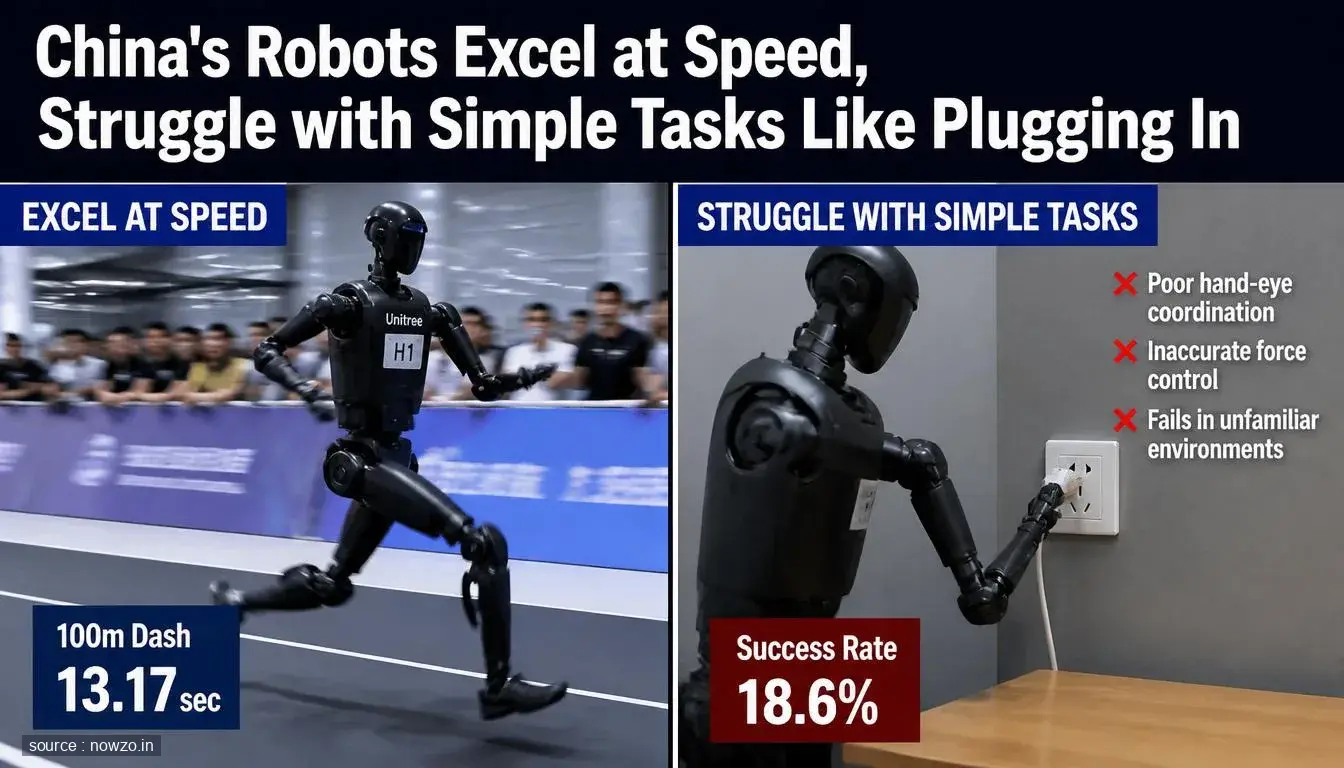
In a striking display of technological prowess, robots in China are proving they can outpace humans in speed-based tasks, yet they hit a wall when faced with something as simple as plugging in a cable. This paradox highlights both the advances and limitations in today's robotics field.
Key facts
- Robots in China outperform humans in running and speed-related activities.
- They struggle with fine motor tasks like inserting a plug into a socket.
- The contrast underscores gaps in dexterity and real-world application for AI.
The Speed Advantage
These machines operate with blistering efficiency, completing movements and computations far quicker than any person could. It's a testament to engineering breakthroughs that have pushed the boundaries of what automation can achieve in controlled environments.
The Dexterity Dilemma
But ask one to handle a everyday object delicately, and the facade cracks. Plugging a cable requires a nuanced touch, spatial awareness, and adaptability—skills that remain elusive for many AI systems. It's a humbling reminder that speed alone doesn't equate to usefulness.
Broader Implications
This gap between raw speed and practical skill raises questions about where robotics is headed. While they excel in factories and on race tracks, integrating them seamlessly into human spaces demands more than just velocity—it calls for finesse.


Comments