
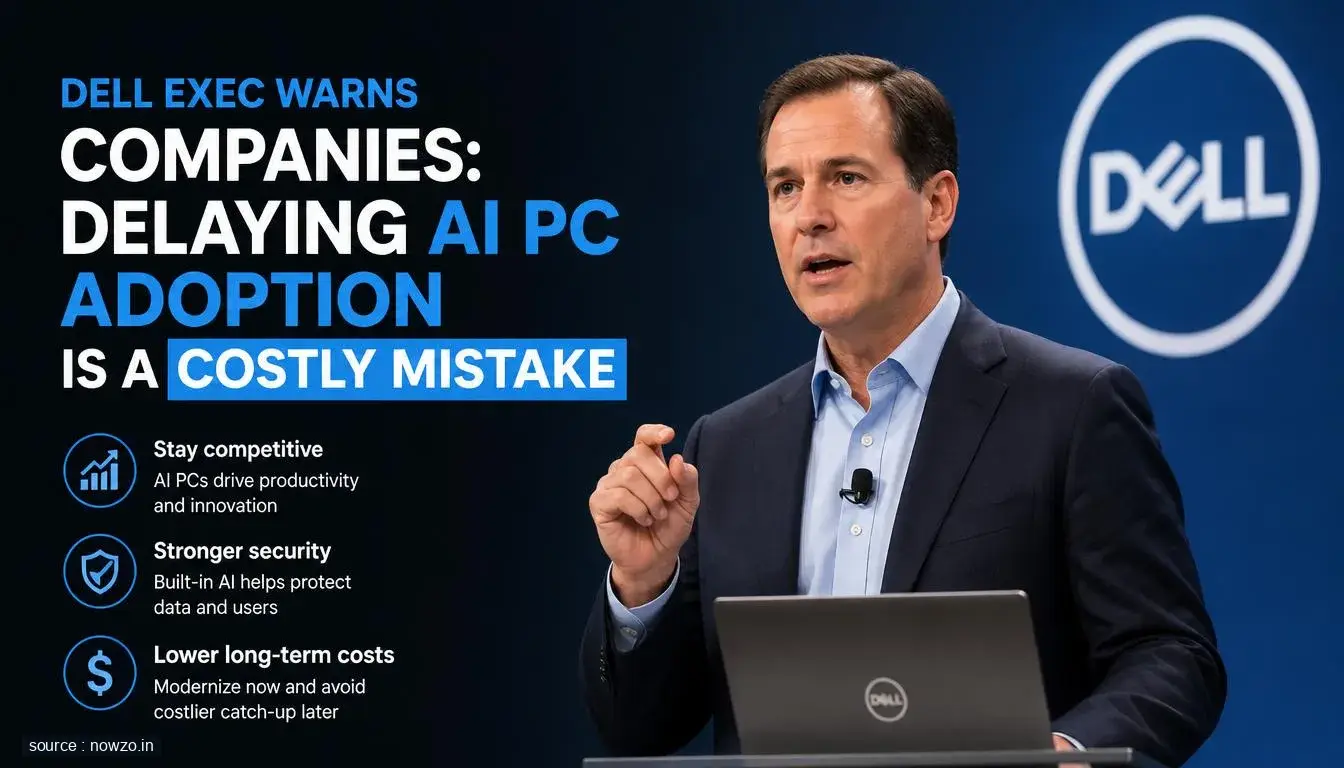
Business leaders who think they can wait on AI-powered computers are making what one Dell executive calls the "costliest mistake" in enterprise technology today. Jacinta Quah's warning cuts through the hesitation many companies feel about upgrading their hardware for an AI future that seems just over the horizon.
Key facts
- Enterprises delaying AI PC adoption risk significant competitive disadvantage
- Early adopters gain operational efficiencies and innovation capabilities
- AI PCs enable on-device processing, enhancing security and performance
The Strategic Imperative
Quah's perspective challenges the comfortable assumption that current hardware will suffice for tomorrow's AI workloads. She sees companies clinging to legacy systems while competitors leap ahead with technology designed specifically for AI applications. The gap isn't just about processing power—it's about fundamental capabilities that transform how businesses operate.
Beyond Hardware Upgrades
This isn't merely another hardware refresh cycle. AI PCs represent a paradigm shift in computing architecture, built from the ground up to handle machine learning tasks locally rather than relying solely on cloud services. That means faster response times, better data security, and reduced latency for critical business applications.
The Cost of Waiting
Every month companies delay, they accumulate what Quah might call "opportunity debt"—the growing gap between their current capabilities and what AI-optimized systems can achieve. The real cost isn't just in delayed purchases, but in lost productivity, missed innovations, and gradual competitive erosion that becomes harder to reverse with time.



Comments