
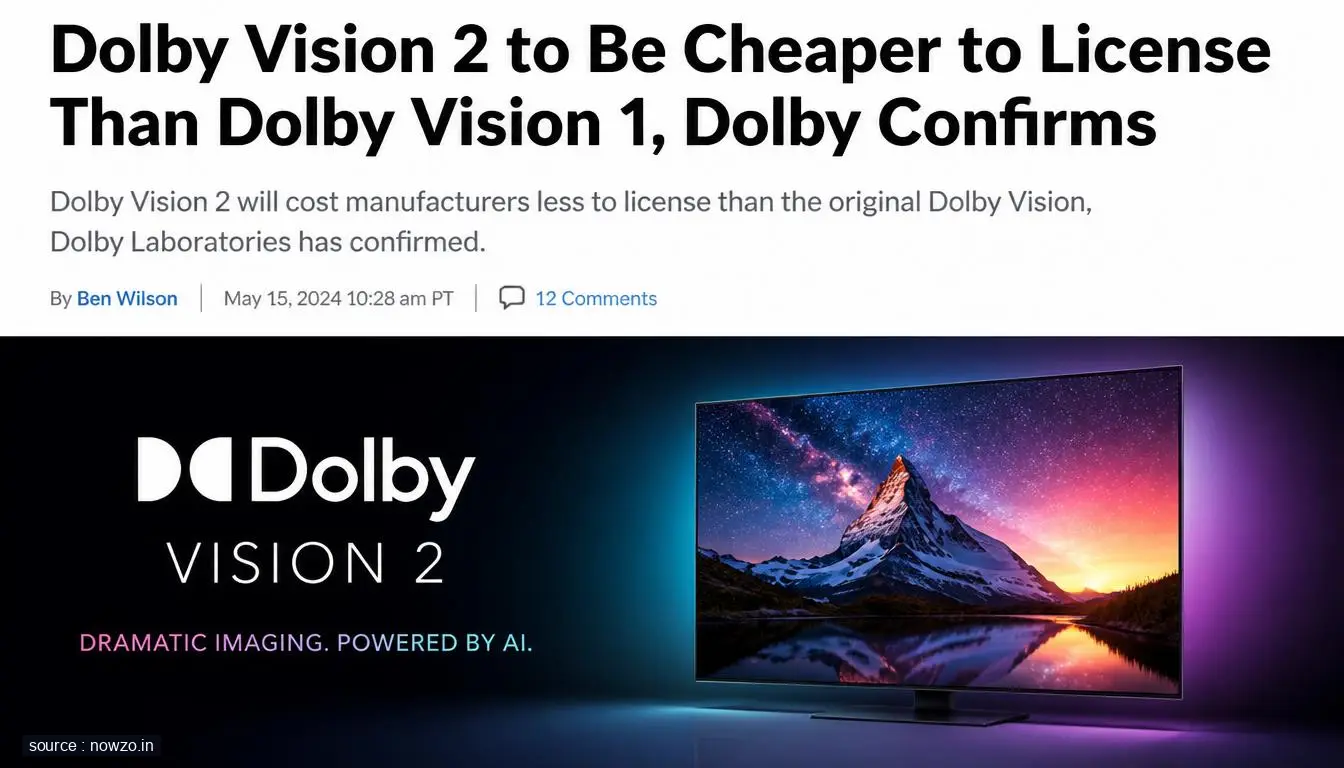
Dolby has confirmed that Dolby Vision 2 will be cheaper to license than Dolby Vision 1, a move that could bring the advanced HDR format to a wider range of budget televisions. The announcement signals a significant shift in how TV manufacturers can access premium picture quality technology without the higher costs associated with the original standard.
Dolby Vision 2 Offers Better Value for Manufacturers
According to Dolby, the new format represents a more cost-effective solution for improving picture quality. "When it comes to improving picture quality, Dolby Vision 2 is the cheapest bang for buck for a TV manufacturer," the company stated. This pricing strategy is designed to encourage broader adoption across different price segments, particularly among budget TV makers who previously found the original Dolby Vision licensing costs prohibitive.
The confirmation comes as Dolby Vision 2 begins its rollout to consumers. The format is already officially available on select Hisense TVs, marking the first wave of devices to support the new standard. This initial launch demonstrates that the technology is moving from announcement to actual consumer products.
What This Means for Budget TVs
The lower licensing cost for Dolby Vision 2 could have a substantial impact on the budget TV market. Manufacturers who previously had to choose between including Dolby Vision or keeping prices low may now be able to offer both. This democratization of advanced HDR technology means consumers shopping for affordable televisions may soon have access to picture quality features that were once reserved for premium models.
Dolby's approach appears to be focused on expanding the ecosystem of Dolby Vision 2-compatible devices. By reducing the financial barrier to entry, the company is positioning its latest HDR format as an accessible upgrade path for manufacturers across all market segments. This strategy could accelerate the adoption of Dolby Vision 2 and establish it as a standard feature rather than a premium add-on.
Industry Implications and Future Outlook
The move has attracted attention from industry observers, with some analyzing what Dolby Vision 2's TV rollout and VVC IP push mean for shareholders. The licensing strategy suggests Dolby is prioritizing market penetration over per-unit licensing revenue, a approach that could pay dividends in long-term format adoption.
As more manufacturers gain access to Dolby Vision 2 at a lower cost, consumers can expect to see the technology appear in a broader range of products. The combination of improved picture quality and reduced licensing fees creates a compelling proposition for TV makers looking to differentiate their products in a competitive market. With select Hisense TVs already supporting the format, the rollout appears to be gaining momentum, and the cheaper licensing structure should help ensure that Dolby Vision 2 reaches beyond flagship models to more affordable options.


Comments