
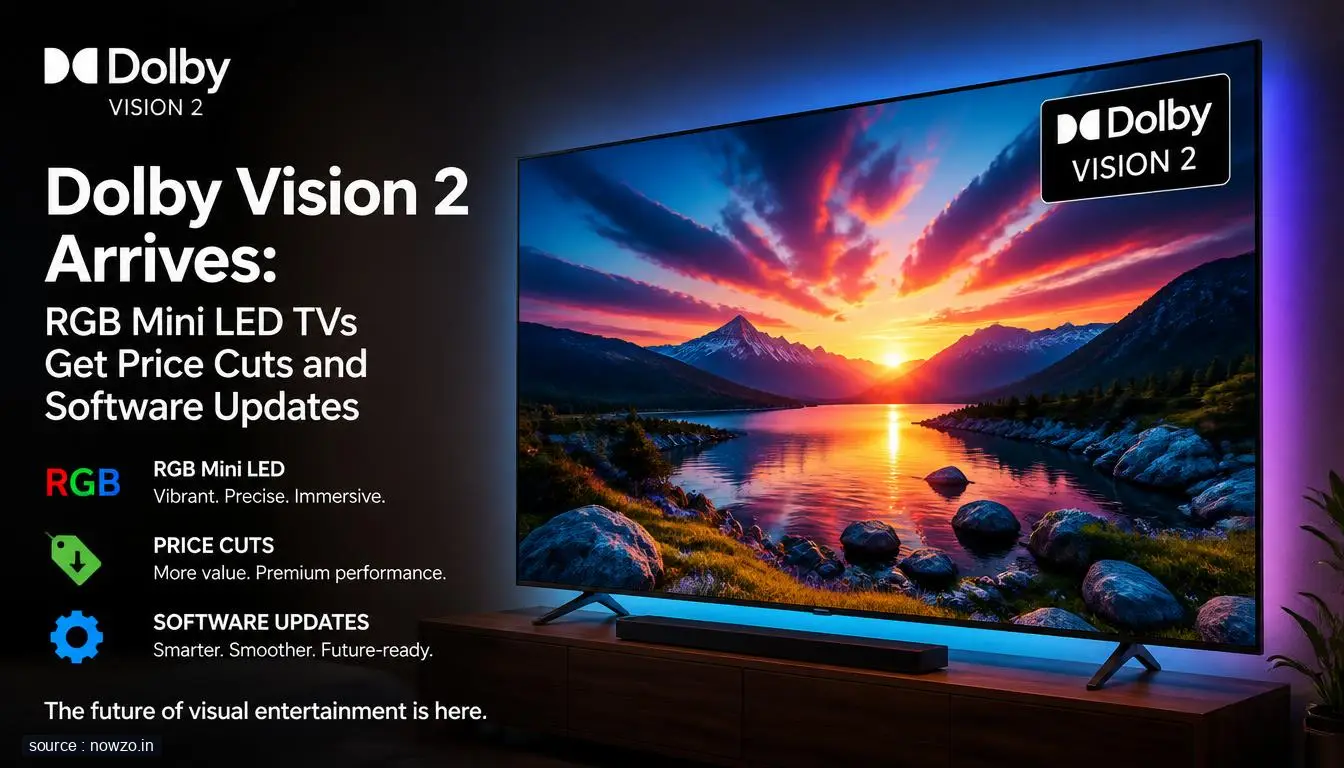
The television landscape is shifting as Dolby Vision 2 begins its rollout across the industry, bringing with it significant price adjustments on premium RGB Mini LED models and clarity on which sets will support the new high dynamic range standard. As the next evolution in HDR technology arrives, consumers are weighing their options between discounted current-generation hardware and future-proofed displays ready for the latest format.
Dolby Vision 2 Goes Live
Dolby Vision 2 has officially launched, marking a substantial upgrade to the company's HDR ecosystem. The new format represents what industry observers are calling potentially the biggest advancement in HDR technology to date, promising enhanced picture quality for compatible content and displays.
Television manufacturers are now confirming which models in their lineups will receive the update, with the rollout extending across various price points and technologies. The implementation varies by brand, with some sets requiring firmware updates while others may ship with native support.
RGB Mini LED Models See Price Reductions
As the new format arrives, retailers have begun slashing prices on RGB Mini LED televisions equipped with Dolby Vision 2 capabilities. These displays, which utilize advanced backlighting technology for improved contrast and color accuracy, are becoming more accessible to consumers looking to future-proof their home entertainment setups.
The price cuts affect models featuring the latest panel technology, positioning them as competitive options for buyers who want premium picture quality without waiting for next-generation pricing to stabilize. The combination of RGB Mini LED backlighting and Dolby Vision 2 support represents the current pinnacle of consumer television technology.
4K Blu-ray Compatibility Questions
While the television rollout progresses, questions remain about physical media support. According to technical experts at Dolby, 4K Blu-ray players could theoretically support Dolby Vision 2 through software updates, requiring no hardware modifications for compatible units.
However, adoption faces hurdles. At least one major manufacturer has already stated it has "no plans" to add the upgrade to its players, creating uncertainty about whether the format will gain traction in the physical media space. This leaves streaming services and digital content as the primary vectors for Dolby Vision 2 content delivery in the near term.
What This Means for Consumers
For shoppers navigating the current market, the convergence of Dolby Vision 2 support and reduced pricing on RGB Mini LED sets creates a compelling buying opportunity. The technology offers improved brightness, color volume, and detail in highlights and shadows compared to previous HDR implementations.
Industry analysts suggest that early adoption of the standard ensures compatibility with upcoming content releases, though the lack of confirmed 4K Blu-ray support may influence purchasing decisions for physical media collectors. As more manufacturers announce their upgrade paths, consumers should verify specific model compatibility before making final decisions.
The rollout continues to evolve, with additional television models expected to receive confirmation of Dolby Vision 2 support in the coming months. For now, the combination of immediate price reductions and future-ready specifications makes this a transitional moment for home theater enthusiasts.


Comments