
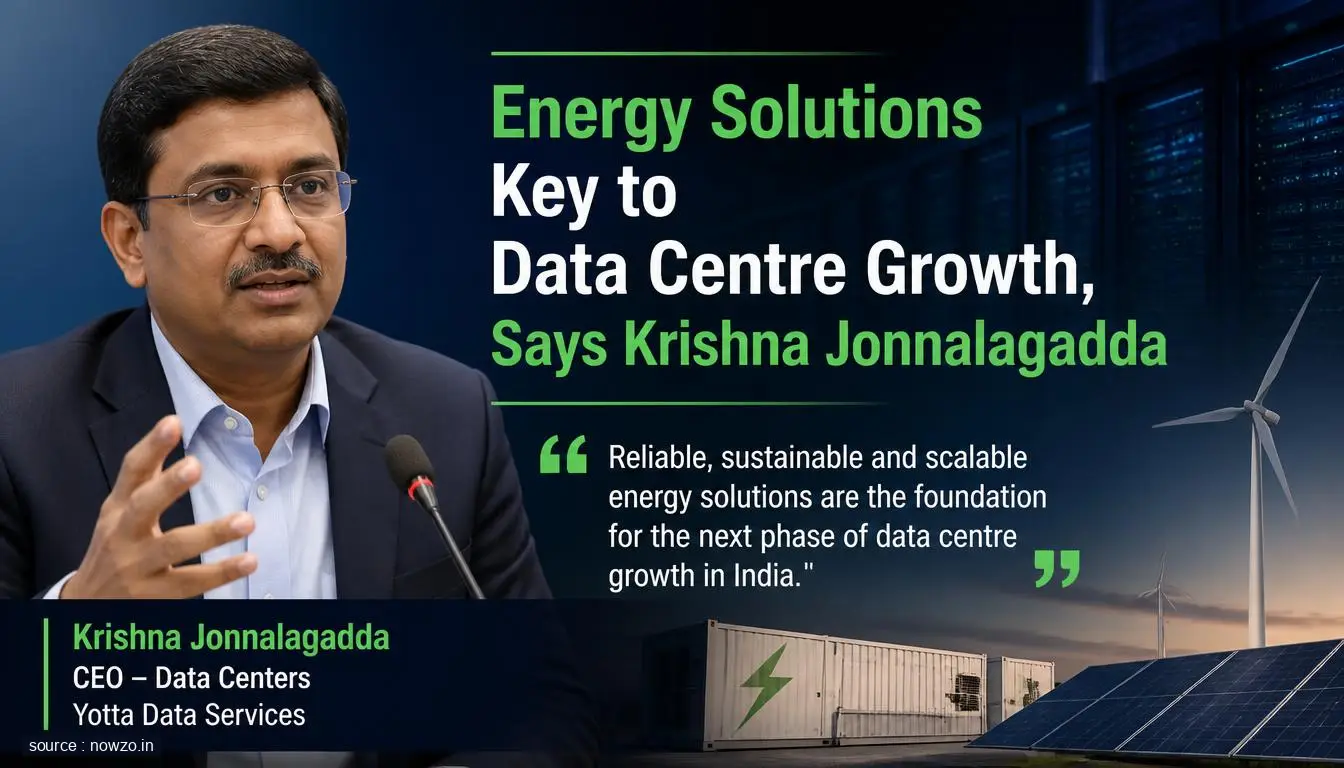
The rapid expansion of data centres is placing energy infrastructure at the centre of industry discussions, with Krishna Jonnalagadda stressing that energy solutions will be crucial for the sector's future. As businesses, governments, and consumers generate and consume more data than ever before, the facilities that store and process this information face mounting pressure to secure reliable and sustainable power supplies.
Power at the Heart of Data Centre Expansion
Data centres have become the backbone of the modern digital economy, supporting everything from cloud computing and streaming services to financial transactions and artificial intelligence workloads. However, their growth comes with a significant challenge: energy consumption.
Krishna Jonnalagadda has underscored that energy solutions will be crucial for data centres, pointing to the fundamental relationship between power availability and the industry's ability to scale. Without adequate energy infrastructure, the expansion of data centre capacity could face serious constraints.
The observation reflects a broader reality confronting the technology sector. As demand for digital services continues to surge, the facilities powering these services require enormous amounts of electricity to operate servers, cooling systems, and supporting infrastructure around the clock.
Growing Demand Meets Energy Challenges
The global appetite for data has shown no signs of slowing. Enterprises are migrating workloads to the cloud, consumers are streaming more content, and emerging technologies such as artificial intelligence are driving unprecedented computational requirements. All of this translates into greater demand for data centre capacity — and by extension, greater demand for energy.
Jonnalagadda's emphasis on energy solutions highlights a critical bottleneck that the industry must address. Data centres are among the most energy-intensive facilities in the modern economy, and their power requirements are only expected to grow as digital transformation accelerates across sectors.
The challenge is not merely about securing enough power. It also involves finding energy solutions that are sustainable, cost-effective, and capable of supporting the always-on nature of data centre operations. Interruptions in power supply can have cascading effects on the services that businesses and consumers rely on daily.
Sustainability and Reliability in Focus
The conversation around energy and data centres increasingly intersects with sustainability goals. As companies commit to reducing their carbon footprints, the energy sources powering data centres have come under scrutiny. Renewable energy adoption, energy efficiency improvements, and innovative cooling technologies are all part of the broader effort to make data centres more environmentally responsible.
Jonnalagadda's remarks suggest that the industry recognises energy as more than just an operational requirement — it is a strategic priority. Companies that can secure reliable, affordable, and clean energy will be better positioned to expand their data centre footprints and meet the growing demands of the digital economy.
The intersection of energy policy, infrastructure development, and technology growth is becoming increasingly important. Governments and regulators in many markets are grappling with how to support data centre expansion while managing grid capacity and environmental commitments.
Looking Ahead
As the digital economy continues to grow, the relationship between energy and data centres will only become more pronounced. Jonnalagadda's assertion that energy solutions will be crucial for data centres serves as a reminder that the future of digital infrastructure depends not just on technological innovation, but on the fundamental availability of power.
Industry stakeholders — from data centre operators and technology companies to energy providers and policymakers — will need to collaborate closely to ensure that energy infrastructure keeps pace with the relentless growth of data demand. The companies and markets that solve this equation effectively will be best positioned to lead in the digital age.


Comments