
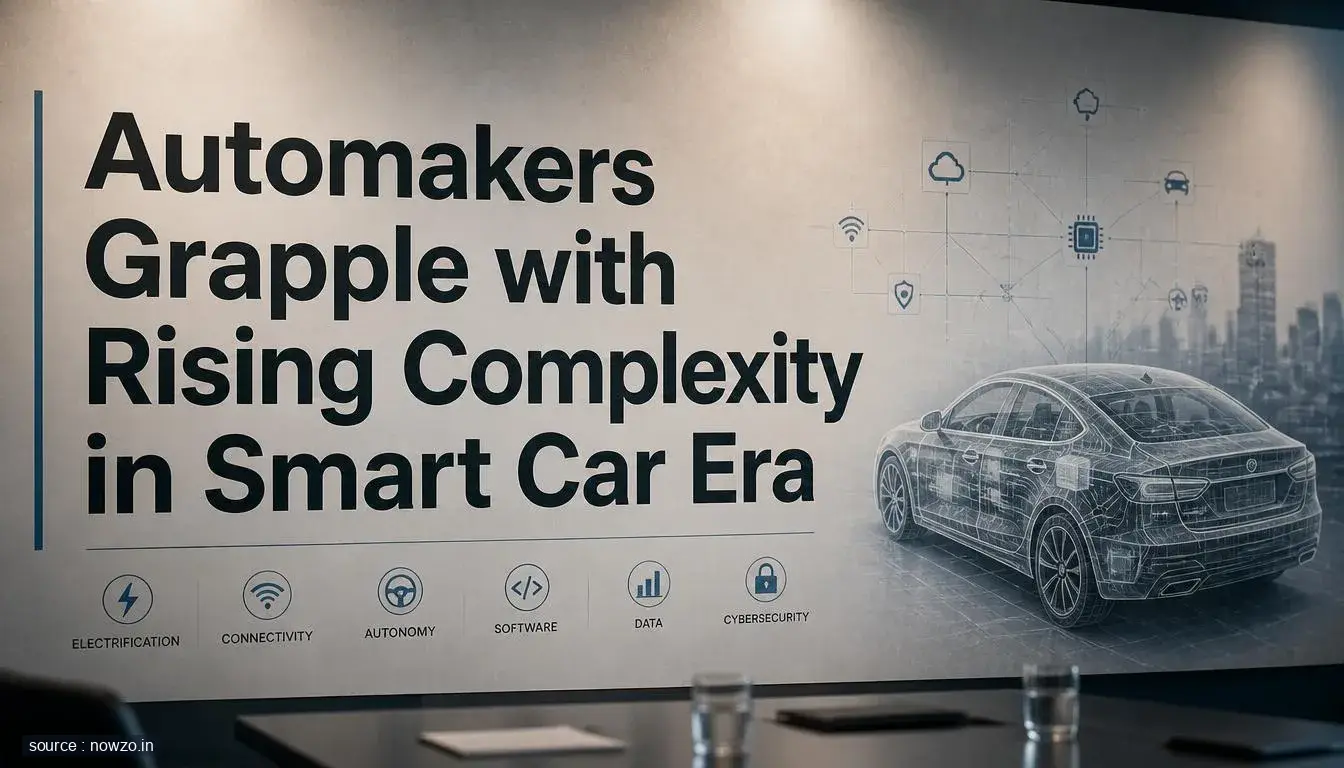
The automotive world is holding its breath as engineers confront what might be their greatest challenge yet: managing the breathtaking complexity of modern intelligent vehicles. Cars are no longer just mechanical marvels—they're rolling supercomputers, and the industry is racing to keep up.
Key facts
- Modern vehicles incorporate hundreds of electronic control units
- Software and hardware integration presents unprecedented challenges
- Traditional engineering approaches are being rethought for the digital age
The New Automotive Landscape
Gone are the days when a car's complexity stopped at its transmission or fuel injection system. Today's vehicles are networks on wheels, with advanced driver assistance systems, connectivity features, and evolving autonomous capabilities all demanding seamless integration. Engineers must now think like software architects while maintaining mechanical excellence.
Integration Challenges Mount
The real test comes in making all these systems work together flawlessly. A single modern vehicle might contain more code than a commercial airliner, with hardware and software developed by dozens of different suppliers. Ensuring everything communicates properly—without glitches or security vulnerabilities—requires coordination on a scale the industry has never seen before.
Industry Responds to New Reality
Automakers are fundamentally reshaping their engineering approaches. Traditional silos between mechanical, electrical, and software teams are breaking down as companies adopt more integrated development processes. The stakes couldn't be higher—get it right, and drivers enjoy unprecedented safety and convenience; get it wrong, and the consequences could be severe.


Comments